In 1997, a new chapter in West Coast literature began when Antioch University Los Angeles launched the region’s first ever low-residency Master of Fine Arts in Creative Writing. Eloise Klein Healy, a prominent poet and longtime Antioch undergraduate studies faculty member, spearheaded the new program. Healy had received her own MFA through Vermont College’s low-residency program. Now, she proposed this new MFA program that could help the University grow while widening access for writers from different backgrounds and financial means.
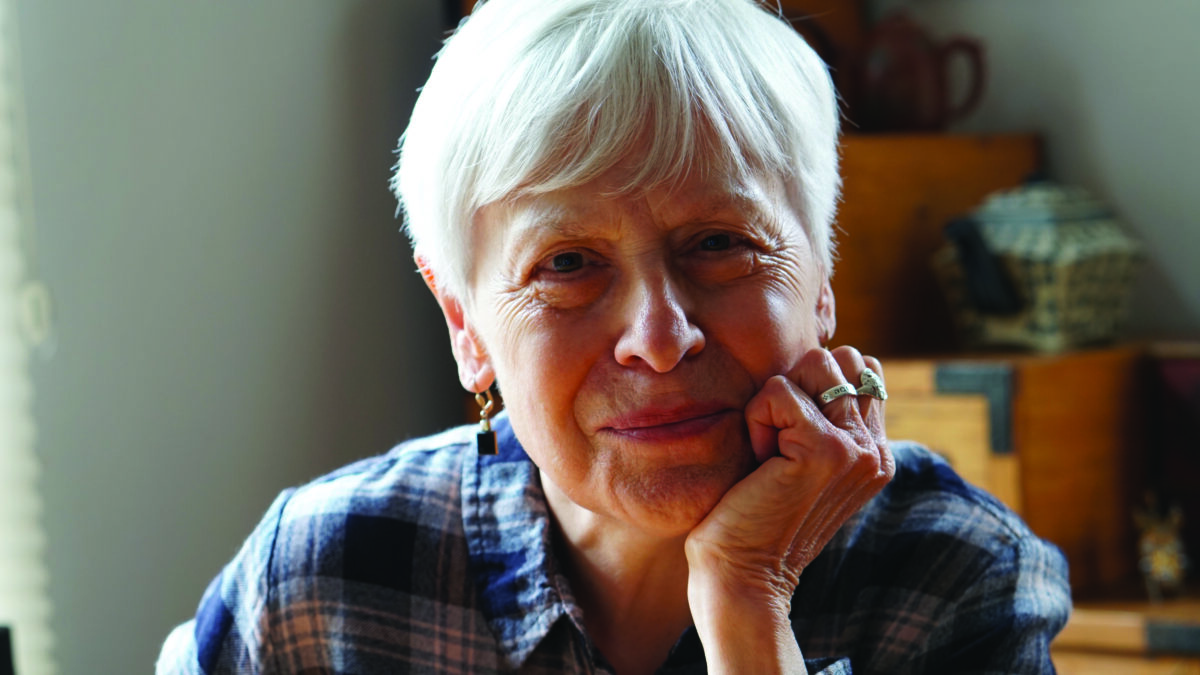
Today, as the Antioch MFA approaches the 30th anniversary of its founding, the program stands as a sanctuary for diverse voices, carrying forward Healy’s lifelong belief that writing can be a powerful engine for collective change—and a powerful force for good in Los Angeles.
Healy believes that “place makes the poem.” She used to live in the hills above Dodger Stadium, and today she lives in Sherman Oaks. Her immersion in Echo Park and L.A.’s Spanish-speaking communities helped shape her language and vision. She was deeply involved with the Downtown L.A. Woman’s Building in its early years. Today she recalls that on her first visit, a woman handed her a broom and put her to work cleaning. She remembers this as an “aha” moment. Before any sort of prestige could be achieved, “there was work to be done,” she explains. Everyone had to pitch in. Later she founded Arktoi Books, an imprint of Red Hen Press, which publishes literary fiction and poetry by lesbian writers. Healy’s papers are archived at the Huntington Library.
Healy retired from Antioch in 2006. In 2012, she was named the inaugural Poet Laureate of Los Angeles. During her laureateship, Healy had a frightening and debilitating bout of encephalitis that caused her to lost her ability to speak. In the years since, she has returned, slowly and fiercely, to poetry and travel with the support of her spouse, Colleen, her three Portuguese water dogs, and many dear friends.
The current MFA chair, Lisa Locascio Nighthawk, has been leading the program since 2023. She lives in West Hollywood, a place she describes as “ugly and beautiful all at once.” Living in this small, queer, rent-controlled city feels meaningful to her. “It’s not arbitrary that I’m here,” she says. Surrounded by immigrants and artists, she writes from a corner with two windows facing a crossroads, currently drafting a novel set in the neighborhood and drawing on Russian folklore.
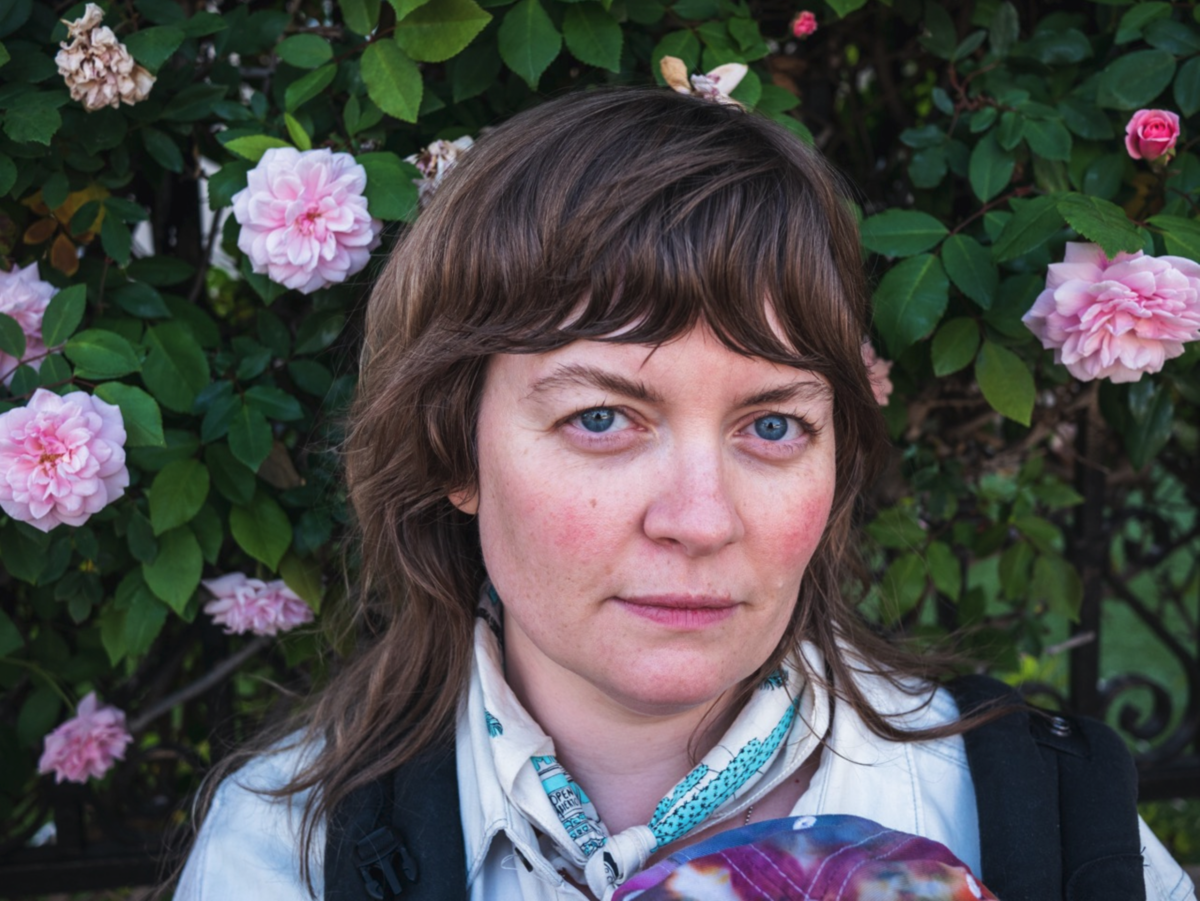
Locascio Nighthawk earned her PhD in Creative Writing at the University of Southern California, an experience that first connected her to LA’s writing community. “Since 2009, this city has felt like my literary home,” she says. But after graduating with her PhD, she went to teaching jobs in Connecticut and northern California. Antioch brought her back to L.A. In her role at Antioch, she has helped strengthen ties among students, alumni, and faculty across the region, deepening the program’s presence within the broader literary landscape. Locascio Nighthawk hopes the city can remain livable for artists. “Any city that wants a vibrant cultural life has to make space for artists to live,” she says. “I don’t want to give up on that dream.”
What is it about Los Angeles? Perhaps it’s the abundance of sunshine, the palm trees, the lowriders and sleek sports cars idling beside ancient pickup trucks sprouting lawnmowers, rakes, and leaf blowers at improbable angles. Perhaps it’s the retro diners and cinemas, the mountain lions in the Santa Monica Mountains, the coyotes trotting casually through neighborhoods as if they pay rent. The Pacific Ocean. The marine layer that creeps in at dusk, cloaking everything in cool gray. The hours of your life spent on the freeway, contemplating existence, or internally fuming. It’s where feminist trailblazers and hard-boiled literary legacies collide, the gilded memory of Old Hollywood, the scent of citrus blossoms and jasmine mingle with exhaust, street tacos, unbelievable economic disparity, trash, dirt, and yes, occasionally poo, drifting on the same gentle breeze. Los Angeles is not subtle. It is layered, contradictory, excessive. It is also one of the great storytelling capitals of the world.
Has the draw of the city itself fed the success of Antioch’s MFA program? It’s difficult to imagine the program unfolding in quite the same way anywhere else.
When I began pondering the question what is literary Los Angeles, the first images that surfaced were libraries and bookstores—spaces repeatedly cited by interviewees as both professional and social hubs of the #writerslife in L.A. And then, of course, there is tráfico—as we call it out here in this city composed of at least 50% Latinos—the particular feeling of gazing down that ceaseless dragon’s tail of red lights, knowing you’re not going to get where you’re going for a good long time. I have a distinct memory of planning to attend MFA alum Tom Pyun’s Skylight Books event in Silver Lake, checking my ETA on the map, and realizing it wasn’t going to happen. Los Angeles is a city engineered for distance. Decades of urban planning decisions have stretched it wide, turning geography into a daily negotiation. Writers often build their communities close to home because crossing the city can feel like crossing a continent. Within this landscape of separation, Antioch’s MFA program has acted as connective tissue, linking neighborhoods, disciplines, and creative worlds that might otherwise remain fragmented.
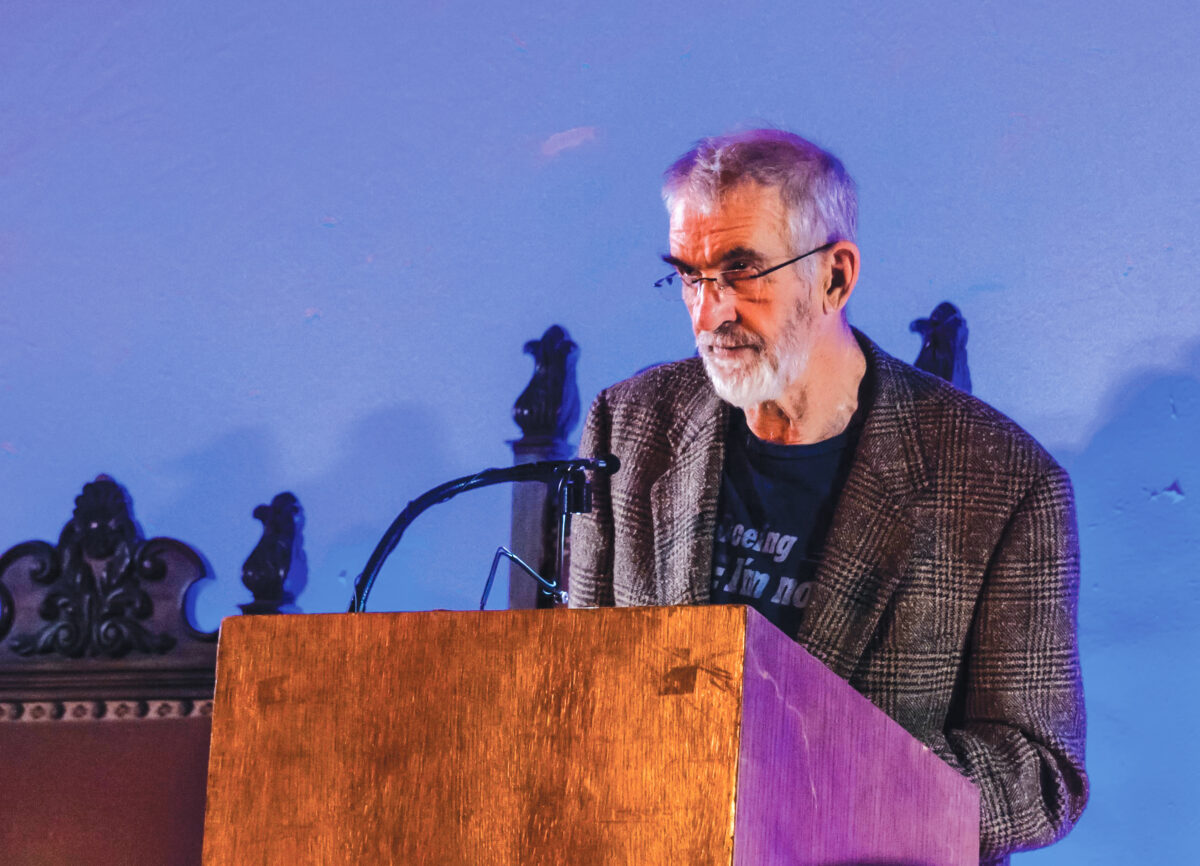
Writer and Faculty Emeritus Jim Krusoe, who has been part of the city’s literary life for 50 years, says that writers in this city have long tended to cultivate creative communities close to where they live. He remembers relatively distinct enclaves in those early years: Venice (centered around Beyond Baroque Literary Arts Center), East L.A., Compton, the San Fernando Valley, and Hollywood/Echo Park/Silver Lake. He was heavily involved with the Beyond Baroque scene back in the Venice poetry heyday, and he now lives and works in San Pedro, the southernmost point of the South Bay.
“Having written for so long, wherever I am is me,” says Krusoe. His trademark wry, dark humor comes out when I ask how his present-day neighborhood influences his work. “Satan said something like that in Milton’s Paradise Lost. Where I am is Hell: nowhere in terms of the literary landscape.” Which I take to mean he adores San Pedro.

Not every neighborhood has its own independent bookstore, but every local writer knows where the nearest one is—and exactly how long it can take to get there during rush hour. In Los Angeles, you’ve gotta do traffic math to decide whether a 6pm reading is worth attempting. For the novelist and longtime faculty mentor Francesca Lia Block, ahome is Culver City, and the neighborhood bookstore is Village Well Books & Coffee.
Block, the author of more than twenty-five books of fiction, non-fiction, short stories and poetry, was born and raised in Los Angeles. Her father was a painter from the East Coast who came here seeking greater creative freedom and ended up writing the screenplay for the science fiction classic Forbidden Planet. Block herself wrote the bestselling Weetzie Bat books, which introduced a romantic vision of Los Angeles to countless young people in the ’90s.
Today, Block vividly remembers how her literary work and life have emerged from the city. She specifically notes iconic Angeleno Kate Braverman’s books and writing groups. She also felt particularly the influence of iconic L.A. feminist writers such as Wanda Coleman, Eve Babitz, and Joan Didion, whose voices—along with the rich noir legacy of writers like Raymond Chandler, Nathaniel West, James Ellroy, and Walter Mosley—helped shape the city’s imaginative terrain.
Today, beyond her work as a mentor in the Antioch MFA, Block runs a daily morning writing circle out of her beloved Village Well Books & Coffee. She also publishes Lit Angels, a journal that leans into her signature fairytale vibes, often featuring the voices of Antioch writers.
For many of us who attended Antioch’s MFA, the experience offered an antidote to regional tribalism. It exposed us to writers and work beyond our immediate neighborhoods and comfort zones. Alumni are bringing literary skills into schools and prisons and social justice organizations and theaters and music venues and more. Many of those I spoke with for this article have made lasting connections across distances physical, cultural, and metaphorical, traveling to see one another, learning each other’s worlds through their writing, and sustaining long friendships and professional relationships.
This series of mini profiles with a few of our local faculty and alumni offers just a glimpse of the many forms of literary citizenship practiced by Antioch MFA alumni across the city, their interconnections, how they were influenced, supported, and resourced by the program, and how they, in turn, continue to give back to the larger community of Los Angeles.
Xochitl-Julisa Bermejo, Poetry ’09, San Gabriel Valley
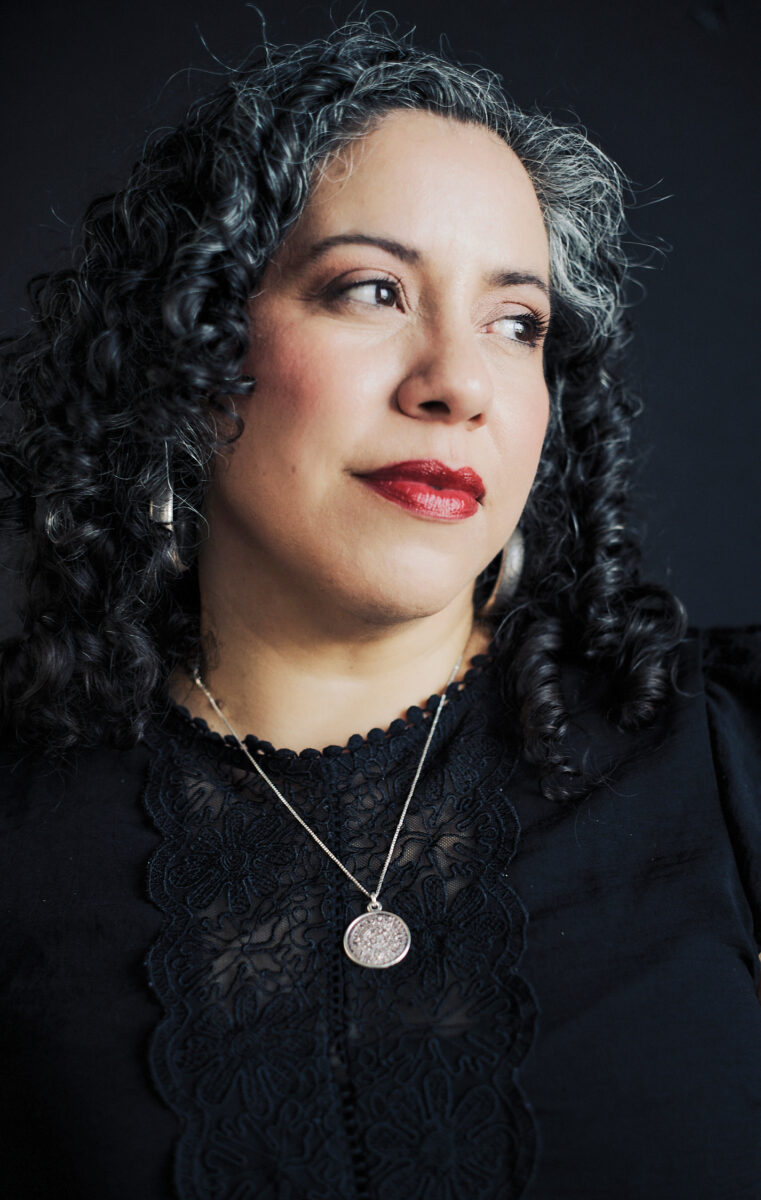
Author of Posada: Offerings of Witness and Refuge (2016), Incantation: Love Poems for Battle Sites (2023)
Xochitl-Julisa Bermejo lives in the San Gabriel Valley, which she describes as “east of East L.A.” The multicultural landscape feeds her poetry, which often reflects her neighborhood’s streets, trees, flowers, and landmarks. “In winter the mauve magnolias bloom, and as spring approaches, so do the yellow loquats,” she says. “These colors inspire me.”
While a student in the program, Bermejo worked on a series of persona poems rooted in immigrant stories from both Asian and Latine diasporas. Now, as an alum, she serves as faculty in the MFA. Bermejo also co-founded and is the Director of Women Who Submit, a longstanding literary organization.
In terms of the future of L.A.’s literary landscape, Bermejo envisions “a city that functions as a true sanctuary, where words, spaces, and services operate as mutual aid.” She reflects on the way communities mobilized after the fires and how neighbors continue organizing to protect one another during ICE raids. What she hopes is that civic leadership will rise to meet the courage and care already present on LA’s neighborhoods and streets.
Tim Cummings, Writing for Young People ’18, Silverlake
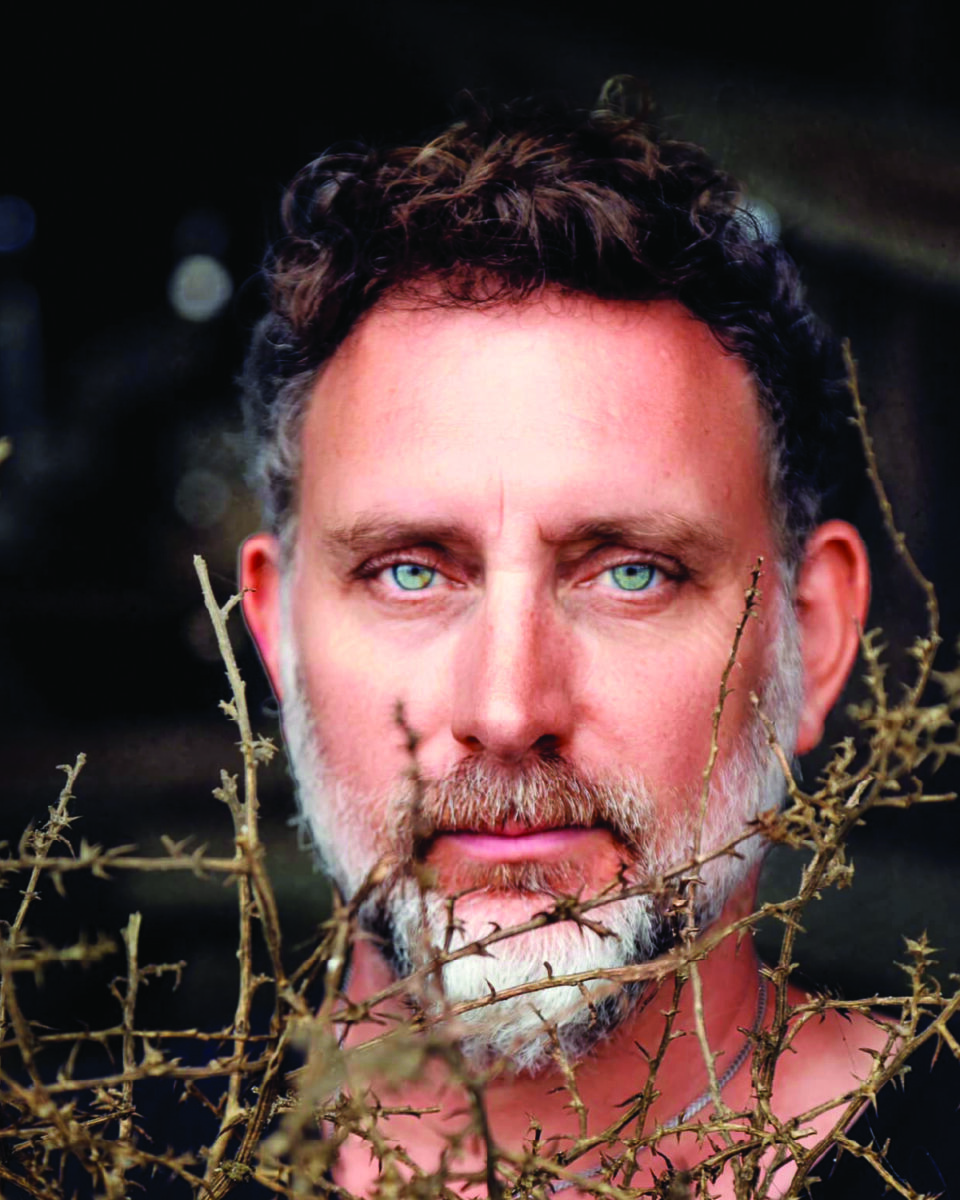
Author of Alice the Cat (2023), The Lightning People Play (2025)
After earning his MFA, actor and writer Tim Cummings leaned into what felt most natural to him. “Community is second nature to me,” he says. Wanting to preserve the workshop environment he experienced at Antioch, he began leading eight-week writing workshops. Today, these workshops are thriving. What began in-person moved to Zoom during the pandemic, allowing a core group of writers to build sustained creative relationships. Alongside teaching in UCLA Extension Writers’ Program, he offers one-on-one writing coaching and manuscript consulting, holding space for writers who seek both craft development and healing through storytelling.
Recently, he has stepped back into theatre. Cummings says, “I feel more of a need to connect, not impress. I’m interested in collective experiences.” For him, literary citizenship means creating spaces where writers and artists of all walks of life, from diverse backgrounds can gather and grow together. He describes himself as an orb weaver, sitting at the center of his web, building chosen community.
Barbara Fant, Poetry ’19, Glendale
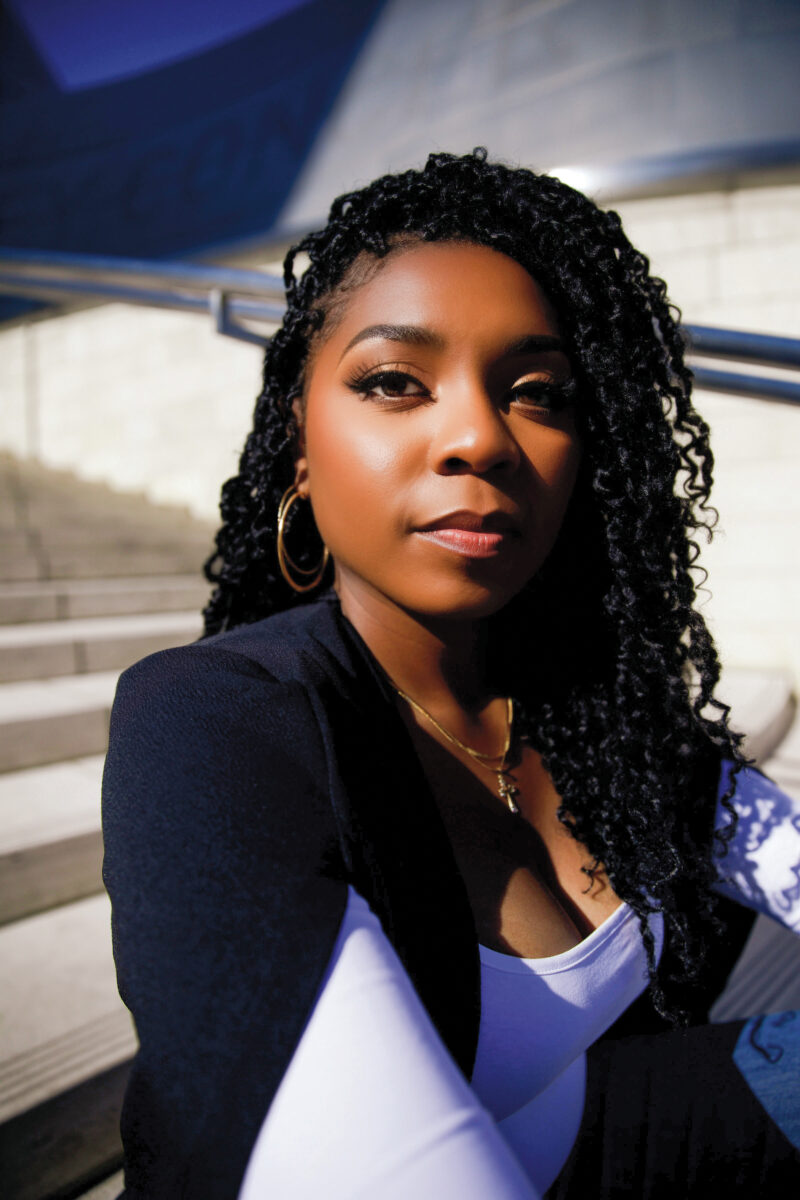
Author of Paint, Inside Out (2009), Mouths of Garden (2021), and Joy in the Belly of a Riot (2025)
When multidisciplinary poet, artist, musician, and educator Barbara Fant applied to the Antioch MFA, she was working at a community foundation in Columbus, Ohio. Having developed a poetry career in the Midwest and the East Coast, she was ready to explore the West Coast. She enrolled in 2017 and graduated in 2019, falling in love with Los Angeles in the process.
Fant’s work centers the arts as a tool for healing and restoration. For more than 15 years she has taught in prisons and worked with individuals in reentry, survivors of trafficking and domestic violence, and now gang-impacted communities.
This work helped Fant make the move to LA in 2021, when she took a job leading arts programming as Director of Trainings and Replication at the Arts for Healing and Justice Network. Since then she has worked as Artistic Director at Street Poets and now as Program Director for the Homeboy Art Academy at Homeboy Industries.
A longtime performance poet, Fant collaborates widely across the city’s music and performance poetry spaces. A few years ago, Fants curated a poetry performance for the opening of the Regeneration: Black Cinema 1898-1971 Exhibit at the Academy Museum of Motion Pictures. She is currently the Poetry Coalition Fellow at Beyond Baroque Literary Arts Center, a 2026 Writing Freedom Fellow, and a voting member of the Grammy Recording Academy.
Jose Hernandez Diaz, Poetry ʼ15, Norwalk
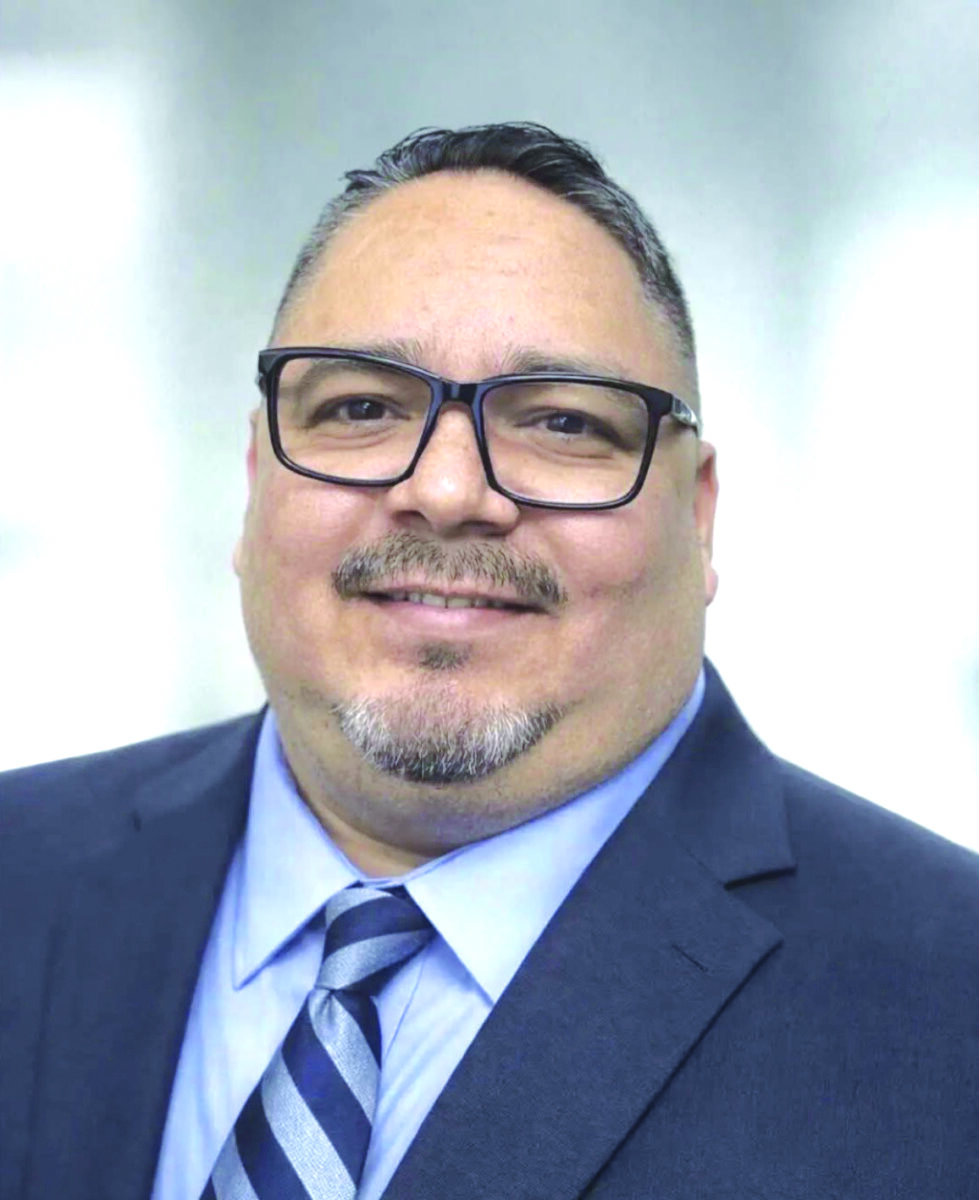
Author of The Fire Eater (2020), Bad Mexican, Bad American (2024), Portrait of the Artist as a Brown Man (2025)
Jose Hernandez Diaz is a Mexican American writer, editor, and teacher. A 2017 National Endowment for the Arts Poetry Fellow, he was born and raised in Norwalk. Today he lives there with his family. This neighborhood has been a formative place and continues to shape his work as a literary artist and teacher. He writes about it in a short prose piece, “The Palm Tree Piñata,” which he has given us permission to reprint here:
The Palm Tree Piñata
I’m smacking around a piñata shaped like a palm tree. It is southern California, mid-summer. The palm tree piñata is swinging back-and-forth beneath the bright summer sun. It is my birthday. I’m thirty-eight years old. I don’t always act my age, yet I am wise beyond my years, people say. We are having a party to celebrate, a few of my childhood friends are in attendance and many Mexican cousins. We are drinking a mixture of Mexican beers, trendy hard seltzers, and sangria. Finally, I giåve the palm tree piñata a final smack and it explodes: out of the piñata comes falling Loteria game sets and Mexican dulces. I pick up a dulce and start chewing. As the sun sets on the west coast, we play rancheras, cumbias, hip-hop and oldies, well into the night. The moon rises with the cigarette smoke.
(“The Palm Tree Piñata” previously appeared in Zocalo Public Square.)
Sanaz (Sunny) Tamjidi Writing for the Screen ’24, Tarzana
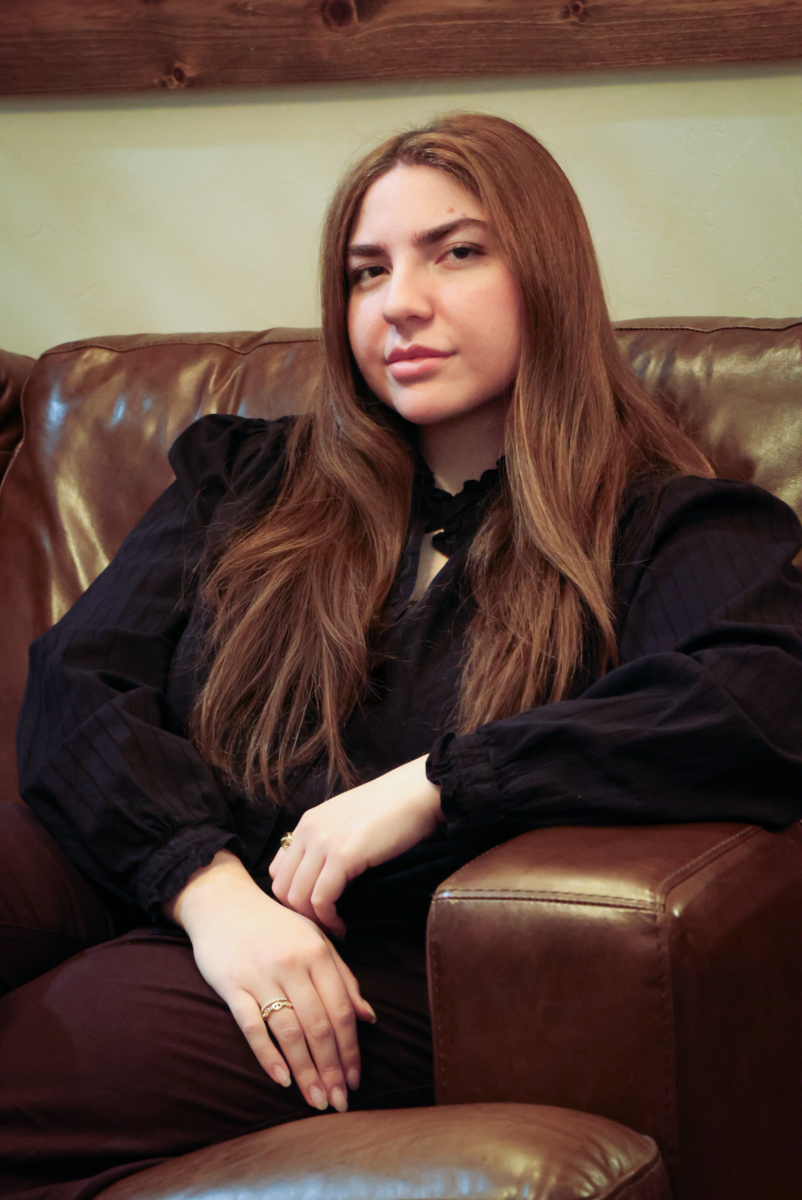
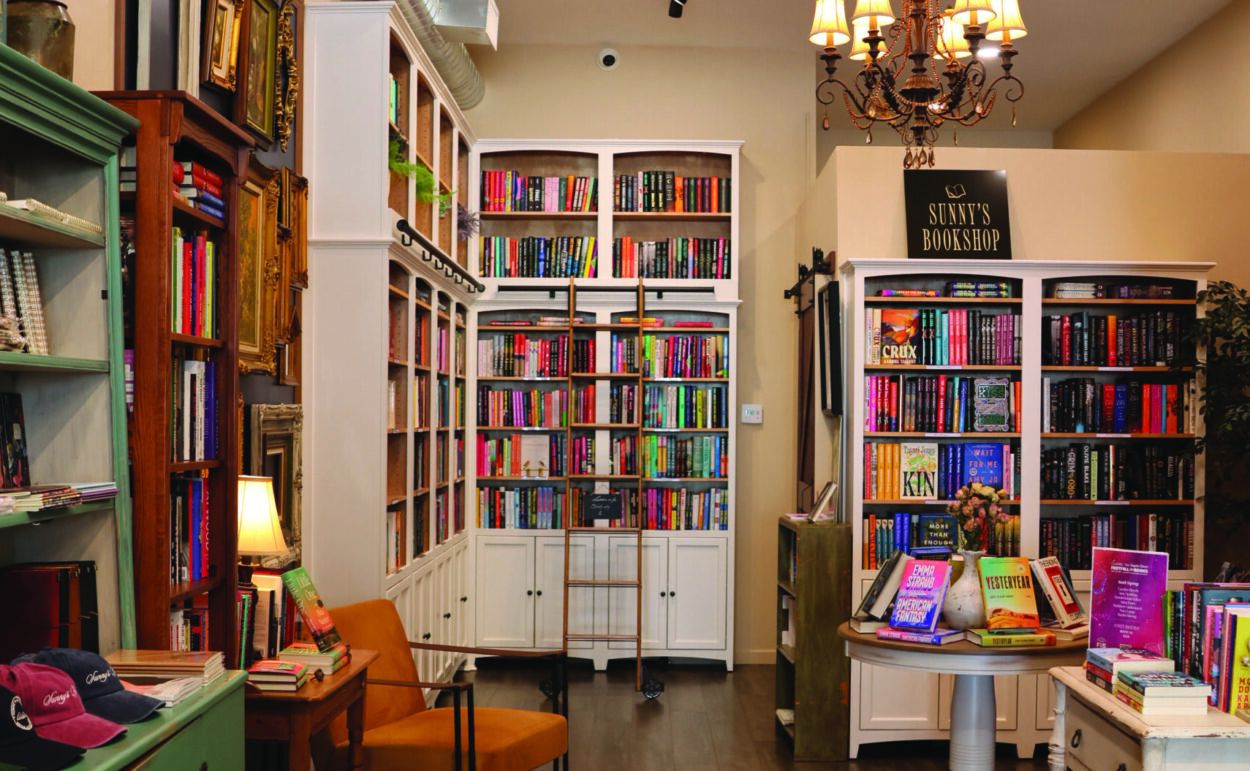
Writer, filmmaker, Editor-in-Chief of Sunny’s Journal and Press, and founder of Sunny’s Bookshop
Sanaz Tamjidi lives in Tarzana in the San Fernando Valley, where she runs Sunny’s Bookshop. She loves the work. As she says, “We have so many customers who just walk in and talk about their day, what book they’re reading, what they enjoyed about our last event.”
A commitment to family and community shapes both her writing and the mission of the store, which shares space with her mother’s florist shop. She explains, “One of my priorities when opening the store was to create a space that celebrated community.”
While Tarzana may not have the visible literary infrastructure of other parts of Los Angeles, creativity runs deep. “One thing I realized,” says Tamjidi, “is how many creatives live nearby. Many customers are writers, filmmakers, and artists, and they’re all so inspiring and supportive. I think that people are the creative landscape of Tarzana.”
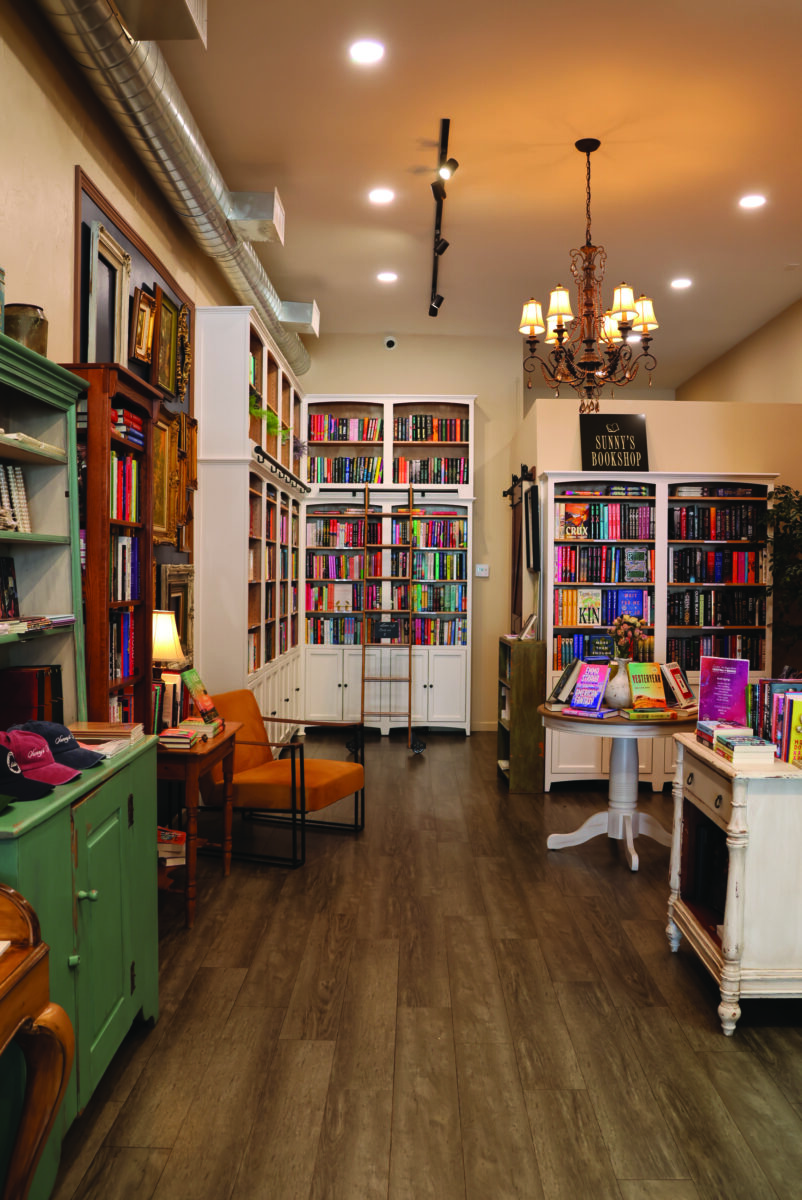
Reflecting on her creative life and professional path, Tamjidi notes, “I’m entirely thankful to Antioch’s MFA. Being a writer doesn’t mean you have to be alone.” She is amazed and gratified by how many from the Antioch community have hosted events at her shop, from faculty to alums. “I truly feel I belong in the LA literary landscape because of them.”
Alistair McCartney, Fiction ’01, Venice
Author of The End of the World Book (2008), The Disintegrations (2017)
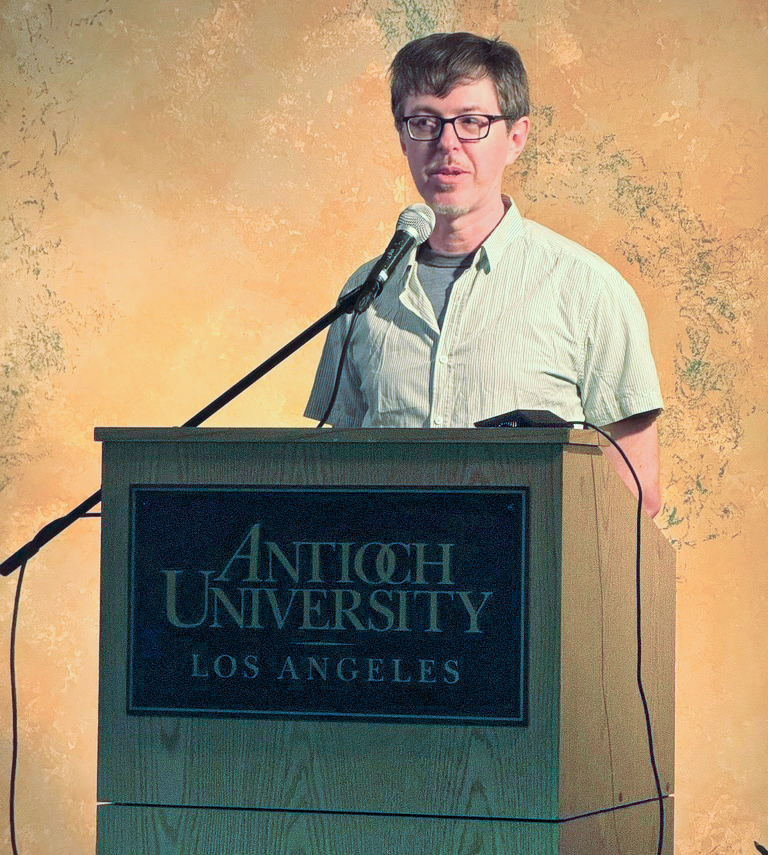
Originally from Perth, Alistair McCartney today lives in Venice, an LA neighborhood with a reputation as a haven for outsiders. Over decades living it Venice, its rich literary history, including being home to the Beyond Baroque Literary Arts Center, has fed his imagination. And the ocean’s proximity gives him, as he puts it, “the space to imagine and create.” The neighborhood even appears as a character in his second book, The Disintegrations, underscoring how deeply place informs his work.
An alum of the MFA, McCartney has taught at Antioch for many years and currently serves as Teaching Faculty and Interim Co-Chair of the program. McCartney sees the community interwoven throughout the city. “The Antioch community is everywhere in LA,” he says. While curating the Literary Uprising reading series at Antioch, he broadened the lineup beyond current students and faculty to include alumni with new books and other writing communities, inviting readers from former MFA faculty Jim Krusoe’s writing class at Santa Monica Community College, from UCLA Extension Writers Program, from PEN America’s Emerging Voices Program, as well as writers from the Macondo Writers Workshop, MFA Faculty Terry Wolverton’s Writers at Work, and from Women Who Submit, co-founded by alums Ashaki Jackson and Xochitl-Julisa Bermejo.
As one of the first graduates of the Antioch MFA, and now, 25 years later, as a steward and leader of the program, McCartney continues playing a key role in assuring the MFA continues to have a powerfully positive impact on literary LA for decades to come.