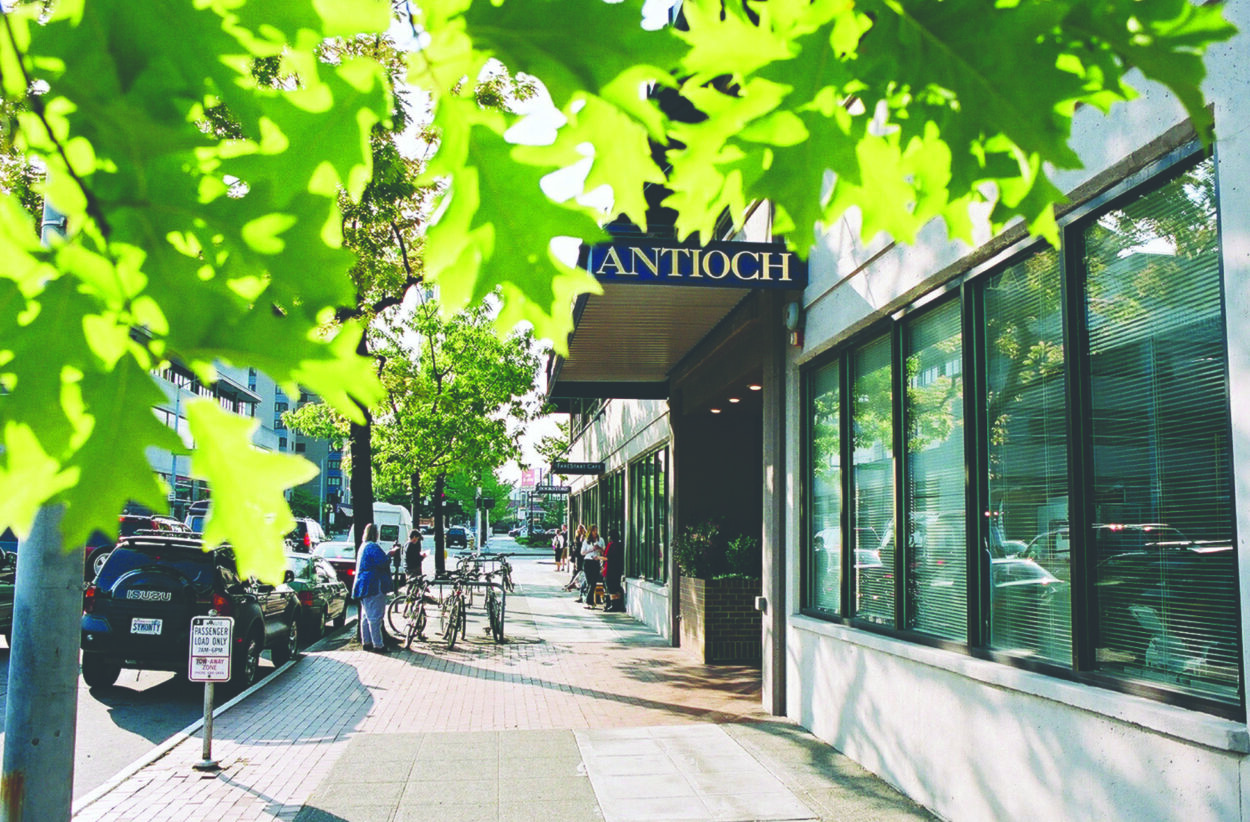
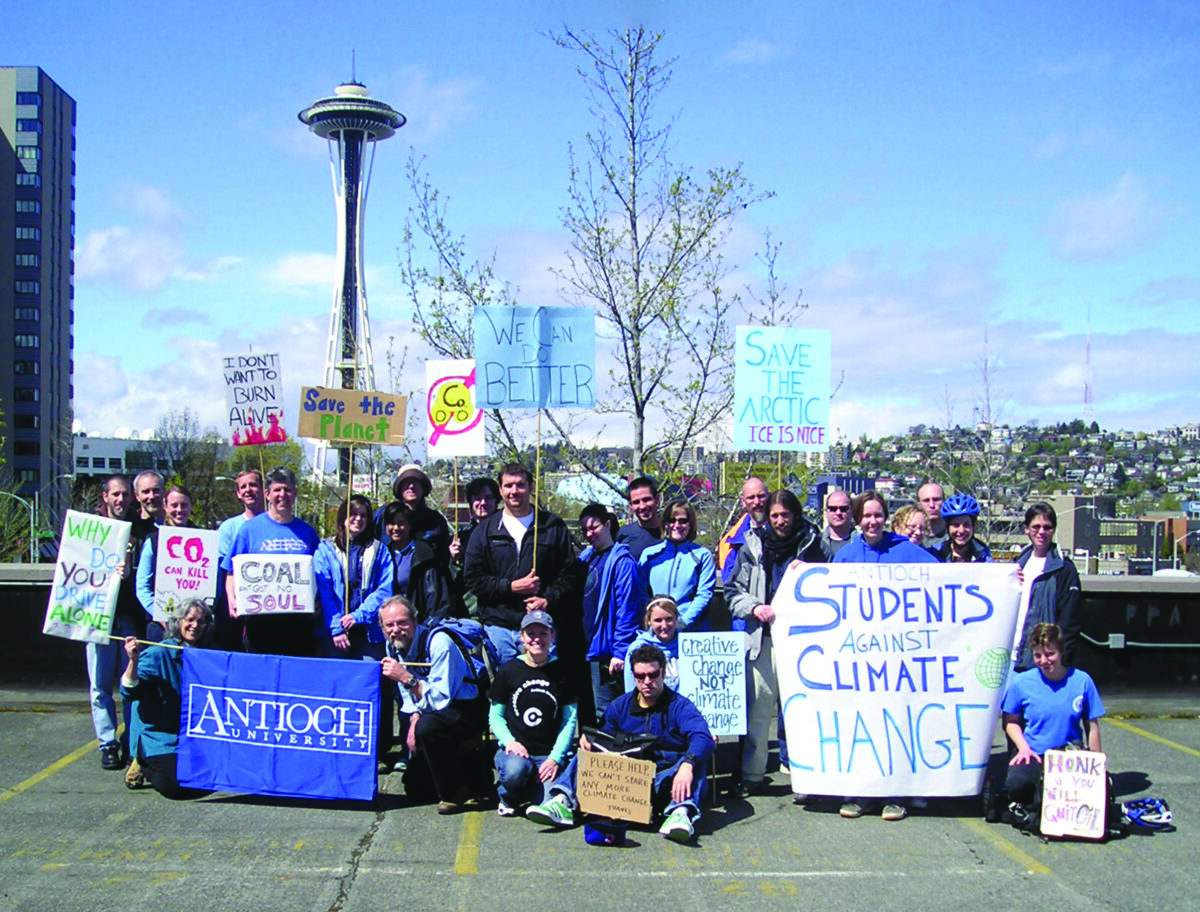
Last October, close to 100 students, faculty, alumni, and community members gathered on our Seattle campus to celebrate the 50th anniversary of Antioch University Seattle. This momentous occasion prompted us to look back at the history of Antioch’s half-century in the Emerald City. Through interviews and archival materials, we have sought to capture some of this campus’ most fascinating stories, key moments, and vibrant contributions.
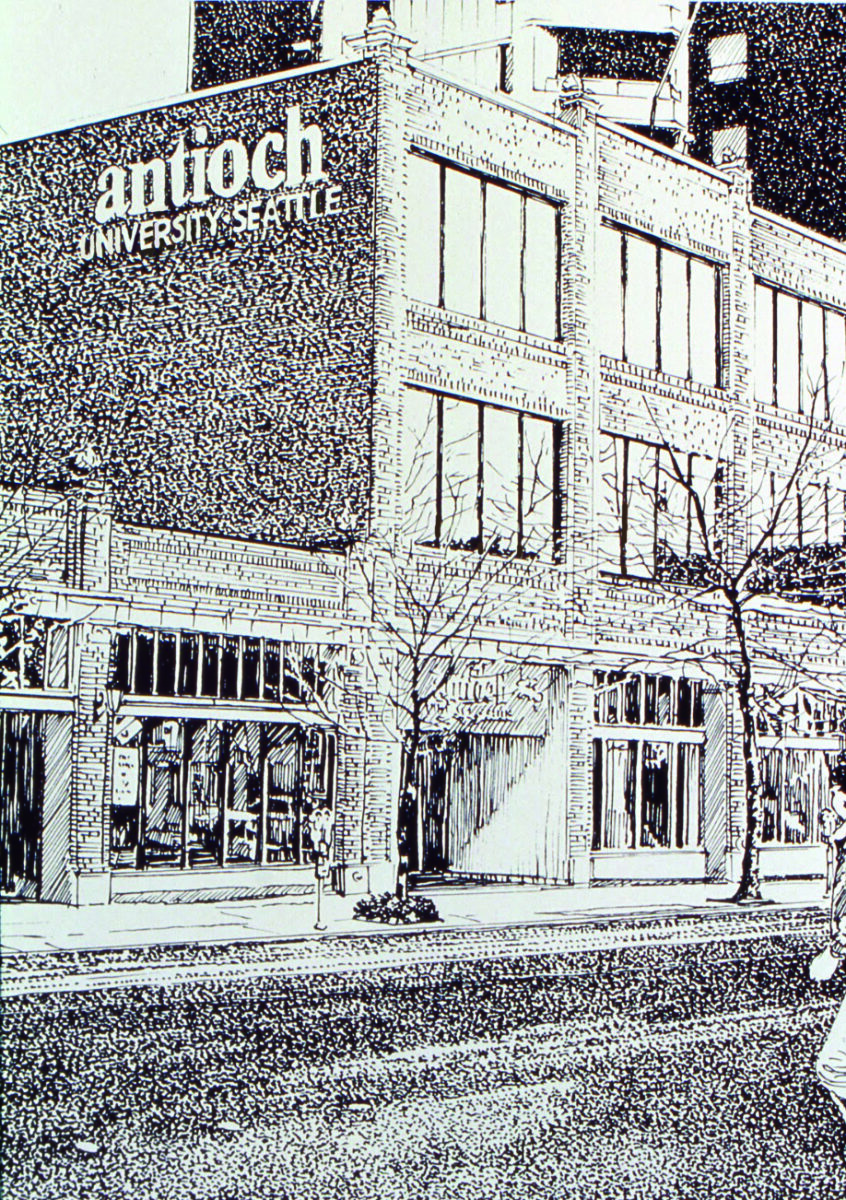
The Seattle campus began during the heyday of Antioch’s efforts to take its mission out to underserved communities across the country, a period between 1964 and 1975 during which Antioch, which had till then consisted solely of a single residential liberal arts campus in Yellow Springs, Ohio, grew to include dozens of sites and centers across the United States—and even a handful of sites internationally. Antioch University Seattle opened its doors in 1975 in the city’s Fremont neighborhood. The inaugurating class consisted of 15 students enrolled in three programs, focusing on non-traditional education for adult learners.
While still a student at the College, Lance Dublin ’73 (College, BA) helped establish the College’s presence on the West Coast. The times called for experimentation, both in higher education and in the country more broadly. The locations up and down the West Coast were part of that experiment, with each of the start-up centers emerging in different ways. In the case of Seattle, the founders saw opportunities to bring innovative, mission-aligned educational practices to new communities, ultimately choosing Seattle as the location.
Dublin recalls, “Seattle was a large geographic center, and it just so happened my brother, Kirk Dublin, lived there. We were able to launch Antioch Seattle by putting a telephone in his basement. My sister-in-law, Grace, had just delivered a baby and had time on her hands. So Antioch Seattle began with a phone in my brother’s basement in Kenwood, ‘manned’ by my sister-in-law while she was taking care of her first child. We moved out of their house when we had our first group of students and were able to rent a facility. My sister-in-law stayed on as staff.”
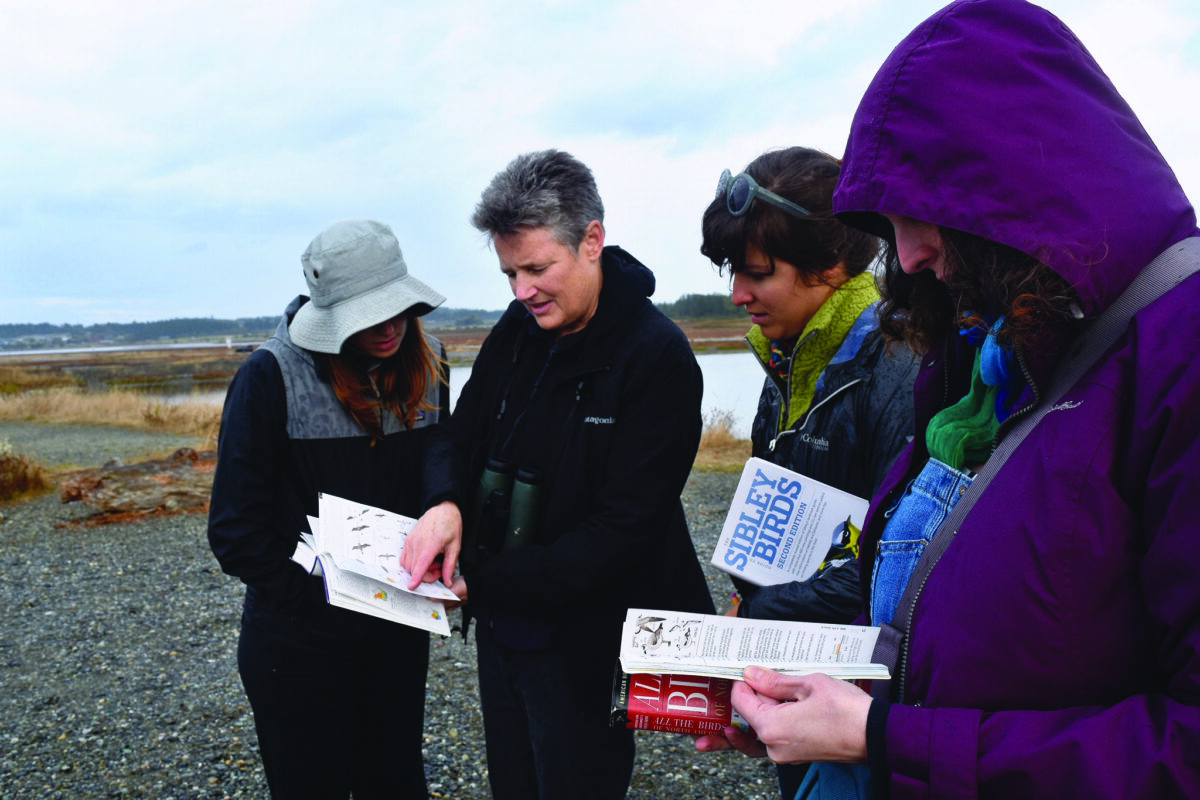
Once established, the campus needed structure and someone to hire and lead faculty and staff as the first students began to enroll. Dean Elias, who passed away in January 2026, was the first director. One person who worked with Dean Elias in many roles over many years was Sue Woehrlin (Seattle, MA). After earning master’s in psychology, Woehrlin served for decades as Core Faculty and Chair of the campus’ Undergraduate Studies Program, and now holds Faculty Emeritus status. Elias was first her advisor and teacher, and later her mentor and boss. Reflecting on his early vision for the campus, Woehrlin notes that Elias “clearly brought the values of participatory engagement and helped marry the kind of personal transformation that was so big in the ’70s and ’80s with the long history of social justice.” Elias was also deeply steeped in systems theory and systems thinking. The campus soon launched the unique and innovative Whole Systems Design master’s program, part of the Center for Creative Change (C3) group of graduate programs. Over the years, Antioch Seattle became known for its undergraduate offerings, education and psychology programs, and the Center for Creative Change.
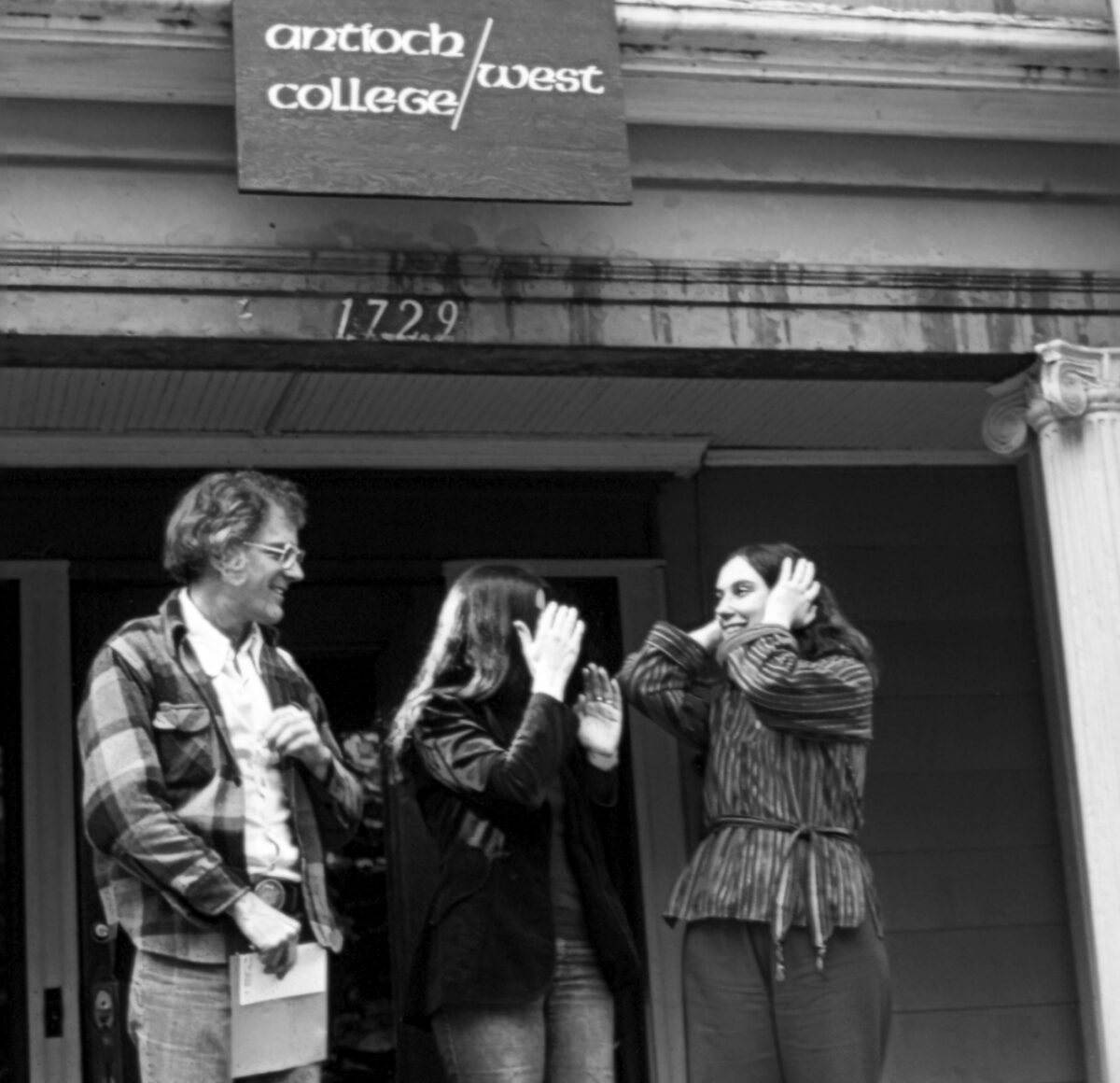
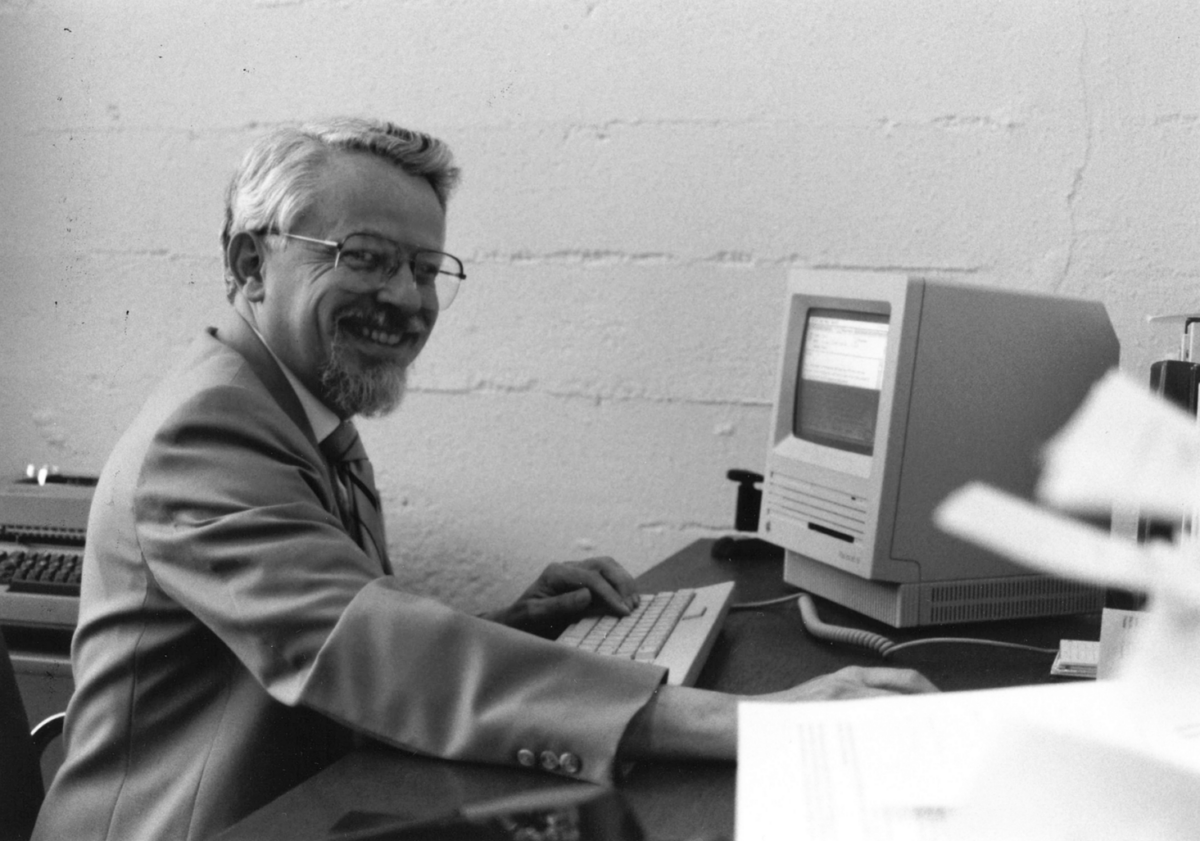
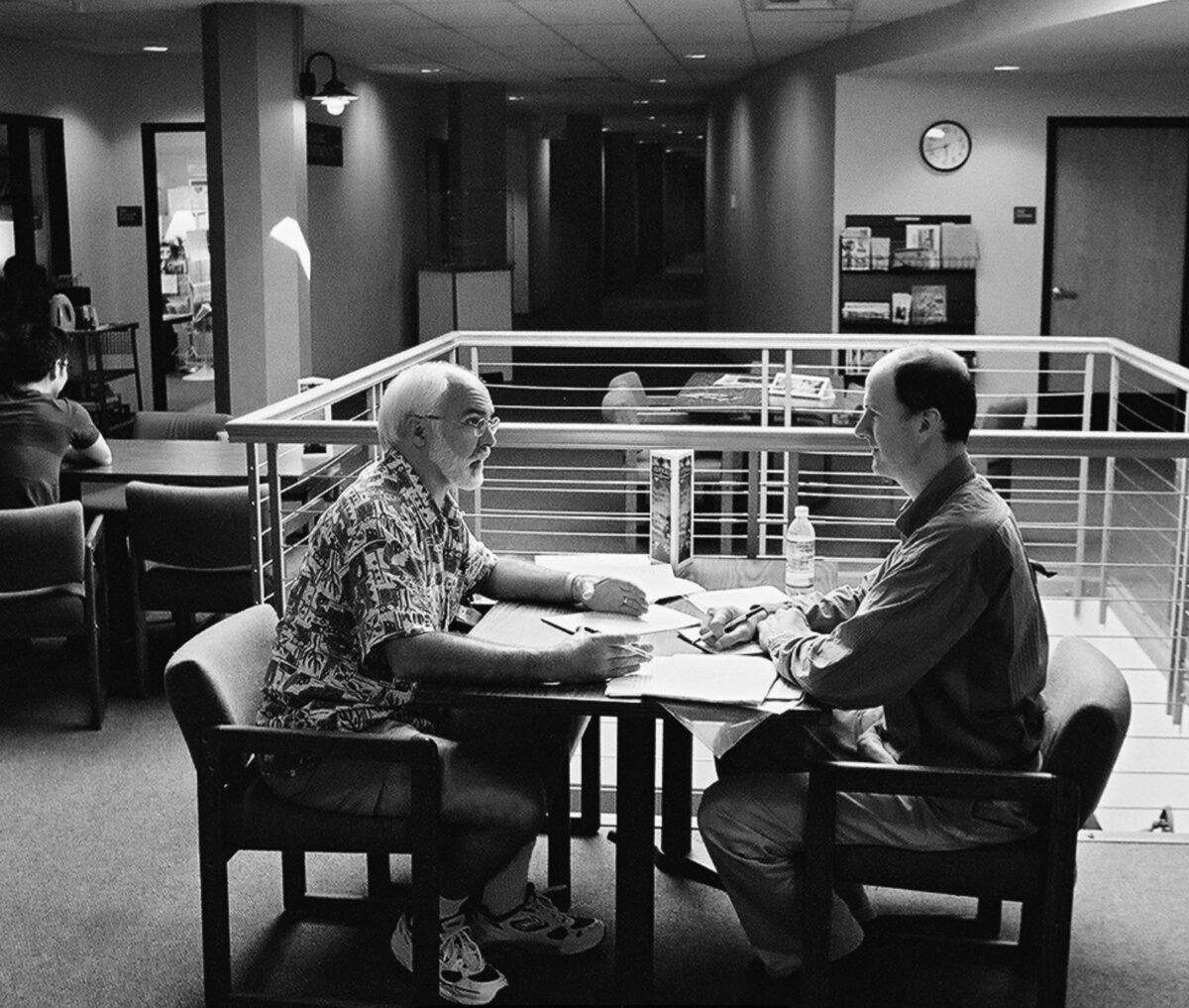
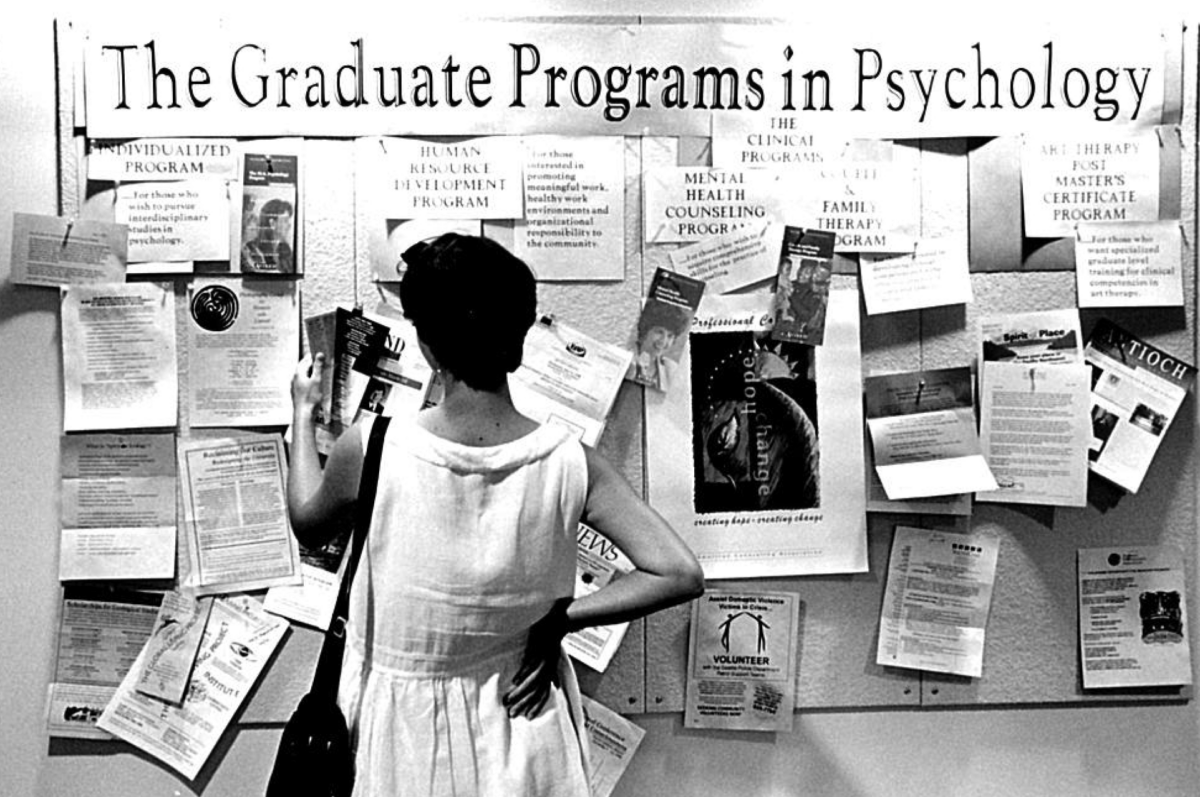
Antioch Seattle has moved a number of times since those early days in Lance Dublin’s brother’s house. The moves included multiple rented spaces from a location in the Wallingford neighborhood, an old steam plant on the east side of Lake Union, and for a time, an old piano warehouse on 2nd Avenue. The campus, both in terms of programs and students, kept growing, and the need for more space continued. Antioch finally bought a building on 6th Avenue, which was the campus’s home for many years. After it was sold to developers, massive residential towers were built on the site where our three-story building once stood. In 2016, Antioch Seattle moved to its current location on 3rd Avenue.
The physical moves, the pandemic, and changes in the work environment have meant that today’s campus building is different. The space is smaller. Ingrid Ingerson ’13 ’23 (Seattle, BA, MEd), who currently serves as Antioch’s University Director of Continuing Educations, says, “It’s gorgeous here, but it’s designed and very streamlined and very modern. The former campus was a bit more folksy. It was like sort of moving from your family home into an apartment in the city.”
Antioch University Seattle has from the start been designed to serve non-traditional students, typically adult learners often coming back to complete their undergraduate degrees or enter master’s programs after having been away from higher education for years. At the start, this was about “pushing the boundaries on getting education to working adults,” says Dublin. It was the time, it was the moment, it was the place.
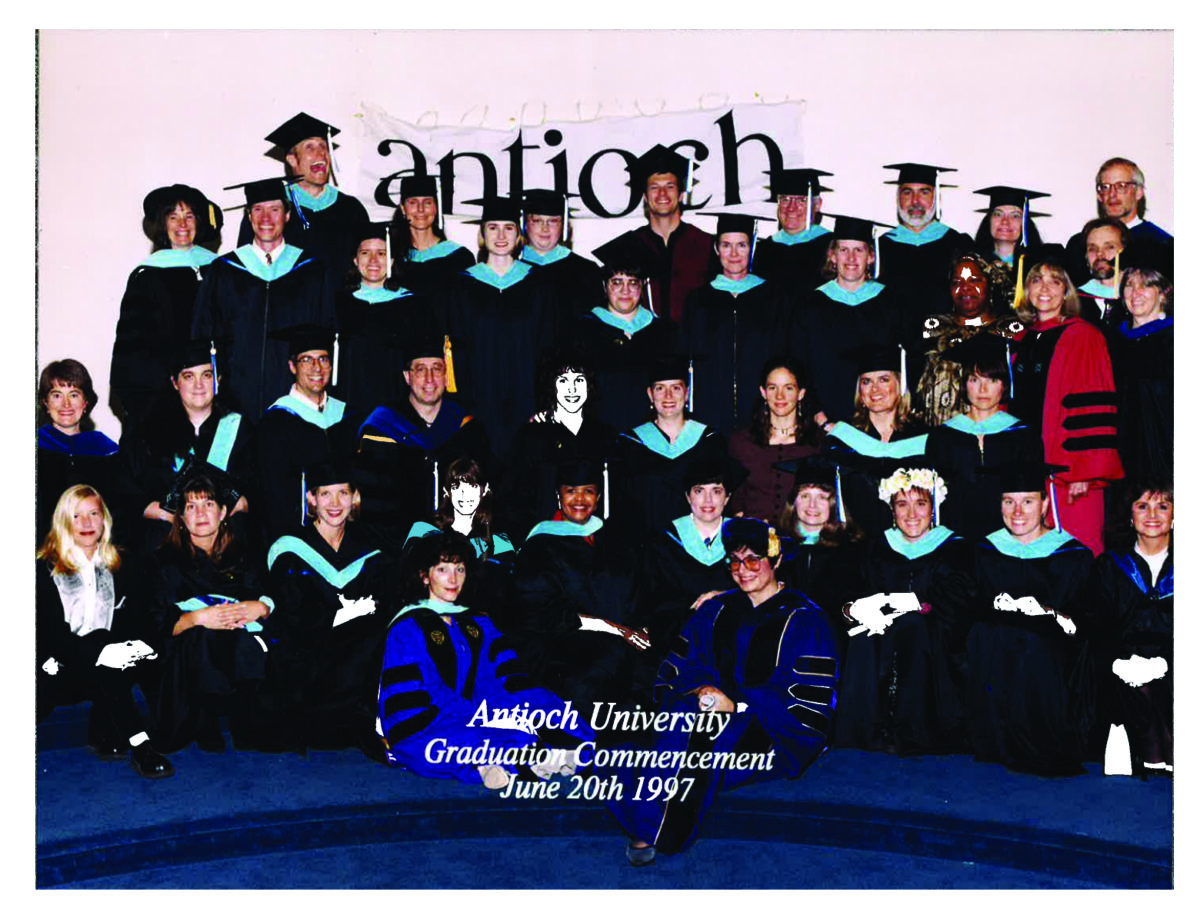
Mark Hower ’98 ’12 (Seattle, MA; GSLC, PhD) started off as Core Faculty and Chair at Antioch Seattle beginning in 2000 and later served as the campus’s Interim President. (He went on to serve as CEO and Provost of Antioch University Los Angeles, and then as California Divisional Dean of Antioch’s School of Counseling, Psychology, and Therapy.) Reflecting back on his early years in Seattle, Hower says, “The staff, faculty, and the students were fantastic. They were usually non-traditional students in terms of age, accomplishments, and life experience. I remember thinking just how brilliant they were and how much maturity and insight they brought to class.”
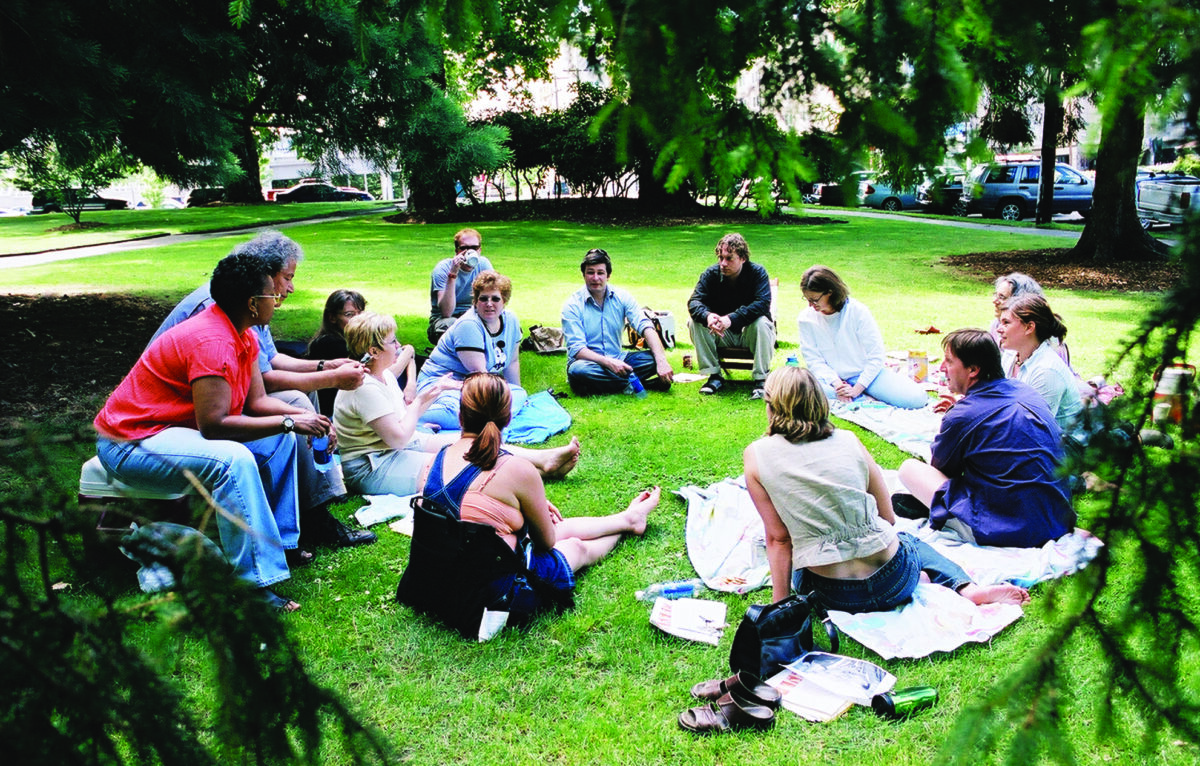
Faculty and staff worked hard to ensure that students felt heard, seen, and respected. Ingerson, who began at Antioch University Seattle as a BA student, later earned her MEd at the campus, and has long worked at Antioch, says that the campus first attracted her because it offered self-directed learning for adult students who needed their education to reflect not only their life experience but also their interests. She loved how her classmates wanted to make their degree program an essential part of their lives. “I’ll never forget,” Ingerson shares, “when one of the admissions counselors said to me, ‘Coming back to school is like switching the gravity from things that are outside—your family, your job, your relationships, your community —to switching that gravity to yourself.’”
The tradition of student-centered, adult-learner-focused education that has long permeated Antioch University, along with a commitment to social, racial, economic, and environmental justice, has always formed the foundation of Antioch University Seattle. As Sue Byers, current Associate Provost of Antioch Seattle and Chief Student Affairs Officer, says, “The commitment to equity and social justice is just wonderful. Seeing Antioch and its students so active and involved in the broader context of things feels very important. It’s not just some pledge that we put on our wall. We live this out.”
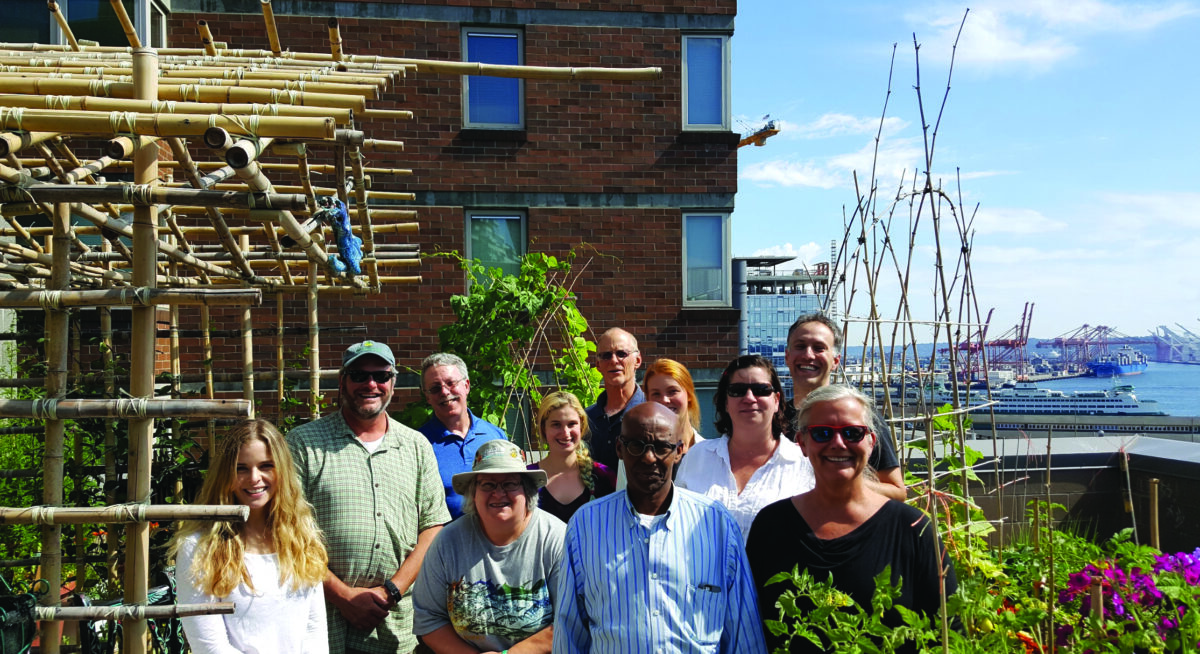
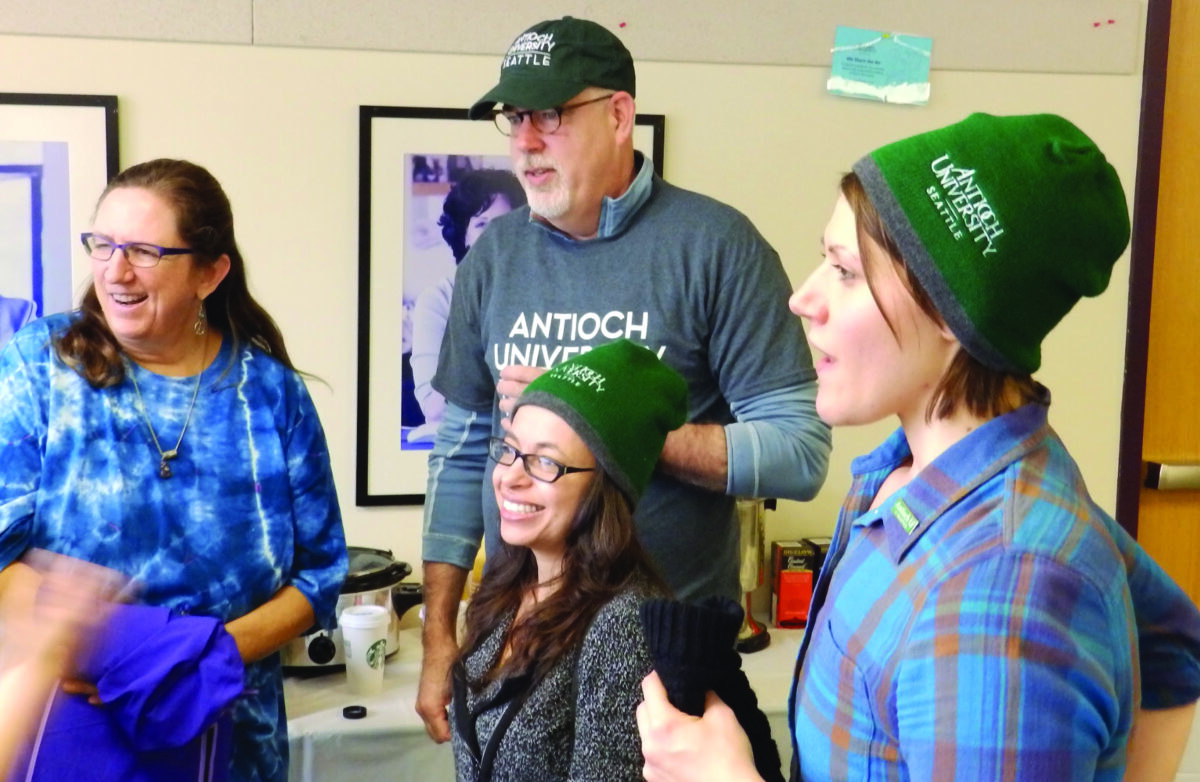
Antioch University Seattle’s legacy is deeply connected to its local partnerships with organizations and communities. Over the years, the campus has served those from marginalized populations, including offering programs for women, children, the unhoused, and veterans. For the local unhoused population, Antioch University Seattle used to provide access to computers and lunches on Soup Day. The campus had collaborations with a school where the children who were homeless could get clothing. The Seattle campus also served as a hub for marginalized women, offering a women’s education program.
In the early 2000s, the campus partnered with the Muckleshoot Tribal College, which had been established in nearby Auburn, Washington, in 1997. The partnership emerged through conversations between the Native American community south of Seattle, which had established the Tribal College, and Antioch University’s Center for Creative Change. Hower and Shana Hormann, who at the time was a Seattle Core Faculty member, traveled weekly to the reservation to teach classes.
Given Antioch’s educational philosophy, both students and faculty brought their life experiences into the learning environment. Hower noted that the experiences of the Muckleshoot students created a rich and powerful approach. “At our first meeting, we went around the circle, and everyone shared a little about themselves and why they were interested in the program,” Hower recalls. “Nearly every student said something like, ‘I want to get a degree so I can help my tribe and contribute to my family and community.’ It occurred to me that they were creating their learning community partly because they already had a strong community outside of the classroom. It was really powerful.”
Antioch University Seattle’s partnership with Muckleshoot Tribal College was not the only example of Antioch’s engagement with indigenous peoples’ lives and educational goals. Some years later, in 2007, the campus hired as its president Cassandra Manuelito-Kerkvliet, who had the distinction of being the first Native American to ascend to the presidency of an accredited university outside the Tribal College and University System. “Unfortunately,” Manuelito-Kerkvliet notes, since her tenure, “no one has filled that spot again in the nation.”
Manuelito-Kerkvliet remembers getting a call inviting her to apply for the presidency. (At the time, Antioch University was organized as a confederation, with each campus having its own president, leadership structure, and significant autonomy.) When she considered applying for the job, she didn’t really know anything about Antioch. But soon she learned about Antioch’s history of inclusive education, for which it had been known since the 1850s. As she explains, “It opened its doors, and it allowed Blacks and women to be among a student body. And it allowed a woman to sit on the Board of Trustees and a woman to have a seat at the table with the faculty. I just thought, that’s amazing for the 1800s.”
“I threw my hat in the mix,” she remembers. And soon she was hired as Antioch University Seattle’s president. As president, Manuelito-Kerkvliet approached her leadership and decision-making process as if she were “weaving a Navajo rug,” she says. She stood firm in her values, worked across disciplines, and demonstrated the integrity to walk her talk. She describes this philosophy as “walking in beauty.” By that, she does not mean superficial beauty, but rather “walking in balance in your intellectual, emotional, spiritual, and physical parts of your being.” During her presidency, she shared this concept widely, encouraging others to remain in balance. “I think it really resonated with everyone,” she says, “because there wasn’t pushback. They were curious.”
Manuelito-Kerkvliet served as the Seattle campus president until 2013. Today, as she reflects on the power of Antioch and education more broadly, she shares words from her great-great-grandfather, Chief Manuelito. Chief Manuelito signed the Navajo Treaty of 1868, four years after federal troopos forced the Navajo people to march over 300 miles to a prison camp in the Southwest. He believed deeply in the importance of education, says Manuelito-Kerkvliet. Chief Manuelito said, “Education is the ladder to success. Tell my grandchildren to climb the ladder.”
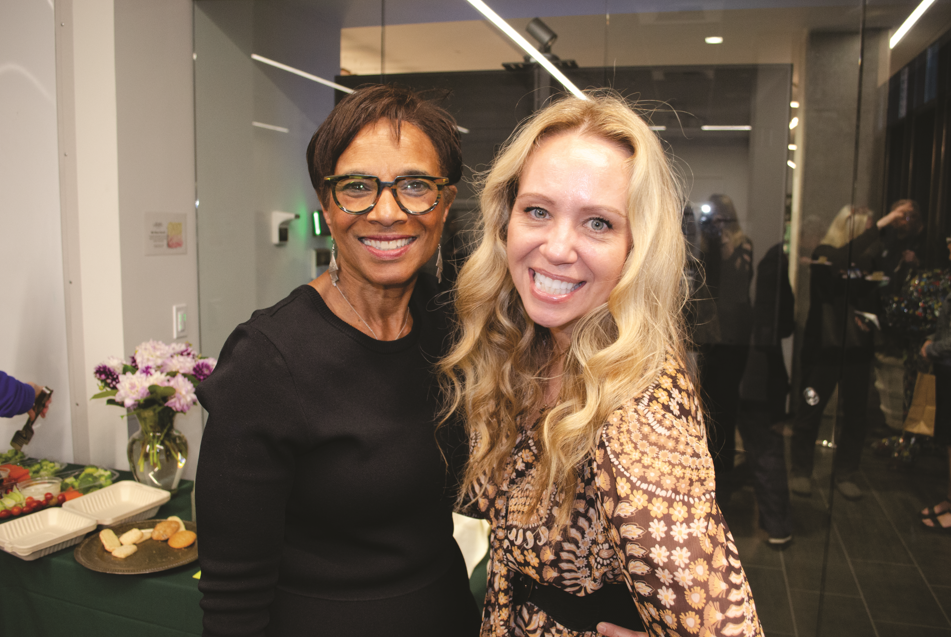
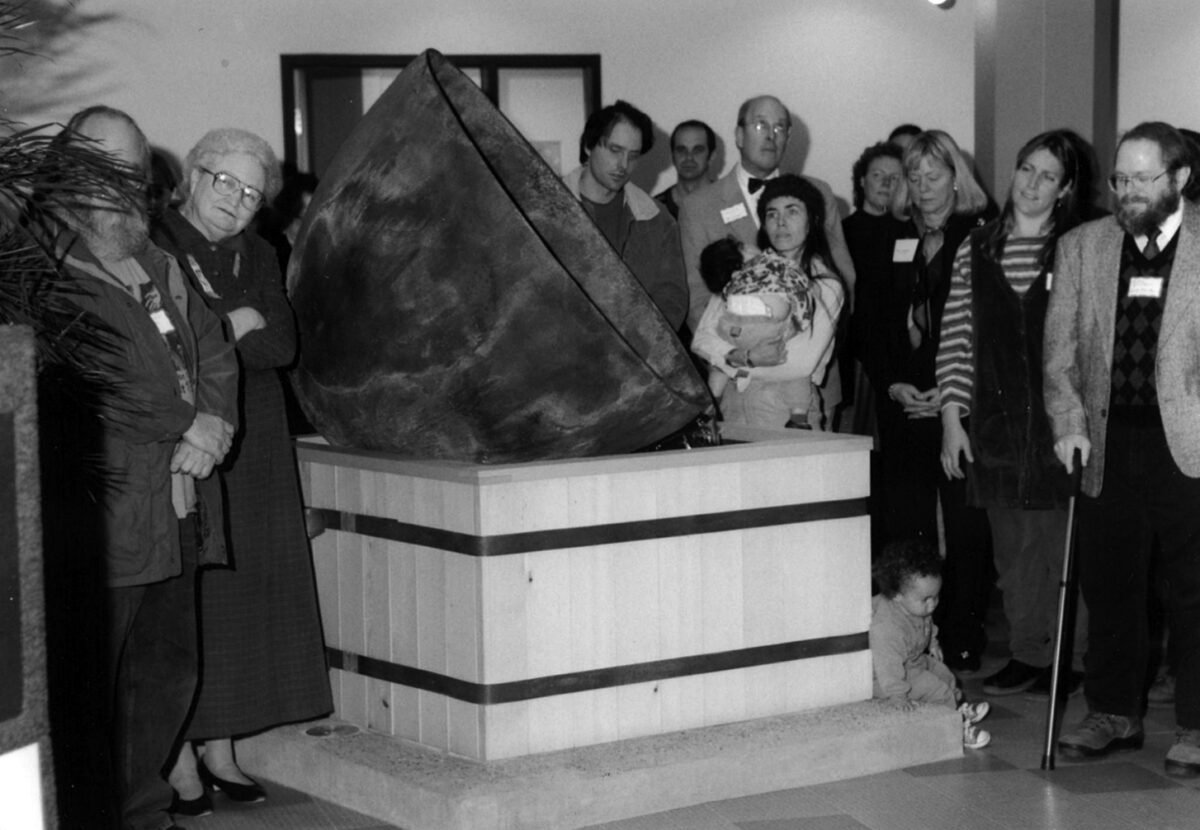
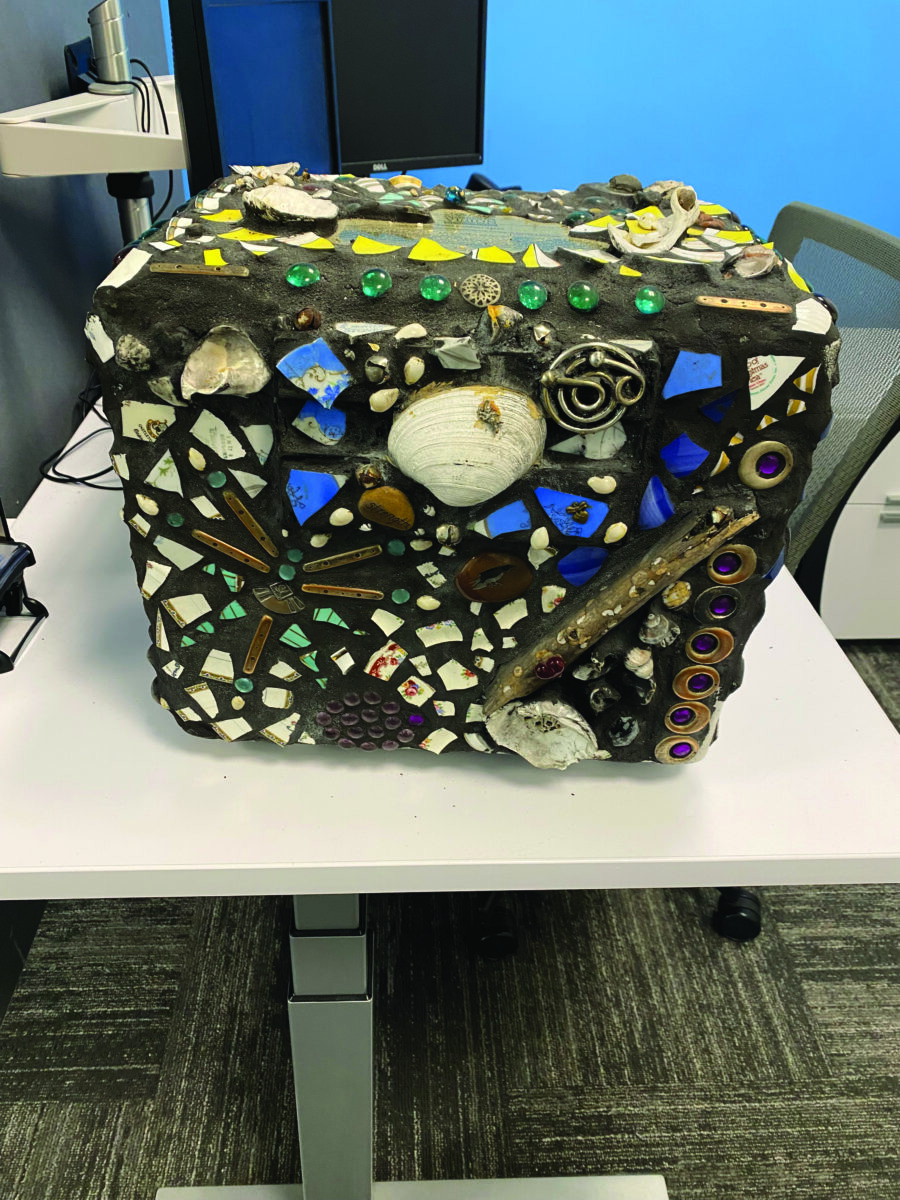
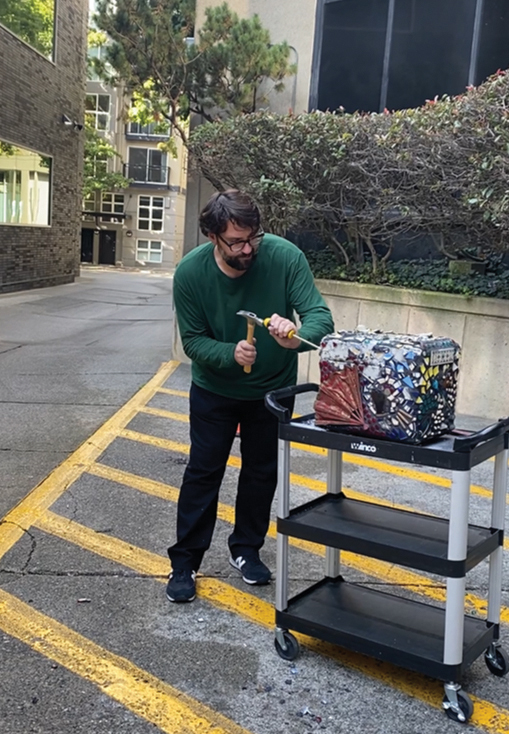
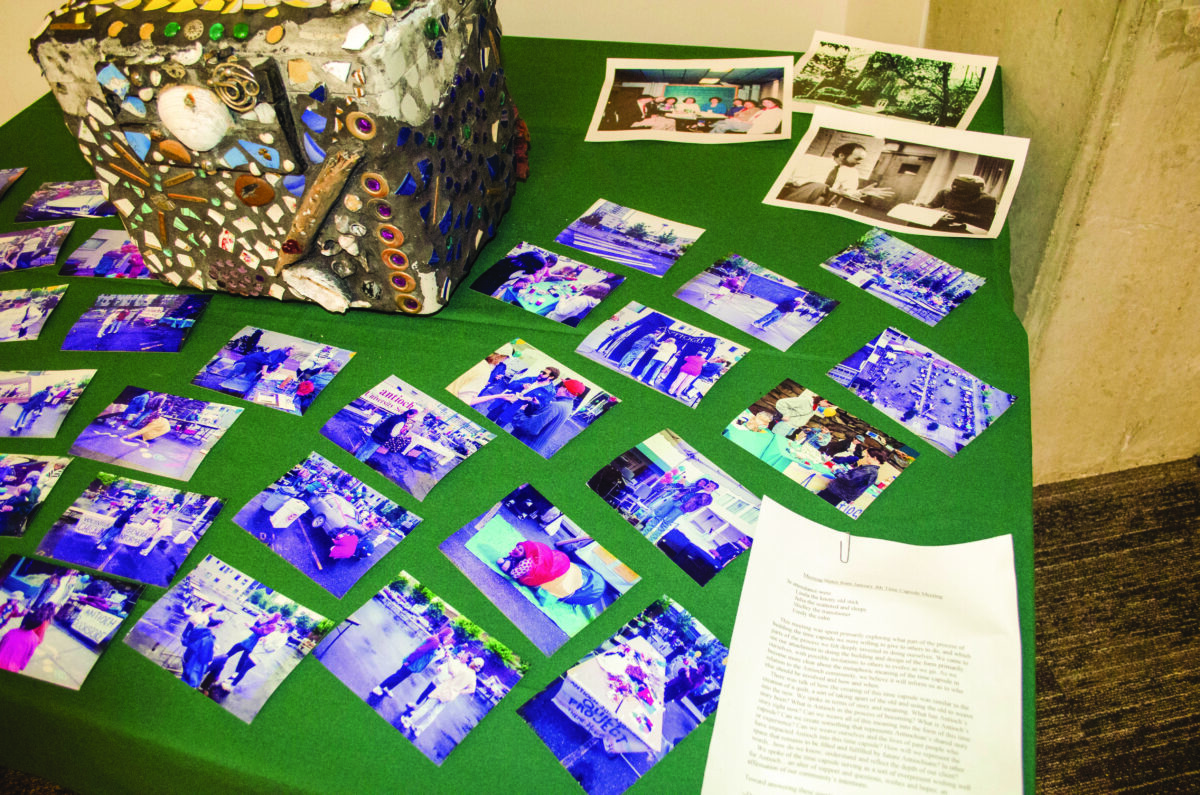
Memories of past eras and dreams of the future flowed freely at the 50th anniversary gathering last October. That event gathered many of those whose memories are shared in this article. Attendees especially celebrated the campus’ rich history and legacy of deep engagement with the city and region in all its diversity and specificity. As those gathered took time to reflect on what had come before, they got to be present for the physical opening of a time capsule dating from the ’90s that was filled with artifacts from the era and student messages expressing hope for the future of the world—and of Antioch University.
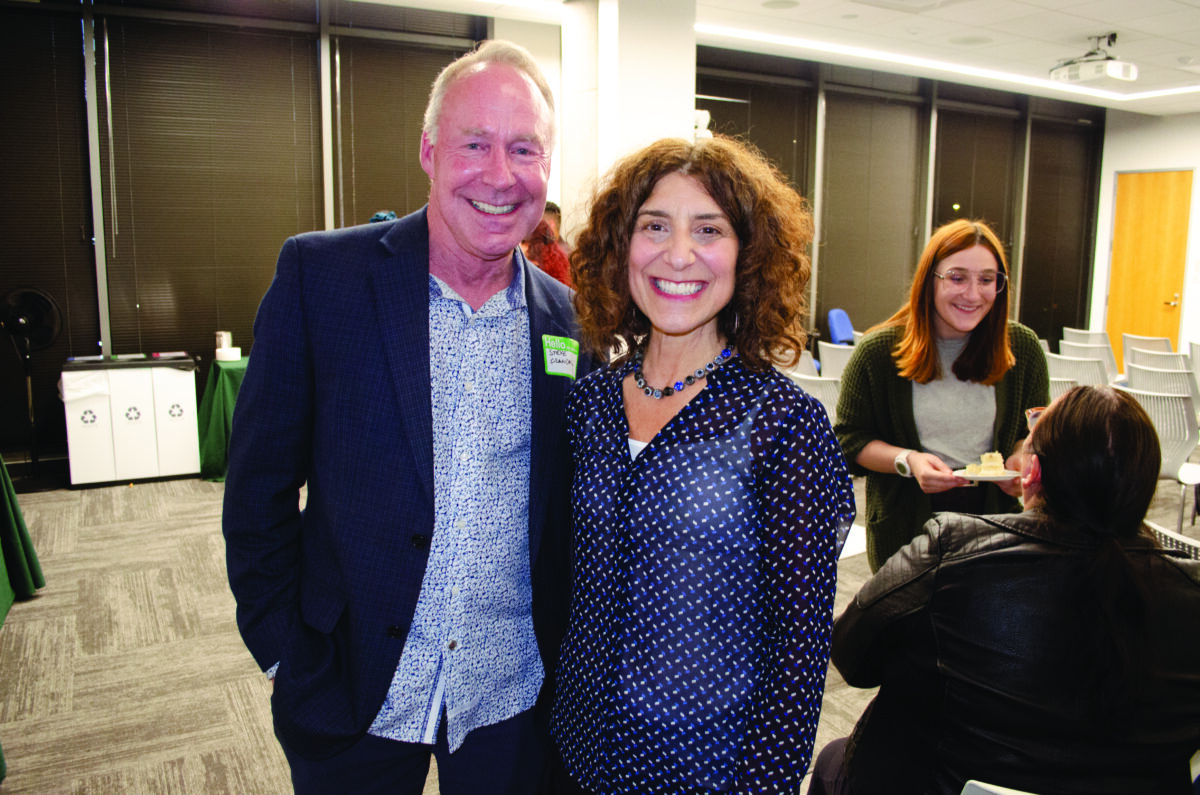
Attendees used the anniversary gathering to share their own dreams for the future. This sense of possibility was heightened by the presence at the event of Antioch University’s new President, Lori Varlotta, who shared about her love and enthusiasm for the institution.
Reflecting the powerful spirit of the gathering, Sue Byers shared what was on the minds of many Antiochians in the room that day: “I hope that we remain true to our mission. I believe that we will. That we’ll continue to support our community and live out our commitments beyond these walls. I hope that remains a hallmark of our University, and that we continue to make a difference.”
Odin Rasco
Odin Rasco is a writer, journalist, and comedian. He lives in the foothills of northern California.
Laurien Alexandre
Over her 35 years at Antioch University, Laurien Alexandre has held positions ranging from Academic Dean of Antioch Southern California and Founding Director of the PhD in Leadership & Change to Founding Dean of the Graduate School of Leadership & Change and Vice Chancellor of Academic Affairs. After stepping away from the Graduate School in 2024, Laurien has been working on University-wide communication efforts for Antioch and for the Coalition. She lives in Los Angeles with her husband, Henrik, and labrador, Puni. And, apparently, she has spent time communicating with Horace!