A Q&A with Jessica Mudd of The Mudd Farm
For Jessica Mudd, an idea for making ceramics more accessible has grown into a nonprofit organization, a developing community studio, and, most recently, a significant first gift.
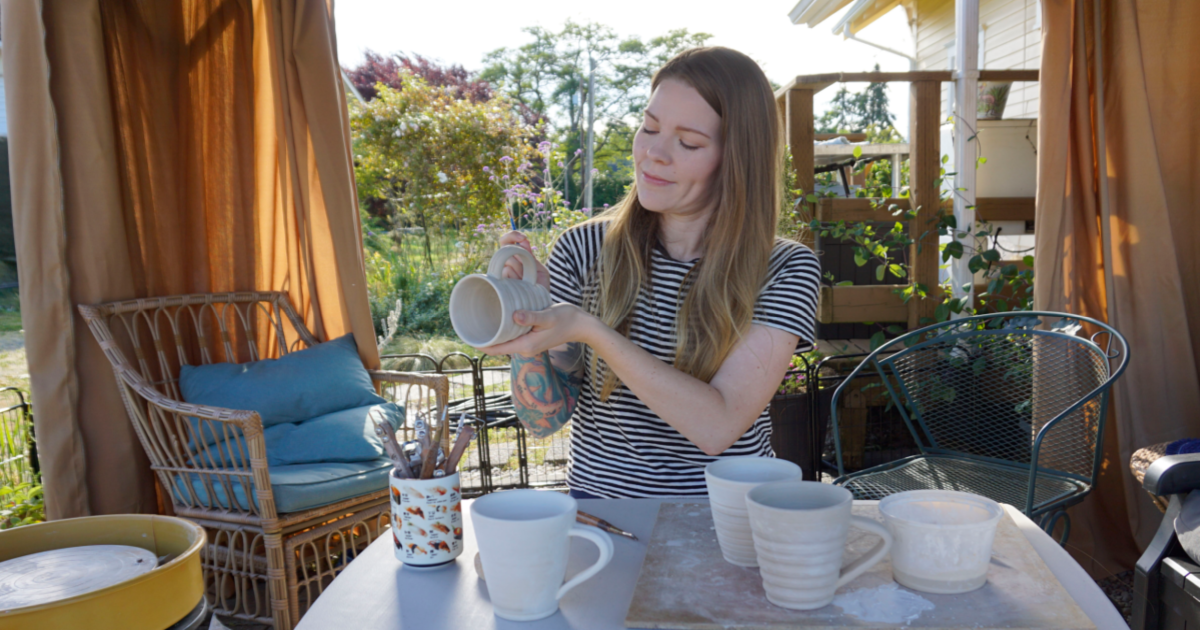
Mudd came to Antioch University with a vision for The Mudd Farm, a welcoming, creative space designed to expand access to the arts and give people of different ages and backgrounds opportunities to work with clay. Her own connection to ceramics stretches back to childhood, when she would dig clay from her backyard and experiment with firing it in her father’s barbecue. Years later, after working in retail management and caring for her grandparents, she returned to school and gained hands-on experience working as a ceramic studio technician.
At Antioch University, Mudd began turning that vision into an organization. In the Nonprofit Management course taught by Russell Thornhill, MDiv, EdD, she explored whether The Mudd Farm should become a business or nonprofit and learned about mission development, shared leadership, fundraising, and the nonprofit development cycle. She went on to establish a board, develop organizational documents, and secure state approval for The Mudd Farm’s Articles of Incorporation.
This spring, Mudd continued building her fundraising skills. When an opportunity arose, she already had a Case for Support and Fundraising Plan ready to share. Her preparation paid off when The Mudd Farm’s contractors nominated the organization for an award after learning about its mission and seeing its work firsthand. The nomination led to a $20,000 gift from Daniel Hedrick and the American Endowment Foundation.
We asked Mudd about the origins of The Mudd Farm, taking a nonprofit from idea to reality, what she learned at Antioch, and what comes next.
First, tell us about The Mudd Farm. What is its mission, and what inspired you to create it?
The Mudd Farm is meant to be a place where people can create, belong, and grow. Our mission is to create a welcoming studio that expands access to the arts and gives people of all ages and backgrounds the chance to explore creativity, develop artistic skills, and experience the healing nature of clay.
It’s the kind of space I always wished existed when I was growing up. My family is very creative, and I was always encouraged to make things. I used to dig clay out of the backyard and fire it in my dad’s BBQ just to experiment, but pursuing actual art education felt impossible because of the cost barriers of living in a very rural farming family.
After graduating from high school, I spent almost a decade in retail management and later transitioned into a caregiver role for my grandparents. Even during those years, I felt pulled back toward creating as a way to balance stress and stay grounded. Eventually, I was able to attend the local community college with financial aid, and a work-study position placed me in the ceramic studio as a technician. Working behind the scenes gave me a real understanding of what it takes to run a studio. I managed kilns, mixed glazes, recycled clay, and helped other students troubleshoot their projects. That experience showed me how much technical support and access matter in a creative space, especially for beginners.
After graduating, I found a second-hand wheel and kiln and turned my basement into a small studio. I could keep making my art and caring for my family, but I saw how hard it was for others to access ceramics. The equipment is expensive, the electrical setup requires an electrician, and many artists just don’t have the space available. People started reaching out to me for kiln sharing and troubleshooting, and soon, there was a small group encouraging me to create something bigger, and that’s when we started to build on our idea and create the studio.
What role have ceramics and creative expression played in your own life, and how did that influence your vision for The Mudd Farm?
Creativity is how I express my inner world. Working with clay, or any hands-on process, gives me a way to explore my emotions and curiosity in a physical way. I love experimenting, trying new techniques, and letting myself follow whatever idea shows up. I also enjoy creating alongside other people. We share stories, teach each other, and help keep the space operating, which is so similar to my childhood growing up on a farm.
When I got into ceramics more seriously, I realized how much there is to learn. The oldest known fired clay objects date to about 28,000–31,000 years ago, from Paleolithic Europe. There are so many different ways to create ceramics—handbuilding, wheel throwing, sculpting, firing, glazing—each with its own traditions and techniques. You need a team to make things happen, people loading kilns, mixing glazes, helping each other learn new skills. It’s very collaborative and involves the whole community in different ways. Those concepts really inspired me to take something that started as a small idea and grow it into something larger that I could share.
When you entered Russell Thornhill’s Nonprofit Management course, where were you in the process of developing The Mudd Farm? What did you have at that point—an idea, a plan, something more?
At the start of class, I was still trying to figure out what The Mudd Farm should be exactly, whether it made more sense as my own business or structured as a nonprofit. I had spent the last several months visiting pottery studios in nearby towns, talking with owners and members, and paying attention to how each space operated. The nonprofit studios especially stood out to me. They felt more focused on long-term growth supported by the community, and I liked the idea of having a team of board members to collaborate and grow our vision.
This course helped me sort through those options and feel more confident in my decision. It gave me a clearer understanding of what a nonprofit actually is and how it operates as a mission-driven organization built to serve a community rather than an individual owner. We talked a lot about what it means to define a mission, how values guide decision-making, and why nonprofits rely on shared leadership. That helped me see how The Mudd Farm could grow in a way that wasn’t just about me and my own personal goals, but about the people who would be part of it now and in the future.
You used the coursework throughout the semester to actively build the organization. Can you walk us through that process and some of the milestones you reached along the way?
Throughout the course, the development cycle became the framework I relied on the most. It’s a process nonprofits use to grow support and stay connected to their mission. The stages include acquisition, cultivation, solicitation, and stewardship, and learning how they work gave me a way to understand what I was building and how to move forward.
Using that cycle helped me break everything down into small, doable steps instead of getting overwhelmed by the bigger picture. Acquisition was simply about noticing who already cared about ceramics, creativity, and community. That included past students, local artists, families, and educators who were already part of my world. Cultivation became the center of the work. I spent most of my time shaping the mission, talking with people, visiting other studios, and paying attention to what our community actually needed. Each conversation and each visit helped me understand the direction the organization wanted to grow.
The milestones I reached came from getting clear about what the organization needed in order to grow. I spent time defining the leadership roles that would support the work, setting networking goals that fit what we were building, and forming the relationships that would help carry the project forward. The development cycle gave me a resource I could return to whenever I felt unsure, and it helped me keep things moving in a steady, manageable way.
Were there particular assignments, discussions, readings, or lessons from the course that changed the way you thought about The Mudd Farm or helped you overcome a challenge?
Learning about the Case for Support, and then writing my own, helped me understand what The Mudd Farm is doing, who it serves, and why it matters. When I described the lack of creative opportunities in our area and connected that to the role creativity plays in healing, mental health, connection, and development for people of all ages, the importance of the work became much clearer. Seeing everything organized in one place helped me recognize that the programs I’m building are realistic, needed, and capable of making a meaningful impact.
The stories Russell shared in class about his own experiences, along with our discussions, helped me talk about my idea with more confidence. They made the mission feel real instead of something I was only imagining. The Case for Support also gave me a resource I can share with other members of my team, which has been incredibly helpful.
Writing the Fundraising Plan showed me that fundraising is not just about asking for money. It’s about finding the people who care, building relationships with them, and keeping them connected to the growth of the organization. Understanding that made the process of asking for financial support feel much less intimidating. Having these documents organized has also made applying for grants and funding much easier, and it has given me a clearer path forward as The Mudd Farm continues to grow.
The course allowed you to move from theory to real-world application. What was it like to complete assignments that weren’t simply academic exercises but were actually helping you build something you planned to launch?
I genuinely enjoyed the process, especially knowing these documents would become part of the foundation of my nonprofit and help me work through what originally felt like an overwhelming checklist starting from scratch. Getting real-time feedback from Russell and my classmates made the experience even more helpful. Their questions and suggestions pushed me to refine my ideas, clarify my language for government applications, and dive deeper into sections that needed more thought and development.
One thing I really appreciated about the course was how different each classmate’s nonprofit ideas and backgrounds were. We all came in from completely different directions, but as we worked through the assignments and shared feedback, we started to see where our projects naturally overlapped. Seeing those connections made me think about the kind of future we’re all trying to create that’s more hopeful and community-focused. It also helped me recognize how much passion I have for my own project, and it meant a lot that Russell and my classmates could see that and encourage it throughout the process.
By the end of the course, you had developed a functioning board, drafted bylaws, created a project plan, and were on your way to registering the organization with the state. Which part of that process was the most challenging, and which accomplishment felt the most significant?
The biggest accomplishment was getting the Articles of Incorporation approved by the state and seeing The Mudd Farm printed on the certificate. I had to set up accounts on all the required state websites and navigate a maze of documents and forms, but I felt like I had everything I needed from the course to move forward. When the approval finally came through, I remember emailing Russell because I was so excited. That moment made everything feel real in a way it hadn’t before, and even though the next set of complicated steps were still ahead of me, I felt prepared.
The hardest part of the process was building the board and defining the roles and responsibilities. I had a few other moms who were interested, but because we were still so small and building everything from the ground up, it took a lot of effort to help us all develop a shared nonprofit mindset. We were juggling limited time and learning together as we went, and I often had to guide the group while figuring things out myself. Having the documents and resources from class made a huge difference. We could share them, talk through them, and use them as a foundation to move forward as a real board. That support helped us take our first steps as a team instead of me trying to carry everything alone.
You recently returned for a fundraising workshop as you continue building the organization. What are you learning now about the fundraising side of nonprofit work, and how do you hope to put that knowledge into practice?
Lately, I’ve been realizing that fundraising is really about building relationships and being actively present, which can feel a little intimidating at first. As The Mudd Farm became officially recognized as a 501(c)(3), I started focusing more on networking and making sure people actually know what we’re doing and how they can be part of it. Becoming certified made everything feel more real, and it gave me a stronger foundation to stand on as I talk about our mission.
When the opportunity for funding came up, I already had my Case for Support and Fundraising Plan ready to share. That preparation made a real difference, because our contractors nominated us for an award after hearing about the mission and seeing the work firsthand. Their nomination led to a $20,000 gift from Daniel Hedrick and the American Endowment Foundation, which was an incredible encouragement. It reminded me that being ready opens doors, and that people often step forward when they understand the heart behind what we’re building.
I hope to start reaching out to potential sponsors and building relationships with the groups we plan to serve. Local youth programs, senior living centers, and other spaces that support creativity and connection feel like natural partners for the kinds of opportunities we want to offer. The workshop gave me a better sense of how to approach these conversations with confidence, and I’m excited to use that as I keep expanding our network. My hope is that these connections, along with the support we’ve already received, will help us reach more people and open up new opportunities to grow and connect.
The Mudd Farm is focused not only on access to the arts but also on strengthening community well-being. Why was it important to you that the organization serve people of different ages, backgrounds, and experience levels?
I’ve always wanted The Mudd Farm to focus less on skill level and more on the experience of making. The real value is in giving yourself the time and space to explore, to follow your curiosity, and to feel inspired by what your hands are creating. Everyone deserves the chance to experience that kind of ease and openness. Over the years, I have seen how the arts support people in ways that go far beyond the finished piece. Creativity can calm the mind and offer a sense of connection.
Caring for my grandparents showed me how important it is for older adults to have something meaningful to do with their hands. Creative activities keep their minds active and give them a sense of involvement in the world around them. Even simple projects can brighten their day and help them feel engaged. When children have the chance to experiment and get a little messy, they are not just having fun. They are learning how to express themselves, solve problems, and trust their own ideas.
As a mother, I have also seen how much pressure parents carry and how little space there is to slow down. Creating art offers a way to settle the mind and reconnect with others in a way that feels calmer and more present. It gives people permission to pause and breathe, even if only for a short time. I want it to be a place where people can show up exactly as they are, explore at their own pace, and feel supported by the simple act of making something.
How has your experience at Antioch influenced the way you think about community engagement, access, and social impact?
My experience at Antioch has influenced the way I think by giving me a place to develop a deeper understanding of what social impact is and how I can be involved. I’ve had the chance to hear from people who are doing meaningful work in communities very different from the small rural farm town I grew up in. Listening to their experiences has helped me see barriers I have never encountered. Those conversations have encouraged me to think more intentionally about the ways people connect, the obstacles they face, and the kinds of support that make a real difference.
My degree is specifically in art and spirituality, and that focus has shaped my experience in a deeply personal way. Studying these two areas together has given me the chance to explore how my own creative and spiritual journey can become something I share with others. Antioch offered a space where those interests could be woven together instead of being treated as separate parts of my life. It allowed me to build my work around my strengths and imagine how art and spiritual practices can support community well-being by continuing to provide spaces for intention, reflection, and well-being.
What has it been like to see something that began as an idea become an officially registered nonprofit organization? Was there a particular moment when it started to feel real?
The moment was when the letters from different government agencies started showing up in the mail. Seeing those envelopes addressed to the nonprofit made everything feel actually official. Quarterly taxes needing to be filed and paid on time added to that feeling, and figuring out the accounting software became part of the process. I met with a friend who works with small businesses to make sure everything was set up correctly, and that helped me feel confident about starting to accept donations and applying for grants.
All of that made me switch gears and realize I couldn’t do everything with just my little team anymore. We needed more help and brought on an assistant for the workshops, found instructors who could teach different classes, and connected with a contractor who understood our mission and could help build the studio using reclaimed materials on a budget. It turned the original idea I had into something that keeps expanding in ways I couldn’t have imagined at the beginning.
What are your next steps for The Mudd Farm? What do you hope the organization will look like a few years from now?
My next steps for The Mudd Farm are focused on finishing the studio build. We’re close. At this point, we mainly need funding for a few more pottery wheels and enough clay to get our first round of classes started. Once the studio is fully equipped, we can open the doors and begin offering workshops and community programming on a regular schedule.
I also want to expand our outreach by connecting with different community sponsors and continuing to grow our presence around town. Having a booth at the farmers market, participating in art walks, and showing up at local events are all ways we can build relationships and make the organization more visible. As things grow, I’d like to create a small gallery space where we can show work, host rotating artists, and offer demos that bring people together around creativity. I’d also like to partner with art therapists and other wellness practitioners.
What advice would you give another Antioch student who has an idea for an organization, project, or community initiative but isn’t sure how to turn that idea into something tangible?
My advice would be to think about the big idea and then break it down into smaller steps. It’s easy to get overwhelmed when you’re looking at the whole vision at once, so focusing on what you can actually do next makes everything feel more manageable. Be patient with yourself and with how long things take to happen. There was a lot of trial and error along the way for me, and plenty of moments when I thought it might be too much to accomplish, but I kept going.
Having support and encouragement from people who believe in you makes a huge difference, so share your ideas with people who are in the same mindset. When someone challenges you or tries to discourage you, try to look at it as part of the learning process. Every skill you pick up, every problem you solve, and every adjustment you make will transfer to whatever project or idea you take on next. Things evolve, change, and grow, and that’s all part of a natural process.
Finally, is there anything about your experience, The Mudd Farm, or your time at Antioch that we haven’t asked about that you would like people to know?
I’ve really enjoyed the opportunity to create this for myself and my community. The instructors and my peers have been supportive and genuinely curious about my projects and my goals, and that has meant a lot. Building something like this can feel scary, especially with everything happening in the world right now, but it’s also shown me how important it is to stay present for ourselves and for each other. Giving ourselves compassion matters, and so does remembering that we’re stronger than we think. We can endure hard times when we come together.
For me, The Mudd Farm is part of that belief I hold. I’m building the kind of world I hope will exist for my child and for the people around me, where creativity and community are part of everyday life. This experience has reminded me that even in uncertain times, we still have the ability to create something meaningful and to shape the spaces we want to see around us.
Visit The Mudd Farm to learn more about its mission and work.