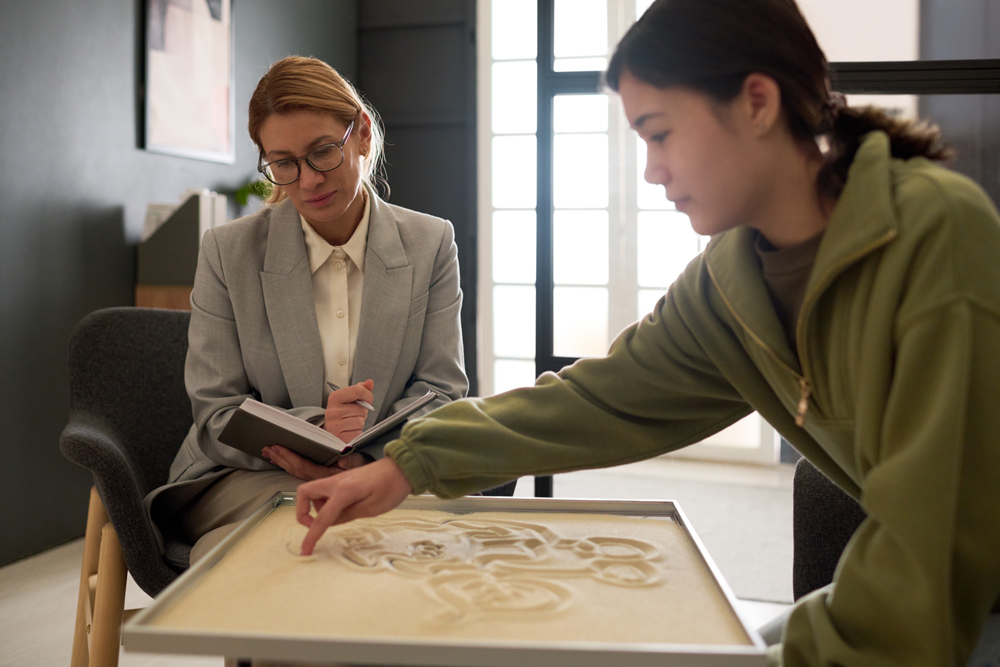


Art therapists use art making and psychotherapy techniques to help clients address mental health challenges when words alone are not enough. One day, they might help a veteran with PTSD paint their memories. In another, they could sculpt with a child who’s been removed from a violent home. The art helps these clients externalize their pain.
There are several ways to become an art therapist. Some begin with a bachelor’s degree in art or psychology. Others come from different disciplines and pursue additional coursework to meet the requirements of their graduate programs. Still others take classes in studio art methods or counseling. They may build a portfolio of artistic media or volunteer in community programs addressing mental health challenges before applying.
This guide shows the steps from portfolio to licensure. It will give you a map for choosing a graduate program, completing clinical training, and beginning to practice art therapy.
What Is an Art Therapist?
An art therapist is a mental health professional trained to use creative processes to help clients manage emotional challenges. Art therapists help their clients express their feelings visually. They work in hospitals, schools, and private practice. They’re often licensed through their state.
Art therapists work with clients like children navigating anxiety or older adults facing memory loss. Client artwork does not need to be polished. What matters is the creative process and the insight it provides.
How to Become an Art Therapist
If you’d like to be a registered art therapist, you’ll need to follow a credentialing process to practice in most states. You’ll start by assembling a portfolio, then work on your degree. Along the way, you’ll learn how to practice art therapy ethically, meeting licensure requirements. Your program will prepare you to work in a range of mental health settings. Here’s what the journey might look like.
1. Build Your Portfolio
Start with a bachelor’s degree in studio art, psychology, or a related field. Most art therapy graduate programs will add courses in studio art methods and behavioral science. Some students double-major or take electives to meet prerequisites before applying to a graduate degree program.
You may not need a perfect GPA, but you will need a compelling selection of artwork to show in your portfolio. Programs often want 15-20 pieces that show range, personal themes, and artistic media. Think high-quality sketchbooks plus digital art or painting. Focus on the expressive process over the polished product.
2. Search for an Accredited, Proven Program
Choosing a program accredited by the Commission on Accreditation of Allied Health Education Programs (CAAHEP) is non-negotiable for licensure in many states. This accreditation signals that your degree meets all Art Therapy Credentialing Board requirements for a registered art therapist application.
Most students narrow their list by looking at whether a program offers low-residency or online options. Faculty should have experience in clinical art therapy. Placement support for internships can help you start your career. It’s also worth asking how recent graduates are using their degrees. Some schools share job titles and licensure outcomes, giving you a clearer sense of your next steps.
3. Earn a Master’s Degree in Art Therapy or a Related Field
Once you’ve narrowed your list to accredited graduate programs, it’s time to apply. Most states require a master’s degree in art therapy, counseling, social work, or a related field, with specific coursework in art therapy. Competitive programs may admit only a few applicants and require extensive prerequisites and an in-person or virtual interview.
A master’s of science or master’s of arts in art therapy can take several forms. You might also pursue a counseling or family therapy degree with an art therapy concentration. Each option includes coursework in core art therapy techniques, human development, group therapy, and ethics. You’ll also develop a framework that connects your creative process with your clinical goals.
4. Complete Your Practicum and Internship
Art therapists must complete at least 100 hours of practicum. They also need at least 600 internship hours in clinical or school work. You might fulfill these hours in hospitals, schools, domestic violence shelters, or private practices.
You’ll start to shape your professional identity during these placements. It’s also where many students find their preferred client populations or treatment settings. You’ll apply theory in clinical scenarios and build a network that can lead to post-graduate job offers.
5. Apply for ATCB Board Certification and State Licensure
You can apply to become a Registered Art Therapist (ATR) or a Registered Art Therapist–Board Certified (ATR-BC). Some states require additional licenses, such as a Licensed Professional Counselor (LPC) or a Licensed Mental Health Counselor (LMHC). Research your state requirements carefully.
Some states legally protect the title “art therapist” and require both ATR and state licensure; others regulate only clinical practice, not the title. You’ll need a state license either way if you plan to work in private practice. Earning dual credentials allows you to bill insurance and meet licensure requirements in more states.
6. Pursue Dual Credentials for Broader Job Options
You can increase your job opportunities by combining your art therapy credentials with a counseling or social work license. Dual programs give you the flexibility to work across settings or bill insurance. Some graduate programs are designed with dual credentialing in mind.
Antioch’s MA in Clinical Mental Health Counseling with an Art Therapy Concentration is CACREP-accredited. It’s low-residency, so it also supports working adults. The curriculum blends studio art and multicultural counseling. You’ll graduate with dual licensure and job placement assistance. Explore the program here.
What Does an Art Therapy Curriculum Include?
Antioch University’s art therapy curriculum can teach you to assess and guide clients through complex emotional processes. Coursework applies counseling theory to studio-based projects. The goal is to build skills in using visual language to support healing.
- Theory & History: Art therapy theory and evolution of clinical practice
- Studio Art: Regular studio-based projects in multiple art media
- Creative Process: An exploration of your artistic expression
- Multicultural Competency: Training in cultural humility
- Group Therapy: Facilitation and therapeutic alliance in group settings
- Assessment: Psychological testing and assessment techniques for patients
- Research: Data analysis and evidence-based art therapy approaches
- Trauma & Diagnosis: Courses addressing trauma stewardship and diagnostics
- Final Project: Thesis or creative capstone demonstrating expertise
Where Art Therapists Work
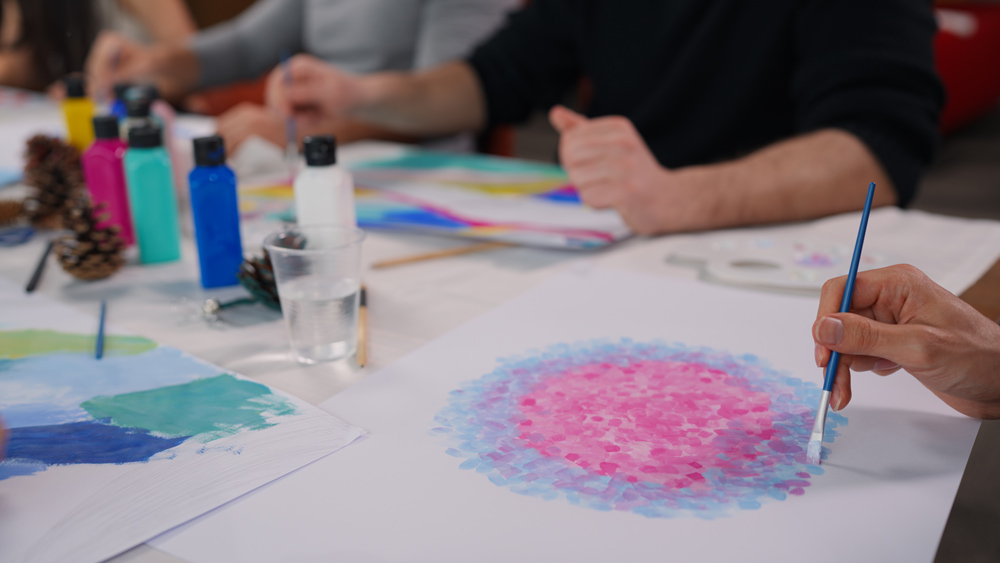
Art therapists work in settings like hospitals and private practice. Some roles are clearly labeled “art therapist.” Others use art therapy techniques in broader counseling positions. Here are a few of the places where art therapists work:
Hospitals and Medical Centers
In hospitals, art therapists work with patients who have cancer or chronic illness. You may help children process pain or older adults cope with memory loss. You’ll work with doctors and nurses to integrate art therapy into treatment plans. You’ll facilitate creative expression to help patients become more emotionally resilient. With these roles, it’s especially important to use reflective practice to decompress outside of sessions.
Schools and Community Programs
School art therapists help students with issues like trauma from domestic violence. You’ll work with teachers and counselors to weave art therapy into school programs. Those can include Individualized Education Programs (IEPs) or after-school activities.
Private Practices and Group Practices
In private practice, you may work as a therapist, administrator, advocate, and entrepreneur. You might specialize in treating patients with a condition like trauma or addiction. Many art therapists find that private practice helps them grow their professional skills quickly.
Alternative Careers
Some artists build fulfilling careers in healing, even if they don’t become licensed to practice art therapy. They may lead workshops in a local hospital or run community mural projects. With the right mix of creative process and people skills, you can still help others heal through art.
- Peer Support Specialist: Use your own lived experience supporting others, with training, but no need for a master’s degree or licensure.
- Art in Health/Community Organizations: Guide creative expression for wellness or recovery.
- Therapeutic Arts Workshop Facilitator: Lead groups in shelters and after-school programs.
- Teaching Artist/Arts Integration Specialist: Partner with schools to bring art into systems like Social and Emotional Learning (SEL).
- Program Coordinator (Hospitals, Nonprofits): Organize creative workshops. You may not need to be a licensed art therapist for this role.
- Expressive Arts Therapy (Unlicensed Settings): Some focus on drama or dance and offer easier entry points.
Job Prospects, Work Settings, and Salary
There are nearly 11,000 art therapists in the U.S. The fastest-growing areas are in integrated healthcare and telehealth. These roles often overlap with counseling and behavioral health. They offer flexible career paths in hospitals and private or virtual practice.
| Setting | Salary Level | Client Population | Work Model |
|---|---|---|---|
| Hospitals/Medical Centers | $$ | All ages, medical issues | Team-based, full-time |
| Schools | $$ | Kids, teens, families | School calendar, FT/PT |
| Community Agencies | $$ | Underserved, trauma | Grant-funded, variable |
| Private Practice | $$$ | Any; self-selected | Flexible, self-employed |
| Telehealth | $$ | Teens, adults | Virtual, FT/PT |
FAQ: Art Therapy Questions and Answers
Here are answers to the most frequently asked questions about art therapy.
What financial aid is available?
Explore the American Art Therapy Association scholarships and ask your graduate program about assistantships. You may qualify for employer tuition reimbursement benefits if you work in a hospital or a community health setting. Many programs don’t advertise local grants or fellowships, so you’ll need to ask.
Can I become an art therapist if I don’t have a psychology or art degree?
Yes. Many graduate programs accept students without specific degrees. You may need training in studio art methods and behavioral science. However, you don’t need to major in either to get started.
Do I need to be good at art?
No. Art therapists teach artistic expression, not skill. Programs look for a strong creative process and comfort with artistic media, not polished or professional work. Reflective practice matters more than technique.
Can I practice art therapy without a license?
You can use art-based approaches in some roles, but in most states, you can’t legally call yourself an “art therapist” without proper credentials. Roles like peer support specialist, teaching artist, or group facilitator offer alternatives outside licensure.
How competitive are graduate programs in art therapy?
Programs can be selective. They often accept only a few students, so you’ll need a compelling portfolio. Pay close attention to your art therapy application and follow all school interview requirements carefully.
Ready to Use Your Creativity for Healing?
MA in Clinical Mental Health Counseling with an Art Therapy Concentration
Antioch University’s MA in Clinical Mental Health Counseling with an Art Therapy Concentration prepares you for dual licensure. It’s CACREP-accredited, and the low-residency format is a good fit for most working professionals. You’ll graduate ready to make a meaningful impact through your art.