

When Christy Shaver began Antioch University New England’s MS in Environmental Studies program, the questions she wanted to explore were deeply personal.
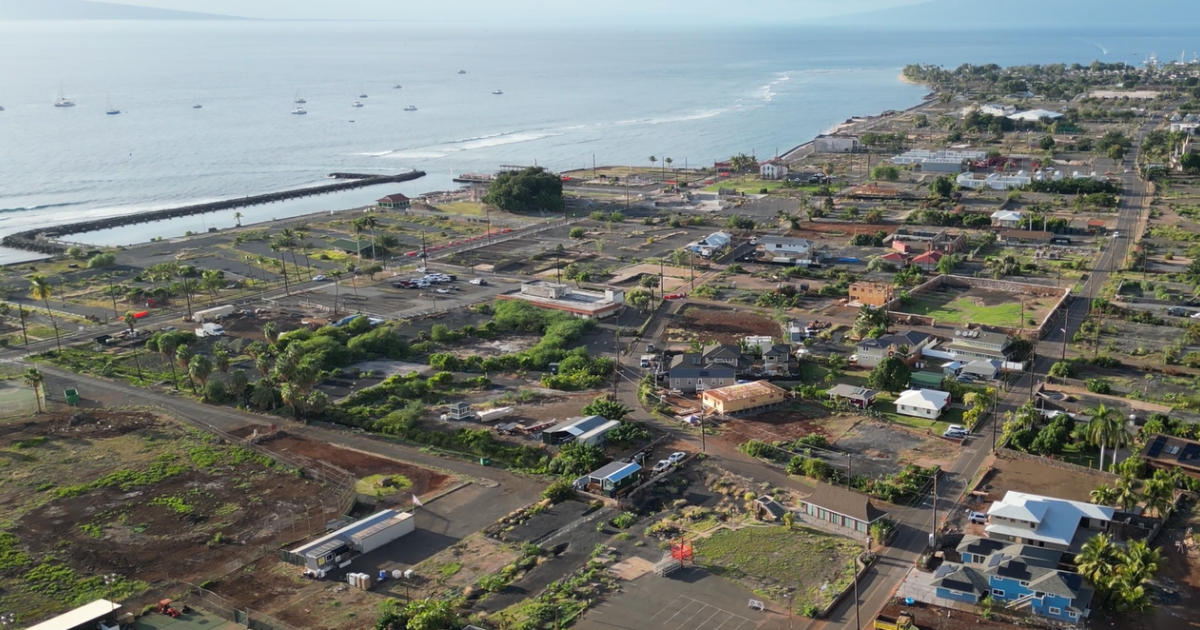
A longtime Lāhainā resident, Shaver experienced the August 8, 2023, wildfire firsthand. The disaster reshaped the community she had long called home. She lost her home in the fire, as did members of her family, friends, and neighbors. The wildfire killed 102 people, destroyed more than 2,200 structures, and displaced thousands of residents. Three years later, Lāhainā is still in the process of rebuilding.
Shaver has turned her experience and commitment to her community into research focused on understanding the requirements for long-term recovery.
A 2026 graduate of Antioch’s MS in Environmental Studies with a concentration in Advocacy for Social Justice and Sustainability, Shaver recently completed and published her capstone titled A Systems Analysis of Long-Term Community Recovery Following the 2023 Lāhainā Wildfire: Understanding Recovery as a Complex Adaptive Social-Ecological System. The thesis committee was chaired by Environmental Studies faculty member Abigail Abrash Walton, PhD, with Elizabeth Kiefer, MD, MPH, on the project committee.
Shaver successfully defended the research on the third anniversary of the fire, giving the culmination of her graduate work particular significance.
“Ms. Shaver entered the Environmental Studies MS program two years ago, as a survivor of the August 2023 Lāhainā Wildfire, which took more than 100 human lives, Ms. Shaver’s home and those of her family, friends, and fellow Lāhainā community members, and from which Lāhainā is still recovering,” Abrash Walton said. “To experience her MS thesis defense, on the third anniversary of that challenging time, was deeply moving.”
How Communities Recover
Shaver’s research explores the many factors that shape a community’s recovery over time. She uses what researchers call a “complex adaptive social-ecological system” to examine how people, institutions, resources, and the environment interact after a disaster.
In Lāhainā, rebuilding has raised difficult questions about who will be able to return and who can afford to stay. For many residents, recovery is tied as much to housing, displacement, and keeping community ties intact as it is to replacing homes and businesses.
Elizabeth Kiefer, MD, MPH, Assistant Clinical Professor at the University of Hawaiʻi John A. Burns School of Medicine and co-founder of the Climate Change and Health Working Group in Hawaiʻi, served on Shaver’s thesis committee. She said Shaver’s research underscores the connection between housing and health in disaster recovery.
“As a physician, what struck me most was Christy’s finding that housing was the key to jobs, schools, family stability, wellbeing. Housing policy is health policy in disaster recovery. As a survivor of the fires, she studied her own community’s recovery with remarkable care, and her Learning Lab gives other communities a practical way to build the relationships and understanding they’ll need before the next disaster.”
Abrash Walton said Shaver’s research also helps show how the different parts of recovery are intertwined.
“Her research yields insights into understanding disaster recovery as a complex adaptive social-ecological system and offers new conceptual models for making sense of the weave of relationships that strengthen the social cohesion so necessary for long-term resilience,” she said.
This work comes as researchers and policymakers continue to examine the lasting effects of the 2023 disaster. State officials point out that recovery is ongoing three years later. Beyond the immediate destruction, the disaster created or intensified challenges related to housing, displacement, health, and residents’ ability to stay connected to their community.
Turning Experience Into Advocacy
For Shaver, studying these challenges has gone hand in hand with advocating for her community.
In a 2025 commentary for Honolulu Civil Beat, Shaver described losing her home in the wildfire and finding a path forward through service, community, and purpose. She argued that climate change must be understood not only as an environmental concern but also as a human and public health issue, one that can worsen existing challenges involving housing, displacement, health, and inequality.
Her advocacy also extends to public policy. In 2025 testimony to the Hawaiʻi Legislature, Shaver supported legislation to expedite the redevelopment of permanent affordable multifamily rental housing lost in the fire. She emphasized that rebuilding Lāhainā means more than replacing the structures that were lost; it also means keeping the community together.
“Lāhainā cannot be rebuilt without its people,” she wrote.
The connection between people, place, environment, policy, and community is central to Shaver’s graduate work and reflects the interdisciplinary approach of Antioch’s Environmental Studies program.
Shaver was also a recipient of the Environmental Studies Department’s 2025–26 Ginsburg-Wessels Scholarship, which recognizes academic excellence and leadership.
Her completed capstone represents both an academic achievement and an extension of work that began with her own experience of disaster. By examining Lāhainā’s recovery through a systems lens, Shaver’s research has the potential to contribute to a larger question facing communities confronting increasingly complex environmental disasters: not only how to rebuild after catastrophe, but how to preserve the relationships and social fabric that enable a community to endure.