

Health begins long before the clinic
You’re managing tight deadlines, juggling grants, and working toward meaningful impact. You’ve gathered the data and built the dashboards—but real progress still feels out of reach.
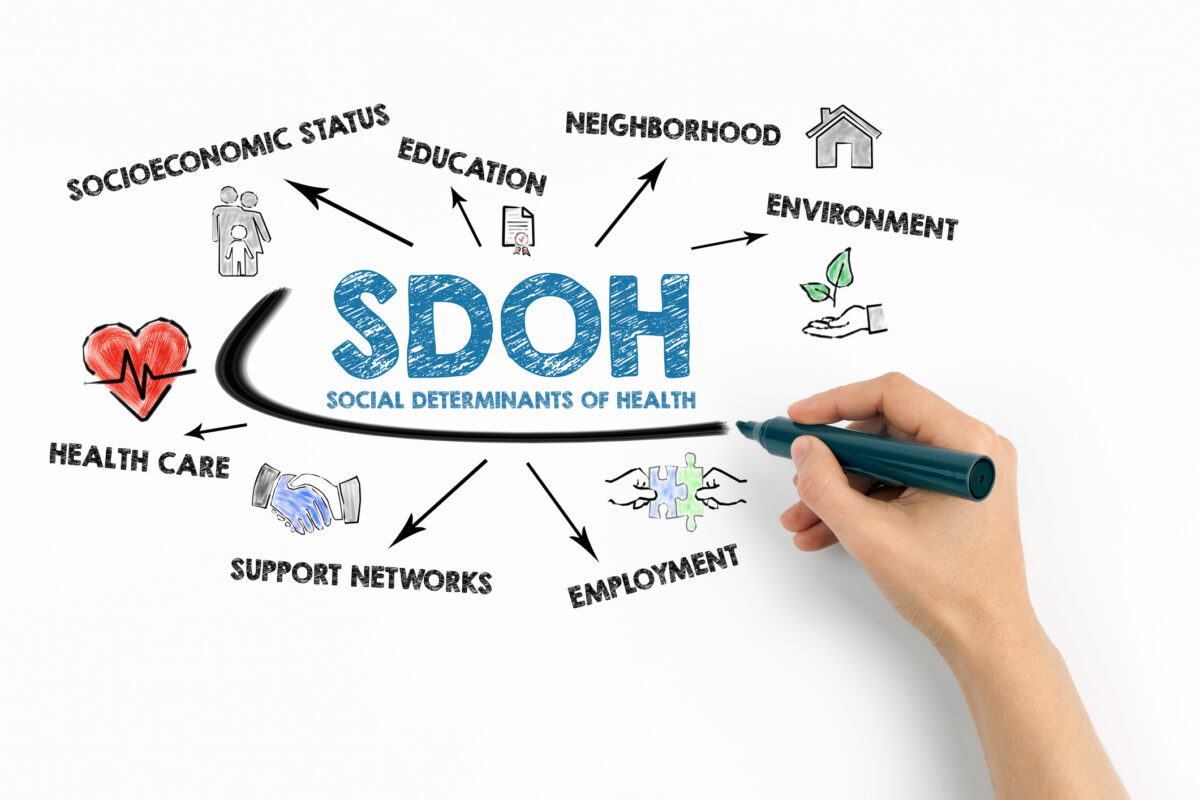
True change in public health requires addressing the conditions where people live, work, learn, and age. These social conditions—known as the social determinants of health (SDoH)—shape every outcome we measure.
“Your zip code matters more than your genetic code.”
— Dr. Anthony Iton
Whether you’re an early-career professional or an experienced leader, understanding and applying the social determinants of health is key to building equitable systems of care. This guide gives you a checklist. You’ll find concrete strategies to embed the social determinants of health into your programs and lead initiatives that actually improve lives.
What are the social determinants of health?
The social determinants of health refer to the non-medical factors that influence an individual’s overall well-being. They include access to resources, opportunities, and environments that allow people to thrive.
The five key domains are:
- Economic stability
- Education access and quality
- Healthcare access and quality
- Neighborhood and built environment
- Social and community context
Each is deeply connected to public policy, social systems, and local realities. Together, they explain why communities experience stark differences in health outcomes.
The Five Social Determinants of Health
Thirty years of research confirms what frontline health professionals already know: health doesn’t start in a clinic. It starts with whether you can pay rent, find child care, or walk safely to work. The WHO Commission on Social Determinants of Health laid the groundwork for this framework globally. It’s time we take operationalizing social determinants of health seriously.
The five social determinants of health
1. Economic stability
Financial insecurity limits every health choice, from buying groceries to paying for care. Many families face impossible trade-offs that lead to preventable illness.
Public health leaders can create impact by linking clinical care with initiatives that address housing, employment, and food access—making equity a measurable goal rather than an aspiration.
2. Education access and quality
Education is one of the most powerful predictors of lifelong health. Children who start behind often stay behind, and literacy barriers can block access to health information and care.
Partnerships with schools, libraries, and family literacy programs can help communities close long-standing health equity gaps.
Education is preventive care.
3. Healthcare access and quality
Insurance coverage doesn’t guarantee care. Rural and underserved communities frequently face shortages of providers, cultural barriers, and prolonged wait times.
Equitable healthcare means building systems that reflect the needs of diverse populations, including access to telehealth, culturally competent providers, and responsive community clinics.
4. Neighborhood and built environment
A person’s surroundings have a direct impact on their lifespan. Poor housing, unsafe streets, and limited green space can lead to chronic conditions and shortened life expectancy.
Collaboration across sectors, such as urban planning, transportation, and housing, creates healthier environments that reduce emergency visits and improve quality of life.
5. Social and community context
Connection matters. Social isolation, discrimination, and systemic racism can harm both physical and mental health.
Community bonds, faith networks, and civic engagement build resilience and trust. Strengthening these connections is one of the most powerful forms of public health promotion.
Relationships are infrastructure.
Turning Insight Into Action
Driving change requires more than data. It takes a connection with the communities those numbers represent. To put the social determinants of health into action, you need real tools and tested models. This section covers practical methods, including Community Health Needs Assessments (CHNAs) and Community-Based Participatory Research (CBPR). These approaches enable health teams to transform insights into actionable health promotion strategies.
Community Health Needs Assessments (CHNAs)
Nonprofit hospitals are required to complete CHNAs every three years to identify local health issues. But they often fall flat without community voice integration. Done right, CHNAs can fuel interventions and justify funding.
CBPR (Community-Based Participatory Research)
CBPR flips the research model. Communities help define the problem and co-design the solution. A skilled CBPR modeler builds trust and outcomes simultaneously. This model has been vital for engaging underserved populations often overlooked by traditional institutions.
PhotoVoice Projects
PhotoVoice lets communities document their environment through photography. It humanizes data and makes policy arguments visual. Use it to supplement CHNA insights or to secure grant support by putting a face to the need.
EMR Dashboards for Social Determinants of Health
Health systems increasingly rely on EMR-bound dashboards to map risk and track outcomes. However, without context, such as housing instability or food insecurity, this data remains partial. Layering in local social determinant inputs creates a more accurate picture of patient needs.
Using Zip Code Data in Risk Stratification
By targeting efforts and resources to areas that need them most, interventions can be precise and effective. But be warned: This risk stratification approach is only possible with the right mapping and analysis tools and processes.
Dr. Camara Phyllis Jones uses the “cliff of good health” to show why ignoring the determinants means accepting preventable harm. Each of these tools equips professionals to move toward sustainable health equality.
How a Master’s in Allied Health Prepares You to Lead
You’re the one people turn to. It’s because people trust you to bridge strategy and community voice. To lead with impact, you need training rooted in today’s equity challenges.
The Vital Conditions for Well-Being framework was developed by the Rethink Health Initiative. It expands on the social determinants of health by identifying seven essential conditions communities need to thrive. These include humane housing and meaningful work.
Antioch University’s MS in Allied Health integrates vital conditions into the curriculum, equipping graduates with the tools to improve health equity. It’s for professionals ready to shift from support roles to strategic leadership.
| Skill | Application | MSAH Coursework Examples | Outcome | Vital Conditions |
| Cultural Competency | Serve diverse populations | Racism: Beyond Black and White | Improved patient trust | Belonging and Civic Muscle |
| Leadership Training | Guide community efforts | Allied Healthcare Administration: Evidence-Based Practice | Lasting program impact | Meaningful Work and Health |
| Policy Analysis | Advocate effectively | Leadership & Advocacy in Policy and Healthcare | Structural changes | Basic Needs for Health and Safety |
| Data Collection and Analysis | Research practices | Research Design | Successful and ethical studies | Lifelong Learning |
| Interdisciplinary Work | Collaborate across sectors | Program Planning & Evaluation | Holistic solutions | Humane Housing / Reliable Transportation / Thriving Natural World |
The program combines theory and practice to help you tackle tasks such as mastering policy briefs and integrating equity into CHNAs. Inspired by pioneers like Paul Farmer, who co-founded Partners in Health, it champions an approach where collaboration and compassion go hand in hand.
If you’re feeling burned out, you deserve a breakthrough that’s built on training and support. Antioch’s MS in Allied Health arms you with tools to lead, from EMR dashboards to community voice integration. Advance your leadership and shape the future of population health. Explore the program ➝
Quick Wins for Health Equity Professionals
Not every breakthrough needs a six-figure grant or policy overhaul. Incremental wins can drive meaningful change, particularly for teams operating with limited resources. Start by identifying one barrier that your local community faces, such as limited access to food or inadequate transportation. Take one step this month to address it.
- Partner with local food co-ops: Collaborate to expand access to healthy food. Integrate nutrition education to strengthen trust and local health.
- Apply for mini-grants with flexible criteria: Seek funders who back fast, community-driven innovation. Use these funds to test scalable ideas, like mobile screenings or housing fixes, without the burden of major reporting requirements.
- Conduct walking audits: Walk with residents to identify barriers, such as the absence of ramps or damaged sidewalks. Document findings and use them to push for infrastructure changes.
- Use story-based metrics: Collect firsthand accounts from those affected by housing, food, or transit gaps. Combine their stories with outcome data to demonstrate to funders why addressing social determinants of health requires context.
- Train CHWs in tech tools: Train community health workers on EMR dashboards and telehealth platforms. Provide them with tools to identify social needs promptly and share their findings with care teams.
You don’t need to start with a massive, deep-pocketed program to improve one of the social determinants of health. In fact, starting small can raise equitable access by making tasks more manageable.
Addressing the Health Equity Challenges
The mission is to improve health outcomes by addressing social determinants. Public health teams often stall when they lose support or pursue short-term grants instead of focusing on long-term impact. The issues below are systemic, but they are fixable with smart strategies and effective communication.
Over-Relying on EMR Data
Electronic medical records can flag patterns, but they don’t tell stories. If your health equity program depends entirely on EMR dashboards, you’ll miss an ocean of nuance. This disconnect affects equity in mental health and the prevention of chronic diseases. In these areas, daily conditions matter just as much as clinical data.
Layer EMR stats with community health assessments and input from local health workers. Use PhotoVoice or lived-experience interviews to humanize the data. Then include that in presentations to stakeholders. This enhances understanding of how social determinants, such as housing and transportation, influence physical and mental health. At the same time, it strengthens support for upstream investment.
Ignoring Community Voice in Program Design
Top-down initiatives often fail because they don’t reflect the needs of communities. One of the most persistent failures in population health is rolling out a solution that was never co-created with the community. Without meaningful input, even the best-resourced program won’t improve health fairness.
The solution is to involve communities early. Use community-based participatory research (CBPR) models to integrate voices. When you engage stakeholders, frame participation as a partnership. This is especially critical in fields like child health or human services, where cultural context and trust can mitigate health inequities.
It’s not enough to tell a funder you’ve “engaged the community.” When you actually show it, you’ll see faster and more sustainable progress on the social determinants of health.
From Burnout To Breakthrough
Health equity work is demanding. Burnout is common—but it’s not inevitable.
Antioch’s program helps professionals transform fatigue into leadership capacity. Through mentorship, applied learning, and self-awareness, students learn how to sustain themselves and their teams while building systems that center care and compassion.
“The work is hard, but the purpose is healing.”
Antioch’s MS in Allied Health prepares you to lead teams that support people pursuing healthy lives. You’ll gain tools to model positive health behaviors and design systems that care for caregivers.
Measuring what matters
Progress in health equity requires proof of impact. Antioch-trained professionals strike a balance between data and narrative to demonstrate meaningful change.
- Track metrics tied to each determinant—like housing stability, literacy, and healthcare access
- Combine quantitative indicators with community stories
- Align local goals with frameworks like Healthy People 2030 and WHO indicators
Data earns funding. Stories build trust. Together, they move systems.
Build your future. Advance equity.
The social determinants of health remind us that wellness is a shared responsibility. Every policy, partnership, and program can either perpetuate inequity—or reduce it.
Antioch University’s online MS in Allied Health equips you to lead with purpose and compassion—bridging the gap between clinical data and community reality.
Be the leader who changes what health equity looks like.
Learn more about Antioch’s MS in Allied Health ➝