


Over 30% of people who start a PhD don’t graduate within ten years. This can be a grand disappointment and a real setback—and it can hold learners back from contributing to their full ability. But today, degree completion programs are helping some of these students to return to the academy, finish their studies, complete their research, and claim their diplomas. So what goes into designing a degree completion program? In this conversation with Diane Richard-Allerdyce, the founding director of the Completion Pathway in Antioch’s PhD in Leadership and Change, we ask her about all of these questions—and learn how taking into account educational trauma and structural barriers is key to helping students finally complete their dreams.
Subscribe: Apple Podcasts | Spotify | Pandora | Simplecast
Video Podcast
Shownotes
Visit the main Antioch website to learn more about the PhD in Leadership and Change, and the Completion Pathway that Diane directs. You can also read the announcement of the creation of the Completion Pathway.
This episode was recorded November 21, 2025 and released December 17, 2025.
The Seed Field Podcast is produced by Antioch University
Host: Jasper Nighthawk
Editor: Nastasia Green
Producer: Karen Hamilton
Social Media Manager: Selina Starling
Work-Study Assistants: Dani LaPoint.
Additional Production Help: Jen Mont, Amelia Bryan, and Laurien Alexandre.
To access a full transcript and find more information about this and other episodes, visit theseedfield.org. To get updates and be notified about future episodes, follow Antioch University on Facebook.
Guest
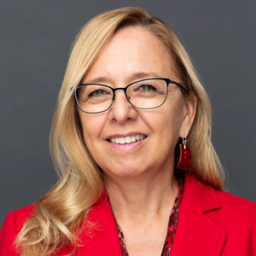
Diane Richard-Allerdyce, PhD, is the Completion Pathway Coordinator and Union Cohort Director for Antioch University’s PhD in Leadership and Change. She came to Antioch from the PhD program in Interdisciplinary Studies at Union Institute & University, where she taught from 2008 through 2023 and served as Associate Dean and Chair of Humanities & Culture. She brings a multi-leveled teaching practice, a rich research and creative writing agenda, and extensive administrative experience.
Transcript
Diane Richard-Allerdyce [00:00 – 00:34] – PhD programs are designed to create new knowledge in the world and to create conversations among the people who have written about their topics so that a PhD student isn’t just somebody absorbing knowledge and being able to repeat it. They have to become an expert in their topic and they have to prove that when they defend their proposal and then their dissertation. But it’s actually to make a contribution in the world beyond that to enter that conversation in print and in speaking, perhaps, and to be able to change how people think.
Jasper Nighthawk [00:40 – 02:10] – This is the Seed Field Podcast, the show where Antiochians share their knowledge, tell their stories, and come together to win victories for humanity. I’m your host, Jasper Nighthawk, and today we’re joined by Diane Richard-Allerdyce for a conversation about PhD degree completion, and social justice. This issue doesn’t get that much coverage, but I personally am a little bit shocked to learn that according to the best research, over 40% of people who start a PhD don’t graduate within 10 years. That is a lot of people. There are something like four and a half million people with PhDs today in the US, and that means there are like multiple millions of people who started PhDs and didn’t graduate at the end. I have so many questions about this problem and also about the potential ways that our society could be helping folks who are halfway, maybe even more of the way to a PhD, and how they could get back in the classroom, get back to their dissertation research, and actually finally finish their degree and have the benefit in the workplace, in their personal life, of having that title. Our guest today, Diane Richard-Allerdyce, is the coordinator of the Completion Pathway, a newly launched pathway within Antioch University’s long-standing PhD in Leadership and Change. And she actually has spent the last two years helping over 80 PhD students from a university that suddenly shut down to finish their degrees here at Antioch. She has lots of other expertise too, and I have a ton of questions for her. So Diane, welcome to the Seed Field Podcast.
Diane [02:11 – 02:15] – Thank you. Thanks for having me.
Jasper [02:15 – 03:01] – So to start off, our first question is always to ask guests to disclose, as much as they’re comfortable, their own positionality. And I think this is relevant. We’re going to be talking about why people drop out of school and drop out of PhD programs. And I know that across race, gender, class position, there are widely varying outcomes. So I can go first. I would disclose I’m white. I identify as a cisgendered man. I’m queer. I’m not living with a physical disability, but I do experience anxiety and depression, and I have been dealing with those things since I was a kid. I have a college degree and a master’s, though not a PhD. I also have steady housing and steady income. Okay, I’ll toss it over to you just as much as you want to share. Where are you coming from?
Diane [03:01 – 03:35] – Sure. Geographically, I live in South Florida. I grew up in rural Ohio in a working class family. I have the privilege of having education, and that gives me a certain status in the world that I know is not available to everyone but should be. And I feel that our program here and our pathway into the programs facilitates that right that people should have to follow their dream. I identify as a woman, but not necessarily with the patriarchal signification that that usually carries.
Jasper [03:35 – 03:54] – That’s great. Okay, so the first question that I wanted to ask you is actually to start before we think about people dropping out of PhD programs and to ask, what are the reasons why people pursue PhDs in the first place?
Diane [03:54 – 05:26] – The answers are varied among different people. For a lot of people, there is a sense of being credentialed and having the right to speak. Having the credential to be recognized as a person of speaking authority can be a huge draw. I know that for many people who are teaching in anywhere from undergrad programs to master’s degrees who aspire to teach in doctoral level programs, or perhaps even other programs where the university requires a doctorate in order to become a full-time professor, that can be a huge draw. And it used to be that most people, when I got my PhD in the 90s, most people in the program were in for that reason, to have the ability to go into what had been such an important experience in our lives, which was to be able to pursue knowledge within the academy and to do so from an increasingly rightful position. Yeah, the right to get up there and speak. And I think today, and at many times for people now who are pursuing and wanting to complete PhDs midlife or beyond, it’s more of a calling. It’s more of a lifelong passion and dream to really package a set of concerns and deep exploration within a recognized degree, a recognized title that carries meaning in the world.
Jasper [05:26 – 06:08] – Yeah. I also, hearing all of those reasons, it made me think of the way that there’s a lot of hope that comes into trying to get a doctorate. I know from my many friends who have pursued such studies that it often means you’re somewhat poor during that time. Even if you’re in a funded program, you’re often being paid kind of like a pittance. But at the same time, there’s like a great romance to it. And so it makes me sad to think of people sort of all the hopes that go into starting a degree program and then not being able to finish it. So I’m wondering if you can share some of the reasons why people don’t finish their PhDs.
Diane [06:08 – 07:23] – Yeah, I think, Jasper, that is, again, for varied reasons, but many times because of the stresses of life. Entering a PhD program often does require the kind of financial sacrifice that you mentioned and on the part of the student, as well as the family. Many times the spouse or partner is bearing the brunt of some of that hardship, and then often kids come along during the time that a person is pursuing a doctorate, or kids come of age to go to school and need a lot more transportation, more parental involvement in school activities and sports and things like that. Many PhD students these days do work, and many of them work full-time, which is probably not always the case historically, when PhD work was considered to be the one full-time job a person could pursue. And yet, with the economy and the needs that people have, that isn’t always possible to devote full time and not to work. The other reason people don’t finish is institutional. A lot of programs lose their accreditation or close. A lot of programs, I should say, from where these potential students come from and where they were pursuing their degree.
Jasper [07:23 – 07:36] – Yeah, that must be so stressful to be engaged in your studies, probably having deep connections with instructors, and then your school loses its accreditation or shuts down entirely. Talk about being left out in the cold.
Diane [07:37 – 07:50] – Exactly. It’s very traumatic, too. And it’s risky, probably. It may feel risky to get involved with a new institution and to be able to know which institution to go to.
Jasper [07:51 – 07:51] – Oh, for sure.
Diane [07:52 – 07:53] – Yeah, whom to trust.
Jasper [07:53 – 09:05] – I want to talk a little bit about educational trauma as a concept. But first, I want to just dig a little bit more into why people don’t finish their degrees. So the big headline is that only 68% of people in PhD programs will finish their degree within 10 years. And that’s a pretty good sign. If you don’t finish a PhD in 10 years, something has interrupted your studies massively. But there were more granular details that showed that women have a somewhat lower completion rate than men, likely due in part to PhDs are usually completed in what are considered the prime, like, childbearing years that you were mentioning, but also that Black and Latinx people have much lower completion rates than white people. And I can imagine, you know, many different ways that across our society, these populations tend to have less familial wealth, less of an ability to carry somebody through what can be like a long desert of wage earning, as you were discussing. But I wonder if there are other factors that might cause these populations to have such diminished chances of finishing these degrees.
Diane [09:05 – 09:23] – Sure. I think that there used to be and still is a lot of probably unconscious, not always unconscious, but I’d like to give benefit of the doubt to say that it is probably mostly unconscious bias still in our higher educational systems.
Jasper [09:24 – 09:31] – Yeah. But I’m curious, what brings students back to the classroom? And if you have any examples of students who’ve decided to come back?
Diane [09:31 – 11:10] – Oh, sure. I am talking to people all the time. The people that came over to Antioch after our university closed, those 80 students who came over, many of them had been in business, had been in community organizations where they were in positions of leadership. They had been school teachers and college teachers, and they came back, many of them, because they wanted to advance in their careers and they wanted to be more of a change agent in their particular organizations or other organizations. So there’s no one trajectory that people follow, but those are some of the examples. And there are also the examples of people that dropped out for some of the reasons we talked about and come back for, you know, personal pride. And that’s completely valid because a person should have the right to not feel that they weren’t able to fulfill something that they really, really wanted to complete and invested a lot in. Also, the skills, the knowledge, the advantage of being able to spend time and to make time to look deeply into the theoretical aspects of everyday management, everyday teaching, everyday life, even on the domestic level, and possibly the political level. A lot of our students do have positions either as elected officials at the local level and above, and they come to want more deep knowledge about what has informed the policies that they’re dealing with.
Jasper [11:10 – 11:53] – Yeah, I love you listing off those different reasons why you might come back, because I feel like they point this idea of building knowledge, just points at what a special thing it is to spend years of your life reading other people’s research and theory and working closely with professors and thinking about something that is a subject that you care deeply about today just seems to move so fast and to be so breakneck in its developments and its new technologies and its demands on workers to adapt to those technologies. It’s such a privilege inside that paradigm to actually slow down and really contemplate a question or a field of knowledge that you’re passionate about.
Diane [11:54 – 13:17] – Exactly. And it is such a privilege. And we talk about that in the classroom here and in other places where we’re sitting around a conference table discussing theory, discussing poetry, and the motivation for poetry or memoir and looking at those genres as increasingly recognized methodologies for research and also for all kinds of applications in the world, including therapeutic applications for people. So, for instance, a psychologist might come with a license in mental health counseling and want to really pursue how some of the modalities they’ve been using have historical backgrounds of immense knowledge that has been produced. And sometimes that goes unnoticed when people are so busy in that breakneck world that you mentioned, the world of work and family and just going from one thing to another, getting things done, taking the next step. And the PhD, like any other graduate program as well, is a chance to slow down, to look more deeply into the nature of things. I mean, talking about the meaning of life as philosophers do may seem kind of like just a hobby or maybe a distraction.
Jasper [13:18 – 13:21] – Or a luxury, like unnecessary.
Diane [13:21 – 14:39] – Yeah, just like, well, it must be nice to just sit around talking ideas, right? But the thing is that real knowledge comes from those ideas. And by the way, PhD programs are designed to create new knowledge in the world and to create conversations among the people who have written about their topics so that a PhD student isn’t just somebody absorbing knowledge and being able to repeat it. They have to become an expert in their topic, and they have to prove that when they defend their proposal and then their dissertation. But it’s actually to make a contribution in the world beyond that, to enter that conversation in print and in speaking, perhaps, and to be able to change how people think. And, you know, it’s like Margaret Mead said at one point, it’s like we should never doubt the power of a small group of people changing the world, getting together and changing the world. And, I’m paraphrasing, but I believe that even though people that are actively pursuing scholarship are not the majority of people in the world, we’re a small group comparatively, and yet a lot of changes have been wrought by people doing just that.
Jasper [14:40 – 14:41] – Yeah, small but mighty.
Diane [14:41 – 14:54] – Small but mighty, and really making even a small policy change or a small correction to a theory of ethics and how that might apply to the world today.
Jasper [14:56 – 15:24] – You’re clearly a true believer. You’re like, if we could just slightly change a theory of ethics, it could change everything. I love that. I wanted to ask a little bit about the design of a completion pathway and how you think about supporting students as they work to get back up to speed, to jump through these hoops potentially for a second time.
Diane [15:25 – 18:01] – Yeah. And because Antioch is Antioch, there is already a legacy and a history and a culture of supporting adult learners here and in the graduate programs and including the PhD program. So, we already have that built in, the idea that students may be older, they may be further along in their lives, or they could be in their 20s and just coming in. But for the most part, our students are midlife professionals in the PhD in Leadership and Change Program. And this pathway into it increases the likelihood that they will be coming in as mid-career experts in their own fields and so forth. So support has to do with recognizing that our students are coming in with vast amounts of knowledge and respecting that, respecting that even though a person may not know the theories and the policies that are embedded in the material that they’re going to be studying, they do have a lot of real life experience and that needs to be respected. So we’re supporting people by respecting where they are in their lives and we’re also supporting people with a small cohort model where they have peers that they are able to get support from. And we also have a stepping stone approach where the first year PhD studies are not the fourth year when the person is in the dissertation. And we have a series of learning achievements that a person can use as step stones to get ready to write the dissertation. And they are never on their own, even at the dissertation stage, they have numerous opportunities to meet with peers and with faculty groups so that they don’t feel isolated, which a lot of times I’ve heard doctoral students say they felt isolated during the writing of the dissertation. And we try very much to continue that sense of community throughout the whole process, including the dissertation. And, you know, the encouragement to build on what they know, while also cultivating a curiosity so that it’s not about knowing so much. It’s about being curious, being invited into a curious community where people are invited to ask questions. I always say that questions are more important than answers in doctoral work because it’s more; the questions are open and they lead us to so many possible answers, not definitive concrete answers. Which can be useful at times, but sometimes can be limiting too.
Jasper [18:02 – 18:40] – And I appreciate all of those different ways, especially keeping people from feeling isolated, keeping people from feeling like they’re on their own, when that may have been part of why somebody failed to complete a program in the first place. That seems so important. And we brought up this term earlier of educational trauma. And I’m curious how you think about the sometimes traumatizing experiences students may have had at previous institutions, leaving institutions feeling like they didn’t belong, like they’re on the outside. How do you approach these kind of, like, psychological after-effects of potentially really hard experiences?
Diane [18:41 – 19:55] – Just yesterday, I was interviewing somebody who is a potential PhD pathway completion applicant who told me his story. And he is a person of color who was discriminated against in an institution in ways that may seem subtle to the person who is not being the person traumatized, but that are real. And they may range from being treated differently in the classroom, being given less opportunity to offer ideas in classrooms, to being graded differently on papers. Women, and especially women of color, indigenous women, have historically been viewed through a lens of patriarchal privilege as being lesser or even having less ability when that is clearly not the case at all. and not in general and not for the particular women who have told me these things. And it’s certainly gender trauma, and that could be harassment in the academy. It’s not unheard of.
Jasper [19:56 – 20:07] – Very far from it. Sexual harassment is like such a common experience among women in the academy, if my friends and colleagues have been any evidence.
Diane [20:08 – 20:19] – Right. And, you know, when I was in my doctoral work in the 80s, it was prevalent. And today, it’s still prevalent from what I hear as well. So it’s astounding.
Jasper [20:19 – 20:57] – It really is. It’s also heartbreaking. Just thinking about people just trying to show up, do their jobs, do their schooling, and facing these kinds of barriers. I mean, not just harassment, but all the barriers that you’re talking about; being treated as other or lesser is just so beyond the pale, really. I’m like, how do you live with yourself if you’re treating people like that? But I know it’s unconscious and I may be guilty of it in my own ways too, but I truly believe you have to be actively fighting your own unconscious biases. If you think you’ve got it all solved, that’s like a red flag.
Diane [20:57 – 22:36] – Exactly. Right. I mean, we’re all swimming in cultural bias. I used to facilitate a lot of workshops for the Anti-Defamation League and my training for that role included that bias is universal. We all have bias and it’s not something to be ashamed of. It’s something just as you’ve said to be acknowledged, recognized even in the body when it comes up because we often feel our solar plexus getting rigid when we feel that we’re needing to defend a certain position which can also then lead to acting in a biased way toward others. And we have to recognize those things and recognize the language and be willing to engage in dialogue, real dialogue, non-defensively. And then also being willing to dialogue with others who have their stories to tell and trusting them, believing them. Because so many times I’ve heard not only stories of trauma, but stories about how people that have been traumatized are not believed or how their concerns are kind of just dismissed as, you know, just “you’re being too sensitive” or “that couldn’t have really happened.” Because as you and I are saying, it’s astounding, it’s unbelievable what people have experienced and still are experiencing. But I think really to recognize all of those things and to stand up to it, speak truth to power, and also to kind of learn strategies for contesting. Traumatizing language, for instance, is something that we really, really give a high value to in the program.
Jasper [22:37 – 23:58] – Yeah. Oh, I appreciate that last bit too. We are almost out of time, but I wanted to just say as a comment, I think there’s something kind of utopian or very beautiful about the idea of something that I think can be a trauma and also just a like an adverse life event of you tried to do this thing you had so many hopes pinned to it and then for whatever reason you weren’t able to finish it and now you feel like, “well, I’m a failed doctoral student, I wasted that time potentially” like all those bad feelings I can imagine very vividly; I’ve felt similar ones in other areas my own life and to turn around and say, no, this actually is open to you. It’s never too late. You can finish. If this is something you care about, we will help you. And we’ll do it in a way that is thoughtful, that is trauma-informed, that is geared to people in your position, that doesn’t see you as other or lesser. There’s something just very hopeful to me. It’s a healthy sign for society and also for our institution that this is something that is on the table. And so I guess as a closing question for you, I would say, how do you hope this degree completion pathway will positively affect the world?
Diane [23:59 – 25:05] – I do see it positively affecting the world because the people that come into it are needed. We need everyone who has expressed interest and ends up even just checking us out and deciding not to. We need their perspectives in the world. We need their contribution. By the way, I would like to say that, if anybody is interested in the program and decides, “you know, I really don’t need to go back and do that now,” I would still like those people to know that their interest that brought them to listen or to possibly think about applying or even applying is itself a, you know, I would think of it as a calling or a choice. But that knowledge that has already been achieved in whatever coursework or whatever programs that they’ve been in is absolutely important in the world. We need everybody in the academy to bring their own uniqueness and their own contributions so that we can really be co-learners together on this life journey.
Jasper [25:07 – 25:09] – Thank you so much, Diane. Thanks for coming on the show today.
Diane [25:09 – 25:10] – Thank you, Jasper.
Jasper [25:16 – 26:17] – You can learn more about the PhD in Leadership and Change and the Completion Pathway that diane directs on antioch’s website, antioch.edu we’ll include a link to the specific program page that has a lot of those details in our show notes we’ll also link to the press release announcing the creation of this pathway. We post these show notes on our website the seedfield.org where you’ll also find full episode transcripts, prior episodes, and more. The Seed Field Podcast is produced by Antioch University. I’m your host, Jasper Nighthawk. Our editor is Nastasia Green. Our producer is Karen Hamilton. Our social media manager is Selina Starling. Dani LaPointe is our work-study assistant. We received additional production help from Amelia Bryan, Jonathan Hawkins, and Laurien Alexandre. Thank you for spending your time with us today. That’s it for this episode. We hope to see you next time. And don’t forget to plant a seed, sow a cause, and win a victory for humanity. From Antioch University, this has been the Seed Field Podcast.