Since its earliest days, Antioch University has been a place of higher learning that appeals to particular kinds of people. Some have been drawn by the school’s social justice focus, or its student-centered and often nontraditional approach to education, or the avenues it opens for adult learners looking to complete degrees later in life. Some are attracted by a combination of these factors. One thing is clear: by approaching the student as a whole person and welcoming their insights, individuality, and lived experiences as a core element of the learning process, Antioch is an institution that often draws alumni back to look for ways to stay involved.
For Ken Friedman and his family, that Antioch appeal has been generational. Ken’s parents, Roberta and Stanford, first met while attending Antioch College, where they graduated in 1954 and 1953, respectively. Ken and two of his brothers attended the College in the ’70s and ’80s, and two of Ken’s daughters, Lili and Memphis, are currently enrolled in Antioch University programs. (Antioch College and Antioch University were the same institution until 2008, when the University closed the College due to financial concerns. In 2011 a group of alumni and faculty re-opened Antioch College as an independent institution that is no longer part of Antioch University.)
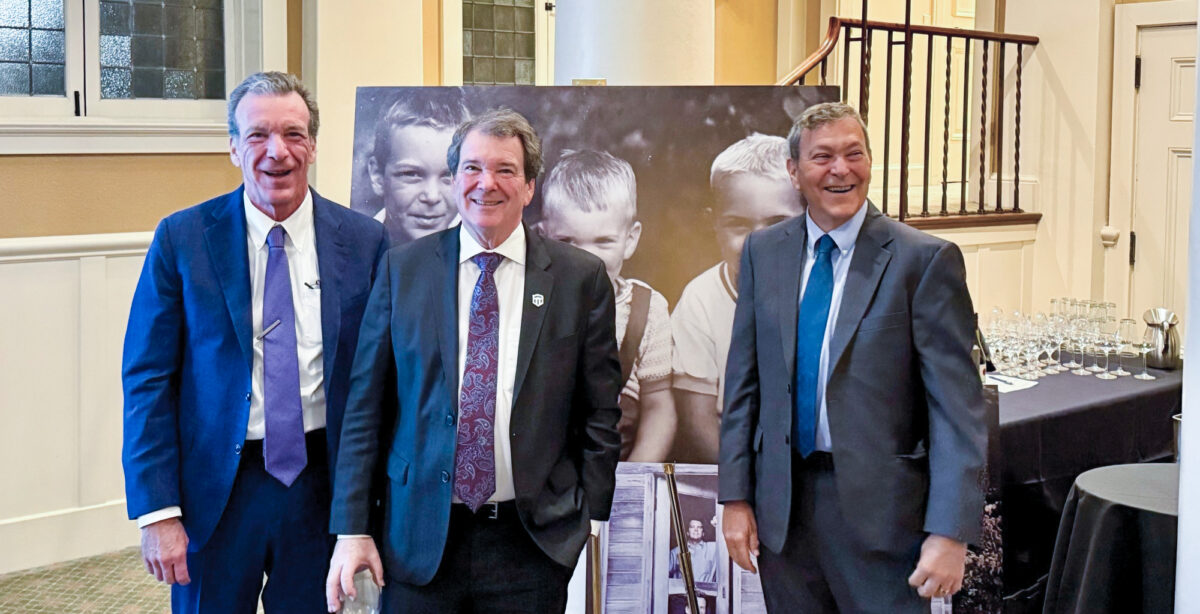
Though his parents didn’t pressure Friedman to go to their alma mater, when he graduated from high school and began searching for colleges, Antioch was his first and only choice.
“I knew about it, and the more I looked at it and looked at other schools, the more I thought it was the only choice.”
“I’d heard of Antioch because my parents had gone there,” Friedman explainse. “Many of my peers had never even heard of it, so they couldn’t consider going there. I knew about it, and the more I looked at it and looked at other schools, the more I thought it was the only choice. It was the only place I applied.”
Friedman graduated in 1983 after studying history. Soon after, he went on to study law at New York University. Although he appreciated the education he received, in law school he missed the feeling of involvement he’d experienced as an Antioch undergraduate.
Once incident pointed to the difference between the institutions. While at NYU, he and a group of other students approached the dean to urge the placement of a professor onto the tenure track. Friedman remembers the conversation very clearly today. “Before we could even get to the substance of our position, he made it very clear to us that he didn’t care about our opinions on which professors got tenure, that we would be gone in three years, and the institution would carry on, and that the students didn’t really have a say.” It left him with a sour taste in his mouth. “It was such a stark contrast to the way we were treated at Antioch,” he says. “The way this institution treats its students as part of a community, [it’s] like I’m part of the institution. I think that is very reflective of how Antioch tries to be different.”
“It was such a stark contrast to the way we were treated at Antioch.”
Friedman’s time at Antioch helped him prepare for a career fighting for justice for wrongfully injured people. He has worked as a trial lawyer for more than 35 years, serving as lead counsel in more than 100 trials in state and federal courts across 11 states. He today is a partner at Friedman Rubin PLLP, a firm originally founded by his brother Rick in Alaska.
“Maybe I would have had similar values and attitude, but Antioch certainly reinforced that,” Friedman says. “It also gave me a very strong background in research, writing, and critical thinking, which is probably as important as the values.”
A recent case, Heit v. Pharmacia LLC, highlights Friedman’s work for justice. This Washington State case resulted in a $165,082,000 verdict in 2023 for eight teachers and staff at a school contaminated by Monsanto’s polychlorinated biphenyls (PCBs). The case involved damages caused by exposure to PCBs among teachers, staff, students, and parents.
“The PCBs were in the building materials and, more significantly, in the ballast of the fluorescent lighting fixtures,” explains Friedman. “Before 1979, most fluorescent light ballast contained PCBs as a dielectric fluid. This school had not been remodeled in any significant way, and many fixtures were still failing, leaking PCBs into the classrooms. Terrible. Unfortunately, it’s probably not as uncommon as you would hope.”
Alongside his legal work, Friedman makes time to give back to his alma mater. His belief in Antioch University and its values has led him to donate and to serve on various Antioch boards.
“I think Antioch always needs to be there for people for whom it is a good fit,” he says. “It’s not the right school for everyone, but for the people that it is, it’s really valuable.”