It sounds like the pitch for a feel-good movie you would watch while snuggled up in a blanket, pint of ice cream at the ready: four women from different backgrounds, with different interests and perspectives, meet while going back to school for their doctorates, and they discover a communal friendship that was, as one of the friends says, “A different type of friendship than I’ve ever had.”
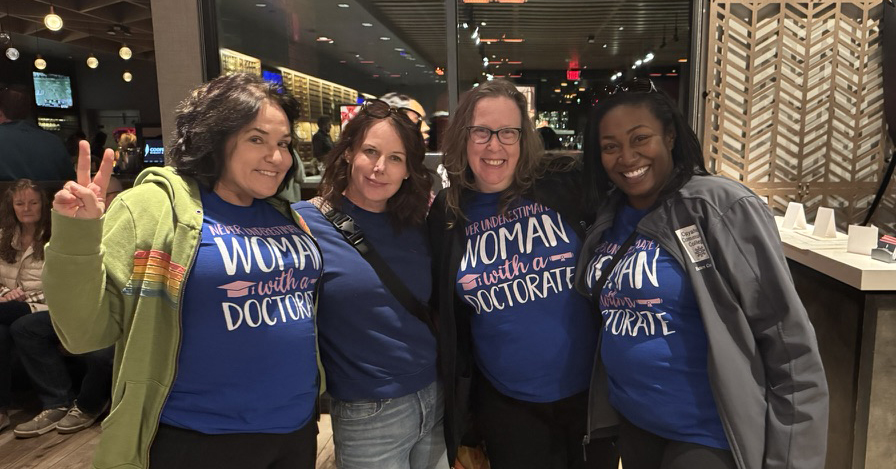
But this really happened. The woman who describes the friendship that way is Tiffany Bruessard, a current third-year student in Antioch University’s Doctor of Education program. The other three friends are her fellow students Stacey Souther, Colette Freedman, Tiffany Bruessard and Amber Beason. Over the last two years, across multiple states and one vibrant group chat, these four women have found key intellectual collaborators—and friends for life.
The stage was set for this friendship to unfold even before they met in the program, because while the quartet were all attracted to the EdD program for their own reasons, its emphasis on social justice had played a key role in each of their decisions to matriculate at Antioch.
Bruessard says that she was drawn both to Antioch’s mission and to its history. “I wanted to find a community, a college, that was really, really focused on doing the work—the uncomfortable work,” she explains. She was excited to learn of Antioch’s history of addressing issues internally and externally, such as a former president of the school working to dismantle the pay gap for African-American professors working there. “To learn that Coretta Scott King graduated from Antioch College was another thing that truly sealed the deal,” she says. “It truly felt more like Antioch called me, if I can be very honest. It’s been one of the most profound experiences of my life, being in association with this institution.”
But it was when Bruessard and the other three arrived for their first July residency in Westerville, Ohio that Beason, Bruessard, Freedman and Souther realized their shared affinity. The four had spoken a bit before the residency kicked off, having been part of some group text chats between students in the program. Now, as the four met in person, the connection was immediate and electric. The four quickly arranged things so that their first meeting with an advisor in the program was held as a group, so that they would all be on the same page. Between seminars, the four chatted, and by the end of the first couple of days, they were already meeting up after the day of learning and laying down roots of a fast friendship.
“The first or second night, we were already baring our souls to each other about our lives and who we were, and what we were there for,” explains Souther. “We just very, very quickly gelled.”
The conversations went deep, and the thing that struck them all was how easily they were able to approach each other from a place of honesty and vulnerability.
“We trauma dumped, exposed our vulnerabilities,” says Freedman. “I shared more with these three women than I’ve shared with best friends who I’ve known for years.” Their shared dynamic created a safe, supporting space.
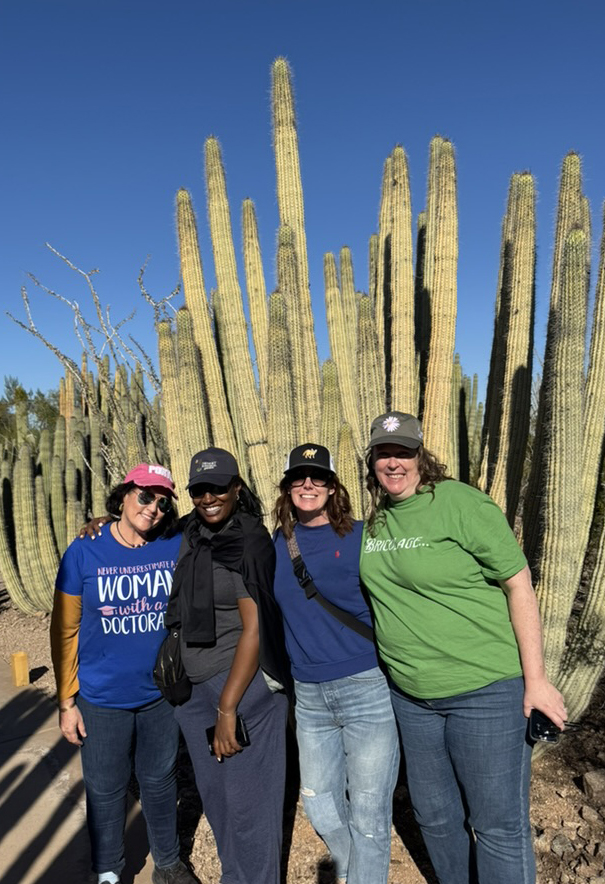
Days after their residency had ended, the group had already reserved a place to meet up and stay for their own “mini-residency” during the semester. The four live scattered across the U.S.—Bruessard in Morris, Illinois; Southerland in Cleveland, Ohio; Freedman in Los Angeles; and Beason in Chattanooga, Tennessee—so they all flew into Phoenix. They spent time together studying, chatting, relaxing and reaffirming the support they had for each other. The study sessions also served a practical purpose: they helped each student make sure their work was all ready to go in time for the end of the semester.
The “mini-residency” also served a deeper purpose. The four student deepened their friendship and shared in the challenges of juggling life, work and their doctorate programs. By the end of the weekend, they’d already planned out when and where to hold the next “mini-residency.”
When not physically proximate, the four students communicate via group chat—a medium that has become a source of inspiration and motivation to push through difficult times. Each of the four says that their companionship through the challenges of their doctoral studies has been a catalyst for self-improvement.
“I got included in this group chat with these three, and it was the best thing that ever happened to me,” Beason says. “I’m forever grateful for all of them, because I don’t know where I would be without meeting them—not just in this program, but also what they mean to me and how far I’ve come as a person just knowing them and their strengths and their vulnerabilities.”
An example of their friendship came up during the interview for the article. Beason’s microphone wasn’t working at the start of the call, and while she was attempting to remedy the situation, the other three ladies took turns describing the myriad qualities of hers that they appreciated (they all agreed she was the funniest one in the group, for one). At the drop of a hat, they were ready to share what they appreciated about one another.
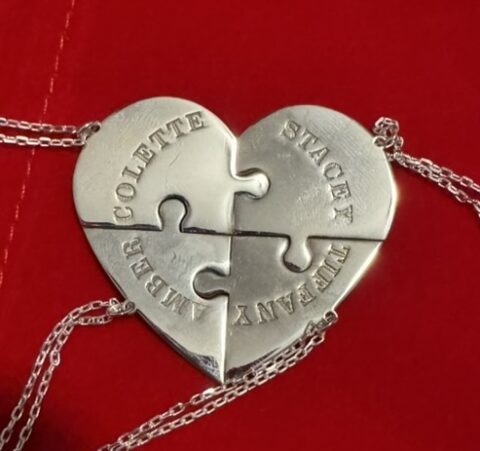
As a reminder of the goal they share as they work their way through the program, Souther at some point procured matching wristbands for the group. The wristbands say, “Mission 2027,” referencing their expected graduation year. Another time, they got matching necklaces with their names on them that combine like puzzle pieces to make a heart. These little talismans remind each another that they aren’t alone, even when studying can be such a solitary experience.
“You really have to create your own community,” says Freedman, “because it’s very easy to want to give up or stop or not push yourself. When you know you have other people wearing the wristband ‘Mission 2027,’ you’re like, ‘I don’t want to let them down.’ And, in turn, ‘I don’t want to let myself down.’”
Freedman adds that part of how their friendship formed is because of the kinds of people Antioch attracts to its programs. (She should know—she is teaching faculty in the Antioch MFA.)
“It attracts a very specific kind of person, and I think it’s a person who who’s open and ready and maybe very introverted, but wants to connect and wants community,” Freedman says. “Community is out there waiting for them. It’s just a matter of, are you going to grab it, or not?”