

This summer, the organizers of the Relational-Cultural Theory at Antioch University (RCT@AU) initiative are looking back on their first year. In ways large and small, the initiative has established itself as a transformative hub for students, faculty, and alumni. Through formal, university-wide programming as well as efforts to support students and faculty using RCT in their research and teaching, Relational-Cultural Theory has transitioned from a foundational, albeit often implicit, element of the PhD in Leadership and Change program’s fiber into the named and highly intentional RCT@AU initiative, deepening its impact in the PhD program and expanding its impact to other corners of the University.
RCT@AU is an initiative undertaken in partnership with the International Center for Growth in Connection (ICGC), the premier organization promoting the study and application of RCT. RCT@AU aims to create spaces for relational practice to thrive across disciplines, strengthen community, amplify voices, and promote social change. Through integration inside the classroom, community programming outside the classroom, close collaboration with the ICGC, the creation of a fellowship program, re-launching a publishing series, and much more, RCT@AU is well-positioned to expand its impact as it looks towards a second year and beyond.
The Roots of Connection: RCT & PhDLC
While the formal RCT@AU initiative is just over a year old, Relational-Cultural Theory has long been woven into the fiber of the PhD in Leadership and Change (PhDLC) program, even when it was not explicitly named. The program’s design, including its cohort model, narrative grading, and faculty framework, has historically mirrored RCT values. Foundational figures like founding PhDLC faculty member Elizabeth Holloway and founding director and Dean Emerit Laurien Alexandre were intentional about building these principles into the design of the program from its inception. These decisions have influenced dissertation committee structures and the overall faculty approach to instruction for decades now.
Several years ago, PhDLC faculty member Harriet Schwartz and Amy Rutstein-Riley, who was then Director of the PhDLC (she now serves as Dean of the School of Interdisciplinary and Professional Studies) came together to discuss how they might reframe and refocus the curriculum to ensure that RCT was more deeply integrated into the first three years of the program, prior to the dissertation process. These early efforts laid the foundation for the initiative that would come to be known as RCT@AU.
Since its launch, the formal RCT@AU banner has provided a new level of visibility and intentionality, offering a centralized hub for affinity groups, University-wide events, mentorship, publication venues, and funding opportunities.
One element of RCT@AU has been establishing the Jean Baker Miller Relational Cultural Theory Fund, named after Jean Baker Miller, whose early work provided the foundation for RCT. This fund supports research-related expenses for students conducting dissertation research in areas aligned with Relational Cultural Theory.
While other universities incorporate RCT in therapy-based programs or offer electives on the subject, Antioch University is leading the way among leadership programs in integrating RCT across much of its curriculum and programming. As the inaugural RCT fellow, PhDLC alum Ileya Grosman says, “Antioch University is unique in North America for building this philosophy into its leadership curriculum on a large scale.”
Bridging Theory & Institutional Culture
A central pillar of RCT@AU’s early successes has been the role of Grosman, whose fellowship serves as a bridge between the ICGC and Antioch University. Originally envisioned as a one-year position, the fellowship was recently extended to two years. This role allows Grosman the freedom to facilitate affinity groups, mentor students, and integrate RCT into institutional culture.
In her role as the inaugural RCT fellow, Grosman says that her favorite part is “the weaving piece within Antioch: being able to talk about cultural change through this lens, through the RCT lens, in an education system that’s already primed to believe this way.” This position has allowed her to connect faculty and staff through relational practices, effectively fostering a culture that is naturally aligned with the program’s foundational values.
Grosman’s responsibilities have evolved from specific, task-based objectives into a broader role that allows for the freedom to build and collaborate dynamically. Her ongoing work now includes co-hosting an internal monthly group that focuses on how faculty and staff can apply RCT elements to their daily work. Recently she led discussions on micro-acknowledgments in mentor-mentee and professor-student relationships. In addition to these responsibilities, Grosman offers a service to interested PhDLC students who are approaching their dissertation phase to help them consider integrating RCT into their projects and clarify RCT elements within their own scholarship.
Finding Steady Ground
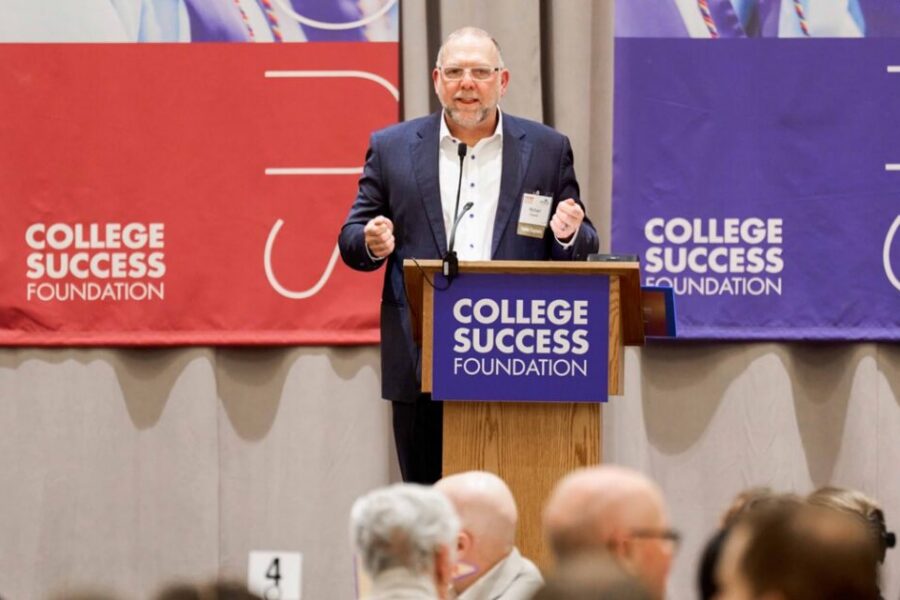
RCT@AU now holds two University-wide events each year. This year’s spring event, held on April 21 was called “Finding Steady Ground: The Role of Relationships in Times of Polycrisis.” This event brought together approximately 100 participants to explore the concept of polycrisis, when multiple distinct crises occur at the same time and interact with each other, often amplifying each other. The event treated this not as a doomsday scenario, but as an invitation for ecosystem-building.
PhDLC alum and Antioch Board of Governors member Froswá Booker-Drew was the event’s featured speaker. She introduced the front porch as a vital symbol of community, urging participants to build figurative front porches. These intentional, organic spaces for community gathering can support, challenge, and sustain the individual.
The session intentionally moved from a traditional panel format to an interactive fireside chat between Grosman and Booker-Drew, followed by breakout sessions. Participants described the topic as potentially challenging and overwhelming but appreciated how they came out of the session grounded and hopeful.
When speaking of the necessity of community, Froswá Booker-Drew offered a warning about the dangers of modern societal trends. She argued that the current move toward isolation in urban design and culture is not benign. As she put it, “Isolation is the glue to oppression.” By fostering an environment where individuals are discouraged from gathering or sharing resources, she warned that systemic inequities become far easier to maintain. She also spoke about managing the challenges of radical empathy. She discussed the importance of maintaining firm boundaries while remaining compassionate and offered a model for generative leadership. As she put it, “I can give grace and demand that you respect me.”
Froswá Booker-Drew also challenged academic institutions to rethink their engagement with global crises and the communities they serve. She says that, in order to navigate wicked problems, leaders must look beyond the human relations lens and pay attention to structure, symbolism, and power dynamics: “Academia tends to have the history of coining and co-opting and not going to the people with the lived experience and asking, ‘How do you want to solve for it?’”
For the RCT@AU organizers, Booker-Drew’s message serves as a powerful call to continue centering the voices and solutions of those most impacted. Schwartz says that Booker-Drew brought not only her expertise but also her grounded presence and wisdom. As Schwartz says, “To engage with Froswá in particular at this moment feels like a profound gift.”
Froswá Booker-Drew ended her session by giving a closing blessing. As she said, “There is power in who you are, and by sharing that, you connect others and help them know they’re not alone.”
Cultivating Sustenance
RCT@AU provides ongoing connection through monthly affinity groups, which serve as essential spaces for respite and recharging. These groups, focused on psychotherapy, leadership, and education, offer an open-access environment for members to discuss RCT principles. The Leadership & Change group also hosts One Good Thing Fridays, where participants engage in conversational approaches to explore core concepts. These sessions focus on how RCT applies to different levels of impact, such as “micro” (individual interactions and personal growth), “meso” (how concepts manifest within organizations), and “macro” (broad systemic applications and leadership practices).
Schwartz emphasizes that these groups provide places for students and faculty to connect with others who are working on similar projects and ideas. As she says, “These RCT spaces, these events, and these other affinity groups and such, they’re providing people with an important space.”
Schwartz and Grosman have also helped relaunch Works in Progress, the ICGC’s open-access, peer-reviewed publication series dedicated to advancing RCT. The editorial process for Works in Progress is itself designed to be relational and to support the development of emerging and established scholars.
Schwartz emphasizes that she and the other editors at Works in Progress aim to provide “clear, timely, respectful communication,” and feedback that is relational and developmental in nature. Ideally, this process prioritizes growth and mutuality, ensuring that the peer-review experience remains a growth-fostering space for researchers across disciplines. In some ways, this is a departure from standard, detached academic peer review. Schwartz hopes that by ensuring feedback is developmental and relational, the initiative can better support and elevate scholars who may be newer to the publishing process.
50 Years of RCT
This year, the ICGC is celebrating the 50th anniversary of Relational Cultural Theory. As part of these celebrations, ICGC will be hosting a landmark conference in October at Wellesley College, where early RCT founders, particularly Jean Baker Miller, did much of their work. Schwartz will be giving the plenary address, “Learning is Movement: Shared Space, Curiosity, and Connection in Times of Polycrisis.” Grosman will also be in attendance, leading a workshop titled, “The Pulse of Connection: What Connection Feels Like.”
At Antioch University, the organizers are excited to carry the formal collaboration with ICGC into a second year. “Together, we are creating spaces for relational practice to thrive across disciplines, strengthen community, amplify voices, and promote social change,” says Grosman.
Schwartz says that she has been encouraged by the progress made in institutionalizing RCT connections over the past year. She says, “This first year-plus of us working to elevate RCT both in program and across the university to those interested has established a strong foundation of partnerships.”