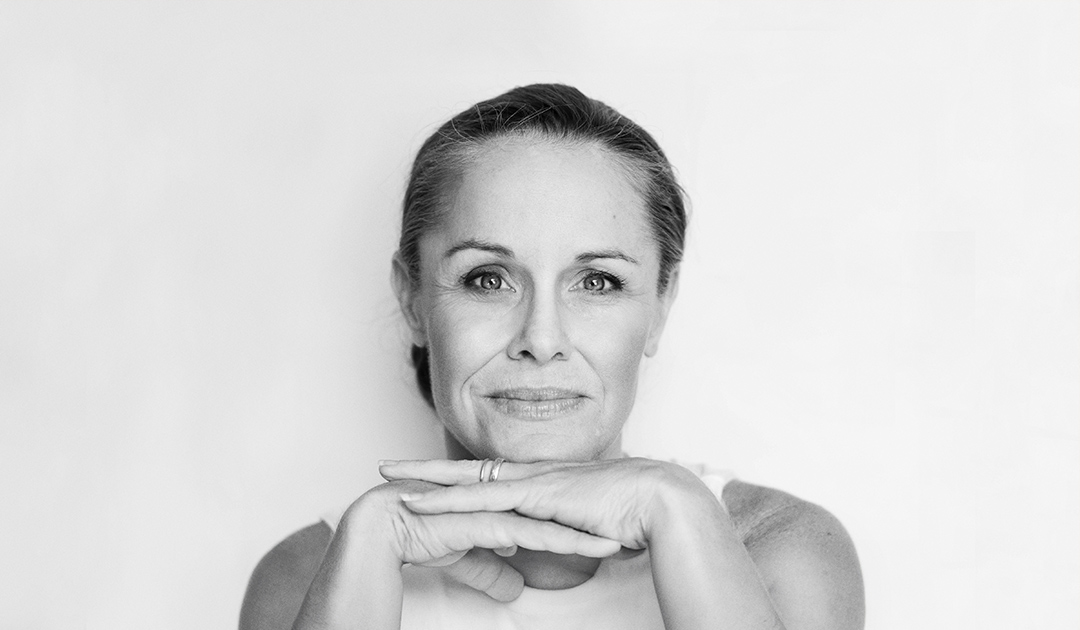

After more than 20 years as a coach, Aleka Thorvalson designed a master’s degree around her questions about belief and change.
For more than two decades, Aleka Thorvalson, PCC, has accompanied people through major change as a professional coach. Over time, she became increasingly intrigued by the complexity of change itself. Then the COVID-19 pandemic and the polarization that followed pushed her questions further.
“Why do we hold so tightly to certain beliefs, even in the face of contradictory evidence?” she asks. “What actually allows people to change their minds?”
“I wanted to go deeper,” she says, “connecting what I’d learned through experience with scientific research on human behavior, belief, and change.” She wasn’t looking to change careers. She wanted to bring greater depth to the work she already loved.
After more than 20 years of professional training and independent study, Aleka knew she could continue learning on her own. But she wanted something different: the rigor, structure, and accountability of graduate education, along with opportunities to have her thinking challenged by faculty and other professionals.
The degree itself mattered, too. As she looked toward expanding her work into teaching, mentorship, and developing original frameworks, she wanted a formal academic credential to complement her professional experience.
That has led her to Antioch University, where she designed her own graduate specialization and is now developing an original framework to help people navigate uncertainty.
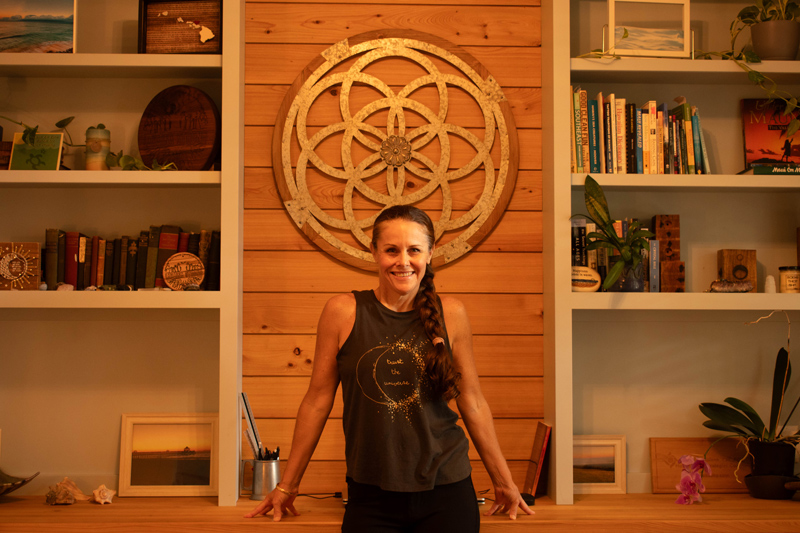
A Degree Built Around Her Questions
The questions she wanted to explore, Aleka says, “didn’t fit neatly into any one traditional degree program. They were interdisciplinary, nuanced, and increasingly relevant to the challenges I was witnessing in the world.”
Antioch’s Individualized Master of Arts (IMA), where students design their own course of study around a central inquiry, supported by advisors, faculty, peers, and optional mentors, offered a different path. “The opportunity to design an education around these interconnected questions was exactly what I had been looking for.”
Aleka, who expects to graduate in spring 2027, is pursuing an MA in Social Sciences with a self-designed specialization in Uncertainty Resilience & Psychospiritual Coaching. Her specialization brings together areas often explored separately, including belief psychology, cognitive science, epistemology, identity and meaning-making, and the science and ethics of coaching.
She has designed courses on how beliefs form and persist and how identity and emotion shape our ability to change. One, called “Shaky Ground,” examined how trauma shapes our relationship with uncertainty.
As Aleka describes it, designing a course means developing learning objectives, selecting research and readings, and creating assignments and projects, with guidance and feedback from faculty and subject-matter experts. To her, “it’s what education should be: rigorous, collaborative, creative, and driven by genuine curiosity.”
It isn’t a solo effort. “Individualized,” she says, “doesn’t mean isolated.” Her advisor and IMA chair, Ashley Nielsen, has been “instrumental in helping me shape and refine the direction of my studies.” Aleka didn’t anticipate the connections she’d make, either: learning alongside thoughtful, accomplished colleagues, and working with faculty who care about their students while challenging them to think more deeply, has been “one of the most rewarding parts of the experience.” “Some of the most valuable learning has come from conversations that pushed me to consider questions I hadn’t thought to ask.”
“In many ways, the structure of the program mirrors the very subject I’m studying,” she says. “It requires curiosity, flexibility, and a willingness to venture into unfamiliar territory without always knowing exactly where the inquiry will lead.”
Why We Hold On to What We Believe
Uncertainty is the thread that runs through all of her questions. “We naturally seek stability and predictability,” she says, “but sometimes that desire for certainty can keep us attached to familiar patterns, beliefs, or identities, even when they no longer serve us.” Uncertainty resilience, as she describes it, is “the capacity to navigate life’s unknowns without becoming overwhelmed by the need for certainty.”
Her studies have changed how she thinks about belief. “We don’t always arrive at beliefs through a careful examination of facts,” she says. “Sometimes we develop or maintain them because they help us feel safe, connected, or certain.”
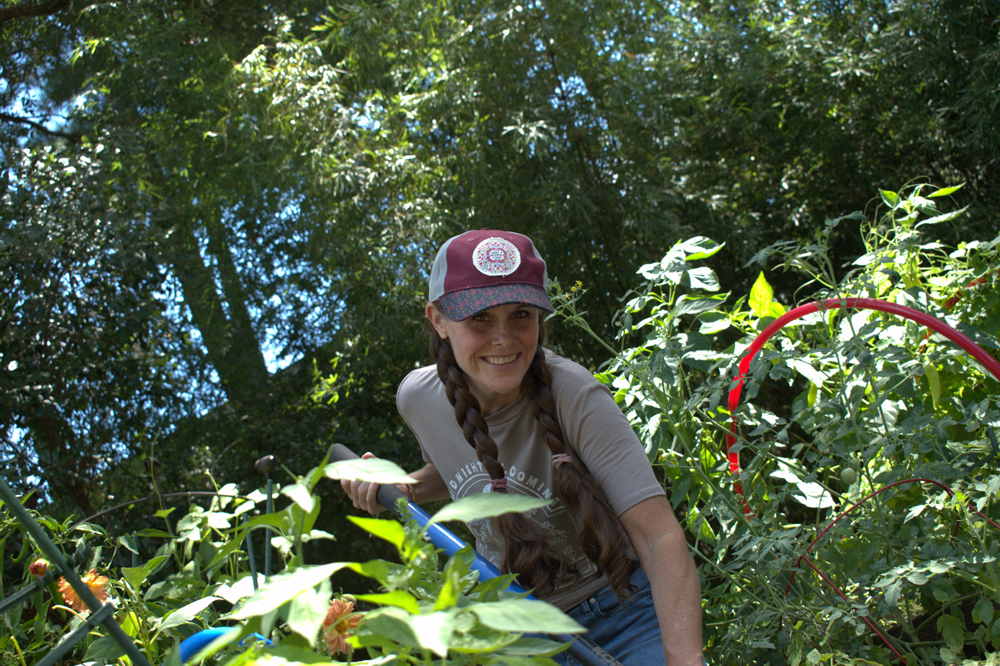
That has shifted how she engages with people whose beliefs differ from hers. “Rather than immediately focusing on correcting information or challenging a conclusion, I’ve become more interested in exploring what a belief might represent or protect,” she says. That doesn’t mean all beliefs are equally supported by evidence, she adds, or that understanding someone’s perspective requires agreeing with it. Meaningful dialogue and change, she says, “often require more than presenting facts. They also require curiosity, psychological safety, and a willingness to examine our own assumptions, because none of us is immune to the same processes.”
Not all uncertainty is the same, and she is developing a framework around that idea. Someone questioning a long-held belief faces a different kind of uncertainty than someone navigating an unpredictable career change or a disruption to their sense of who they are. Each may call for a different kind of support.
“When the support we offer doesn’t match the kind of uncertainty someone is facing,” Aleka says, “it can actually compound their distress rather than ease it.”
Putting Knowledge Into Practice
Aleka is bringing her research back to the work that first inspired her questions. Her capstone, which is in progress, is an original framework for uncertainty resilience and a cohort-based coaching program designed to put it into practice. She is also developing programs for both coaches and the broader public, and she is incorporating what she’s learning into an evolution of THE REAL® Coaching Method, her signature approach.
Her ambitions reach beyond her own practice. “I hope to help translate psychological research into accessible, practical approaches that strengthen critical thinking, emotional resilience, intellectual humility, and the capacity to engage with complexity,” she says. For her, those capacities matter well beyond individual growth. “Our beliefs don’t exist in isolation,” she says. “They influence the choices we make, the actions we take, how we treat others, and ultimately, the lives we build together.”
She began with a question about what allows people to change their minds. Going back to school, she says, brought a surprise of its own. “What I didn’t expect about going back to school was how liberating and energizing it would be to discover just how much I still don’t know!” she says. “It’s reminded me that curiosity doesn’t diminish with experience. If anything, it grows deeper, especially when we have the opportunity to learn from one another.”
Learn more about Aleka’s work at The REAL Change and in her Substack, The Grit and the Grace.
What question would you build a degree around?
Antioch’s Individualized master’s degree programs support self-expression within a community of learners working toward a more just world.
Explore the programs in Social Sciences and Humanities.