


This essay is part of Antioch Voices, a forum for Antiochians to speak out about issues important to them. Opinions expressed here belong to the author alone and do not necessarily reflect the official position of Antioch University. If you’d like to share your own voice, the first step is to send a short description of what you are planning to write about to [email protected].
Today is World Suicide Prevention Day.
This year’s theme, “Changing the Narrative on Suicide,” asks us to start conversations that can be difficult, uncomfortable, and deeply necessary.
One of those conversations is about shame and stigma.
Cultural norms, political rhetoric, and religious beliefs can profoundly shape our sense of identity, community, and belonging. They can be sources of meaning, connection, and strength. But when they are used to stigmatize, condemn, exclude, or silence people because of who they are, what they believe, whom they love, or the lives they lead, the consequences can be profound.
Shame tells people to hide.
Stigma tells them they will be judged.
Exclusion tells them they do not belong.
And together, those messages can create a terrible kind of loneliness, one in which someone may be surrounded by people and still feel entirely alone.
Suicide is complex. There is no single cause, and we should resist explanations that reduce it to one experience, identity, belief, or circumstance. But we also cannot ignore the conditions that can contribute to isolation, hopelessness, and disconnection, particularly when people fear that being fully known may cost them their family, community, faith community, friendships, or sense of belonging.
Changing the narrative means doing more than encouraging someone in crisis to reach out. It also means asking ourselves whether we are creating communities in which reaching out actually feels safe.
Do our words communicate dignity?
Do our institutions make room for people whose experiences differ from the majority?
Can someone tell us who they are, what they are experiencing, or what they are struggling with without fearing judgment or rejection?
Belonging can be protective. Connection matters. And sometimes the most important conversation begins by making it clear that another person does not have to hide in order to have a place among us.
On World Suicide Prevention Day, may we work not only to prevent suicide, but also to build families, communities, institutions, and systems in which fewer people are made to feel that they are alone.
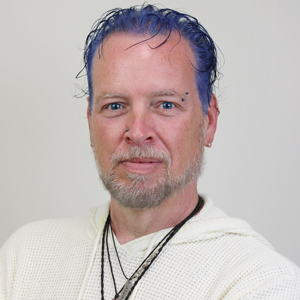
Jeffrey Fouche-Camargo
Jeffrey Fouche-Camargo, DNP, WHNP-BC, CPCHE, is the Founding Director of the Doctor of Nursing Practice (DNP) Program at Antioch University, where he leads curriculum development and program innovation grounded in health equity, social justice, and learner-centered education. He has extensive experience in innovative graduate and undergraduate nursing curriculum design, program assessment, and evaluation of student learning outcomes across multiple nursing education settings.