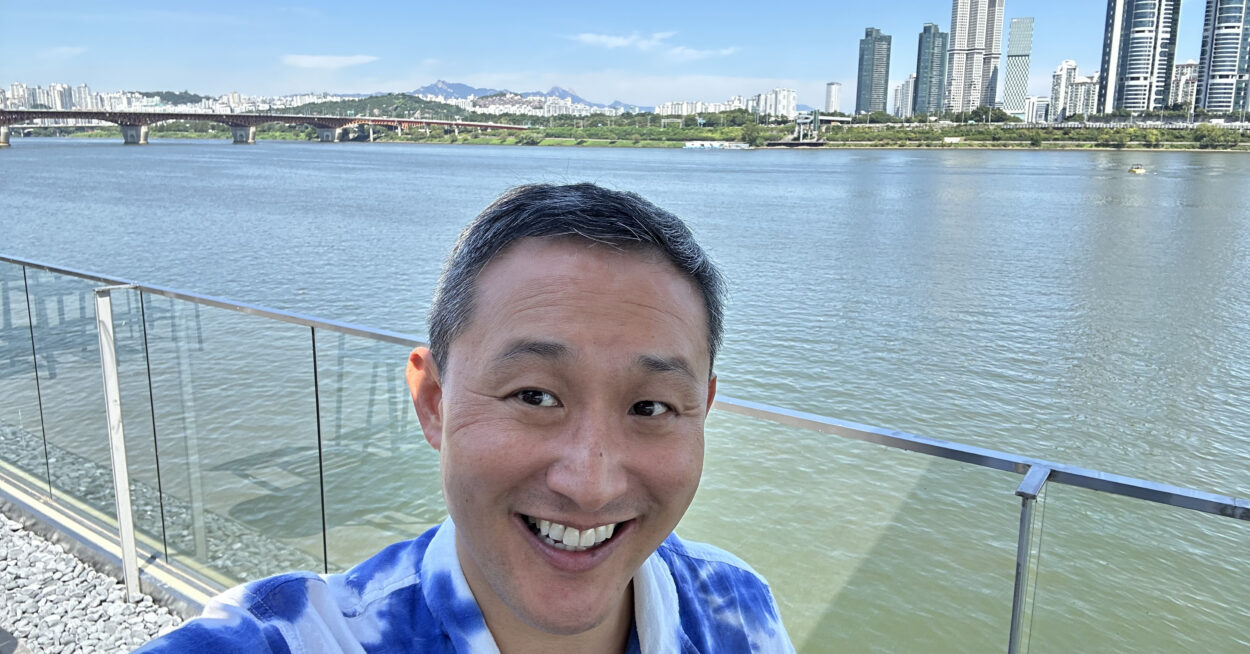
In the spring of 2025, author and Antioch MFA alum Tom Pyun learned that he would be receiving a prestigious Fulbright Award. This opened the door for him to explore the legacy of his grandfather—a man he never had the chance to know—and to find a deeper connection with his parents in the process. That fall, Pyun left his home in Los Angeles to travel to Seoul, South Korea, for a year of writing, researching, and emotional discoveries.
As a kid, Pyun heard little of his paternal grandfather. He and his family lived “very regular, middle-class lives” in Long Island, New York, he explains today. His parents had emigrated from Korea during the Korean War, and they left many of their memories of that time in the past. Among the memories left behind was almost no mention of his grandfather, Pyun Young Tae—even though Pyun Young Tae had been a notable figure in the history of South Korea. As Pyun says, “My father never mentioned him—or the fact that his father was the former Prime Minister.”
His father died when Pyun was 13 years old. After that, his mother would mention details “here and there” about his grandfather, says Pyun, but that was about it. After his mother died in 2021, Pyun felt a growing awareness of the things he didn’t know about his family and the questions that had gone unanswered.
As he explains, “I was like, ‘Holy cow, I know nothing about their experiences.’” He could understand why they didn’t spend much time dwelling on their memories. “I think for a lot of reasons related to trauma, they never talked about their experiences, why they left South Korea during the war and became immigrants.” But Pyun, one generation removed, had the opposite reaction. He said to himself, “I really want to know more about this.”
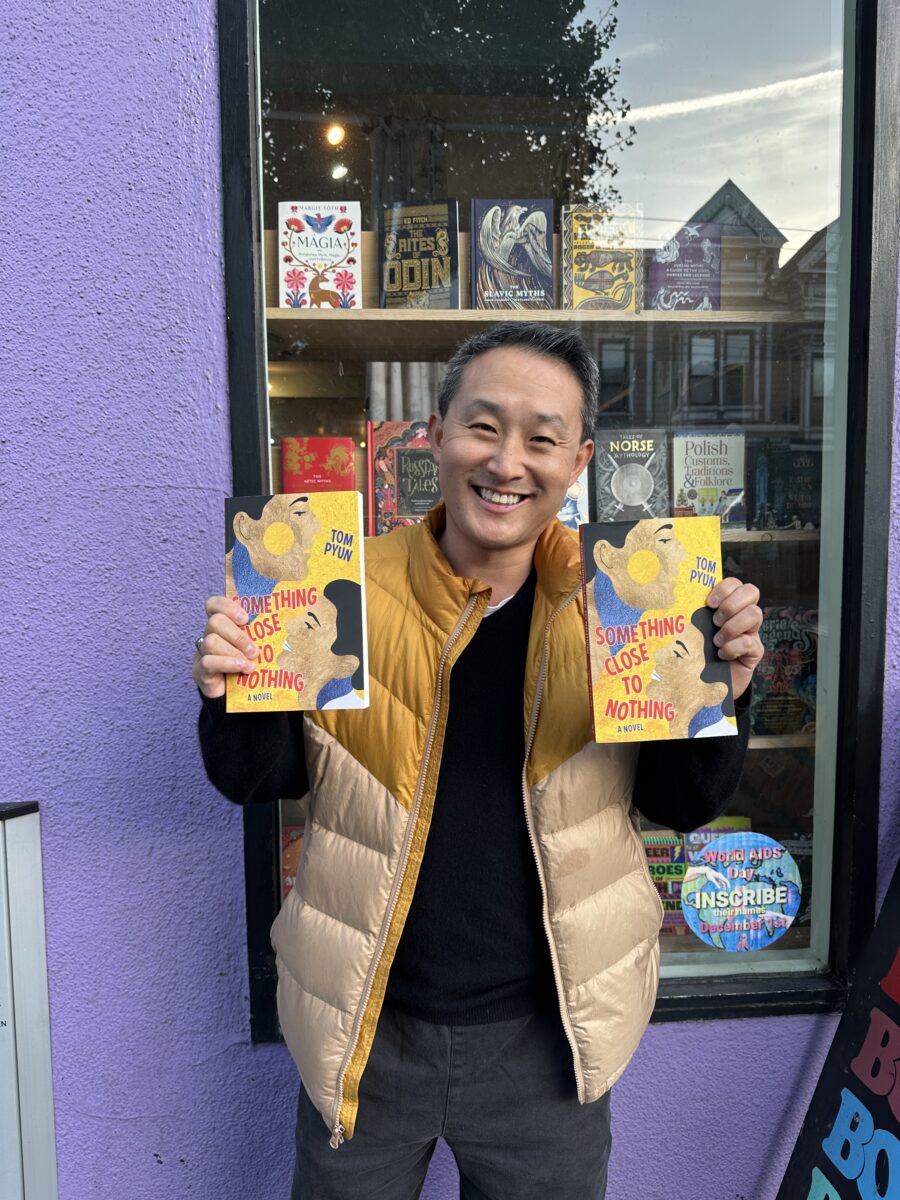
Pyun has long been a writer. After graduating from the Antioch MFA in 2020, he published his first novel, Something Close to Nothing, in 2024. Now he saw these lingering questions as something he could potentially explore through his craft as a writer. Pyun decided to pursue a Fulbright Award to fully focus on writing and exploring his family’s past.
The application process took significant effort, but he found help from another Antiochian, education faculty emerita Cynthia McDermott, who had previously been awarded a Fulbright herself. “I wouldn’t be here if it wasn’t for Cynthia,” says Pyun. “She was incredibly hands-on and gave me great feedback on my proposal.” Even with McDermott’s help, it took Pyun a month just to write the first draft of his proposal. But it was all worth it when the application was successful, enabling a year of living and researching in Korea.
Pyun started his research period in South Korea in August of 2025. Though he’d visited the country before, his prolonged stay as a Fulbright grantee was an altogether different kind of experience, both creatively and personally.
One immediate issue was the matter of the Korean language. Pyun was already acquainted with the alphabet and some basic words, and he began taking language classes.
“It’s been a huge challenge,” says Pyun. “When I came here, I spoke almost nothing. I knew baby words.” After months of study, he says his Korean language skills have improved—a bit. “I’m like an advanced baby, now.”
With the help of a translator, he delved into the work and history of his grandfather, a former Prime Minister and Minister of Foreign Affairs who signed the Mutual Defense Treaty with the United States, securing military protection in case North Korea violated the Korean Armistice Agreement. Pyun also read some of the works his grandfather had written in English. The deep dive into the history and culture of his family was moving, but it also carried an element of grief when learning the legacy of a relative he’d never met.
“It’s unbelievably haunting,” says Pyun. “There’s just a chasm in time, in culture, in experience. But I think the beautiful thing about it is that I really feel his love for Korea. He dedicated his life to service to the country. I think he would be devastated by the fact that 75 years later, they’re still divided and there’s no resolution in sight. But I also imagine that he would be very proud of how much South Korea has developed economically. It was the second-poorest country in the world in 1951, and now it’s quite developed and vibrant.”
The time spent learning about his grandfather also expanded his compassion for his parents, though that feeling comes alongside a feeling of loss.
“With my parents gone too, I feel like I understand everything better,” says Pyun. “I understand them better, and that’s been a really beautiful experience. This experience helped me bridge a cultural gap, and living in Korea has given me a deeper level of understanding of their perspective. But it also underscores a lot of the grief, the loss and the never knowing the answer to all these questions—and I have so many.”
Pyun’s creative endeavors during the project were fruitful. His Fulbright-funded research ended in June 2026. At a closing ceremony with other Fulbrighters who had also completed their terms of study, he read aloud a new personal essay he had written during his time in Korea. Now he is planning to expand the essay into a book of personal essays.
That’s far from the extent of the writing he produced. Being able to work as a paid writer afforded him the space to experiment with different forms and ideas, including writing two original television pilot scripts.
“Just living here has inspired so much,” he says. It has given him “so many ideas to pursue in terms of my writing, and it’s been a huge privilege to have a full year to focus on my research and writing.”