
Peter Palmiotto believes that outdoor classrooms can be much more intentional than the cliché of students enjoying a sunny day out on a manicured quad. Instead, he says, outdoor classrooms can be designed to work in any weather—and the natural world can be a key part of the learning they facilitate. Peter should know: he has spent the past dozen years building Antioch’s 80-acre teaching forest, Glover’s Ledge, into a highly functional and much-used outdoor classroom. In this conversation, he talks about the decisions made there, the vision for the future, and how other schools might cultivate their own outdoor classrooms. As Peter says, “The dialogue and the dynamic of a group moving through a outdoor classroom is totally different than students sitting in a classroom.”
Subscribe: Apple Podcasts | Spotify | Pandora | Simplecast
Video
Shownotes
Visit the Glover’s Ledge website to learn more about Antioch’s premier outdoor classroom. Visit Antioch’s website to learn more about the MS in Environmental Studies and the PhD in Environmental Studies. You can also find the expanded press release about the recent $1.5 million dollar gift supporting Antioch’s Environmental Studies department and Glover’s Ledge on Common Thread.
Further listening: a previous Seed Field Podcast interview with two education faculty that asked, “To Reopen Schools, Teachers Took Their Students Outside. Should They Stay There?”
– – –
This episode was recorded January 27, 2026 via Squadcast and released February 11, 2026.
The Seed Field Podcast is produced by Antioch University
Host: Jasper Nighthawk
Editor: Nastasia Green
Producer: Karen Hamilton
Work-Study Assistants: Dani LaPointe, Odin Rasco, Rylie DeGarmo, and Shayla Kerr
Additional Production Help: Amelia Bryan, Jonathan Hawkins, and Laurien Alexandre.
Guest
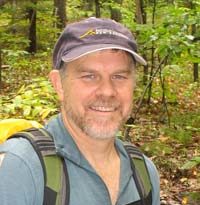
Peter Palmiotto is Core Faculty in the Environmental Studies Department based on Antioch’s New England campus. He is also Director of Antioch Forests, in which role he oversees Glover’s Ledge, the 80-acre teaching forest that Antioch owns and manages in outside of Keene, New Hampshire. As a forest ecologist, Palmiotto incorporates practical field skills and applied research into his teaching practice.
Transcript
Peter Palmiotto [00:00 – 00:31] – The indoor classroom, I’m always feeling a little confined and in front of an audience. Whereas when I’m in the outdoors, I’m with a group and we’re moving and looking at things and sharing in a way that’s just so much more natural. And the dialogue and the dynamic of a group moving through an outdoor classroom is totally different than students sitting in a classroom. And it’s just such a difference. It’s really night and day for me.
Jasper Nighthawk [00:37 – 01:54] – This is the Seed Field Podcast, the show where Antiochians share their knowledge, tell their stories, and come together to win victories for humanity. I’m your host, Jasper Nighthawk. And today we’re joined by Peter Palmiotto for a conversation about outdoor classrooms. What are they? What do they offer students and communities? And how can we create and cultivate them? Peter Palmiotto is the perfect person to have this conversation with, because since 2014, he’s been the main faculty member in charge of Glover’s Ledge. Glover’s Ledge is an 80-acre outdoor classroom in the forests of western New Hampshire. Glover’s Ledge is located about a 30-minute drive from the city of Keene, which is where Antioch University’s main New England campus is located. And Peter is core faculty in the Department of Environmental Studies located there. Part of his role managing Glover’s Ledge is that he is the director of Antioch forests. And I’m excited to learn from Peter about this specific forest and outdoor classroom. And I also want to zoom out and think about outdoor classrooms more generally, the theory behind them, and the considerations that go into cultivating one, no matter the region or the climate. So with that intro, Peter, welcome to the Seed Field Podcast.
Peter [01:55 – 02:00] – Thanks, Jasper. And I’m looking forward to talking about our outdoor classrooms with you.
Jasper [02:00 – 02:20] – I am too. And to start our conversation, I always like to ask guests to share where we’re coming to the conversation from. So anybody watching the video version of this podcast will see we are both indoors. So we’re not in an outdoor classroom right now. We discussed when we were planning this, should you be at Glover’s Ledge while we recorded this and we decided that probably wouldn’t be ideal for audio.
Peter [02:20 – 02:32] – That would miss minus degree temperatures outside notes. Indeed, it is late January as we’ve hit record.
Jasper [02:32 – 03:28] – But I also want to, I like to disclose a little bit about who we are and what we bring to the conversation. So I can go first. We’re talking about land in the United States. So I want to share, I’m recording this podcast in Los Angeles. And I want to say Los Angeles is the traditional homelands of the Tongva, Tataviam, and Chumash peoples. As for myself, I am a white man. I identify as cisgendered and queer. I’m not living with a physical disability, but I do experience anxiety and depression. I’ve talked about that a fair amount on this show, actually, and I think it’s useful to share. I hope we talk a little bit about mental health and being outdoors in this conversation. Yeah, I would also disclose I have a college degree and a master’s degree. I have steady housing, steady income, and I also have a three-year-old child. So I bring that to conversations about education, is thinking about my own child’s upcoming education. I’ll hand it over to you, Peter.
Peter [03:29 – 04:05] – Thanks, Jasper. I’ll follow your lead and identify that I’m in New Hampshire, and that’s the land here. And Glover’s Ledge that we’re going to talk about occupies the unceded land of the Abenaki people in this region. I’m a white cisgendered male. I have a doctorate degree in ecosystem ecology. I’m a certified forester. I own a home. I’m married to an amazing, talented artist who bore two of my adult children, my two adult children, we have two, who both inspire me every day.
Jasper [04:06 – 04:14] – That’s beautiful. Thank you for sharing that, Peter. And before we get to outdoor classrooms, how did you come to work in forestry and environmental studies?
Peter [04:14 – 04:45] – My brother was a forester for one. So I guess I followed in his footsteps and went to college to be in forestry and just love being in the outdoors all the times where I felt most relaxed and always something new was occurring in forests. When I went out there, whether it’s the mountains of the Northeast and the Adirondacks or the mountains of Southeast Asia, where I did my graduate studies. Just love being outside. And so forestry and environmental studies is something I’ve always just been part of the way I am, I guess.
Jasper [04:45 – 05:02] – Yeah. Thank you for sharing that. And I feel like that kind of ties in to the idea of studying outdoors. So can you define for us, what does an outdoor classroom mean to you?
Peter [05:02 – 05:43] – I really love that question because learning outdoors just so resonates with what I do and how I teach. And if we’re going to define what an outdoor classroom is, sort of different than any outdoor space like a public park, an outdoor classroom is a place where there are natural communities that you can learn about and elements within that place that create opportunities for learning. Those kind of elements are specific places where students can gather, people can gather, shelters, again, diverse habitats, and in many places, interpretation information. They’re special places that create opportunities for them.
Jasper [05:44 – 06:07] – Thank you for that definition. And I appreciate you specifying how it’s different from a public park. I feel like as we’re defining it or trying to understand what outdoor classrooms are, it would be really helpful for us to look closely at a specific one. So tell us about Glover’s Ledge. You have been helping create it, build out its infrastructure since 2014. Describe this outdoor classroom to us, please.
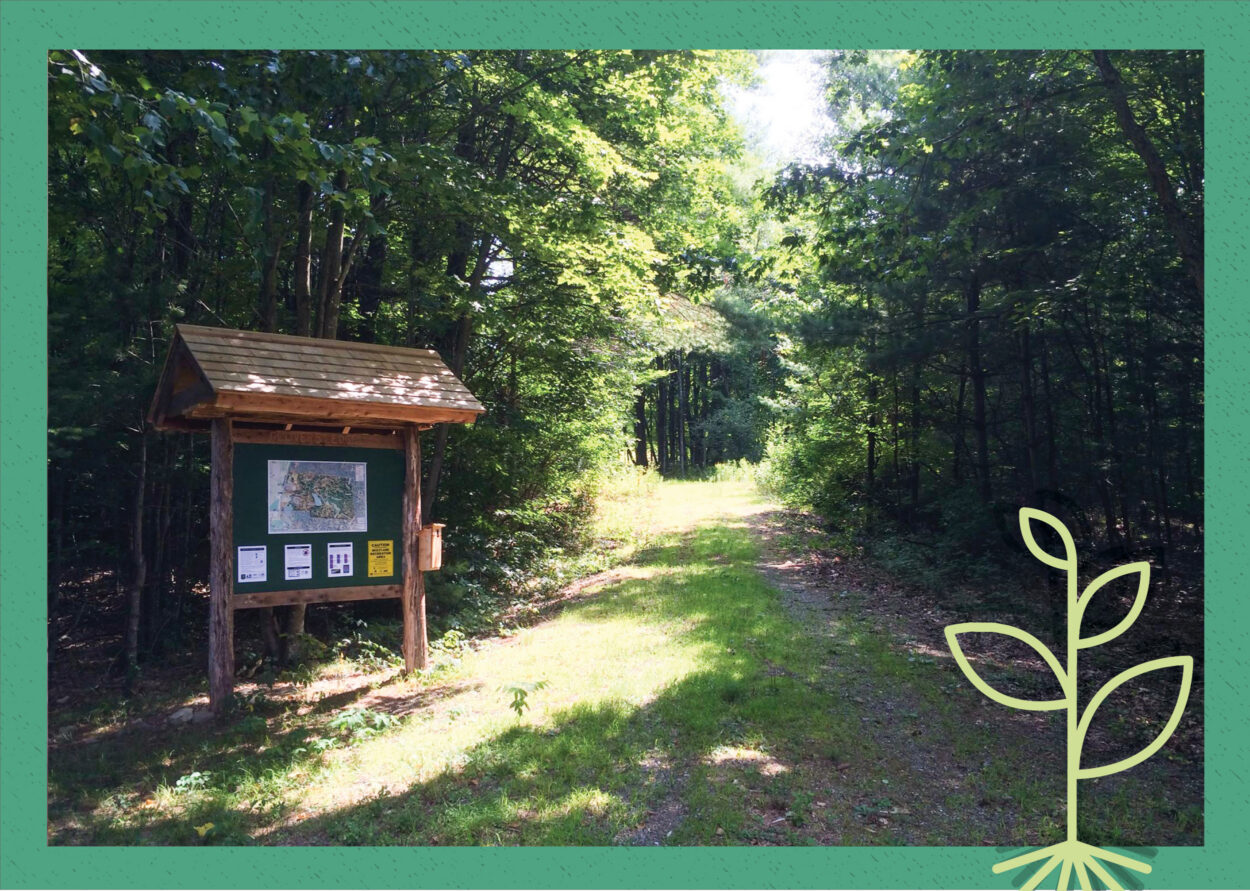
Peter [06:08 – 06:49] – Glover’s Ledge, pretty special place in that numerous cohorts of graduate students and community members have used the property. But it’s an 80-acre property. Three-quarters of it is forested with a very interesting vernal pool complex and pond. It’s got fields in terms of meadows that we’ve established and cultivate and mow. And some of those elements I described to you for learning that we created was like a pavilion, interpretive trails, half mile ADA compliant trail, all projects that we developed on the property since we acquired it in 2014.
Jasper [06:49 – 06:57] – That’s great. And so vernal pools, those are like pools that fill up during the springtime, but are empty during the fall. Is that right?
Peter [06:57 – 07:13] – Vernal pools are wetlands, yes, that don’t have fish in them. And so they’re amazing places for breeding amphibians and spring peepers in the Northeast where they just are screaming in the early spring while they’re breeding.
Jasper [07:14 – 07:16] – Sorry, what are spring peepers?
Peter [07:16 – 07:23] – Spring peepers are little tiny frogs that have an amazing chorus that if you’re really close, it’s rather deafening, but beautiful.
Jasper [07:24 – 07:30] – That’s great. So does that also like draw in a ton of different birds and other migrating animals?
Peter [07:30 – 08:00] – Certainly birds would use it for bathing and drinking and insect foraging, frogs, salamanders, amphibians, fairy shrimp is an indicator of a vernal tool. In our work at Glover’s Ledge with camera trapping and one of the most recent projects, one of my students captured amazing wildlife using the vernal tools from black bear to bobcats to all the small mammals. And it’s pretty amazing.
Jasper [08:00 – 08:22] – Yeah, that’s so cool. And it seems like one of the benefits of having this forest for the last 12 years that you have been studying is that there have been all of these different projects to understand. It’s hydrology and geology, it’s wildlife, it’s bird life, it’s all of these different roles. Can you talk a little bit about how like the role that it plays in the environmental studies graduate program?
Peter [08:23 – 09:27] – Certainly the base, I would say, is a place to hold classes. And I’ve run many of my classes there, wildlife and forest management class, New England flora class, our community ecology class. So the class lessons, when we’re based at Glover’s Ledge, allows us to be out in the environment in which we’re studying, the students are learning about, provide real hands-on experiential learning, as I’ll define it, where we can talk about the habitat and the relationships because they can see all the players right there. And yeah, it’s just great for that. And then all the projects that we have ongoing there allows us to talk much more about the big picture of the global issues, whether it’s climate change or forest management or wildlife habitat. We see the elements, we talk about them in person, and at least from my perspective as an instructor, that’s much more tangible and therefore the learning is a little deeper.
Jasper [09:27 – 09:37] – Yeah. Can you talk a little bit about the difference that you see in students and maybe in your own self between teaching in a traditional classroom and teaching in an outdoor classroom?
Peter [09:37 – 10:14] – Yeah, that’s kind of easy for me because the indoor classroom, I’m always feeling a little confined and in front of an audience. Whereas when I’m in the outdoors, I’m with a group and we’re moving and looking at things and sharing in a way that’s just so much more natural. And the dialogue and the dynamic of a group moving through a outdoor classroom is totally different than students sitting in a classroom. And it’s just such a difference. It’s really night and day for me.
Jasper [10:15 – 10:23] – What is that dynamic? Like, what are some of the things that you’re able to do in an outdoor classroom that just wouldn’t be possible if you were inside?
Peter [10:24 – 11:24] – Well, I think about being inside, you know, you break a classroom lesson into different discussions. I’m not going to say lectures because we rarely sort of lecture here at Antioch, but different lectures, different lessons. And you move from one to the other. Maybe you break out into groups and you do breakout sessions. But in an outdoor classroom, you’re doing similar type structure, but moving from one point to the other. You’re basically enabling, allowing, supporting informal discussion amongst the students as we move from one place to the other. There’s lots of conversation, reflection on what was just said or just general connections between students that they don’t have in a formal classroom. And I just feel that it’s just a more total enriching environment to learn in because of those relationships, those connections that students make throughout the whole class period.
Jasper [11:25 – 12:19] – Yeah, that makes a lot of sense to me. Like, I also think when I have been in classrooms, I’ve had experiences of, as both a student and a teacher, like taking a field trip or doing a lesson just out on the school grounds. And it seems like when it’s just the students in the classroom, it’s often hard to have the students interact with each other in a natural way. I think in my experience, when we’re outside, there is a way that especially when we’re moving through a space or walking, there’s a way that you’re soothed by the outdoors. But you’re also like your attention can fall upon things or you can naturally end up walking by somebody who you might not otherwise talk to, and strike up a conversation with them. It’s just like a more organic social space than a classroom with a bunch of chairs in front of desks.
Peter [12:19 – 12:22] – I just agree. I feel that way for sure.
Jasper [12:23 – 12:49] – Yeah. So I want to talk a little bit about the work of building outdoor classrooms and really cultivating them, like helping them grow into really meaningful spaces that affect generations of students and also the broader community. So can you walk us through some of the infrastructure that you have added over the last decade plus on Glover’s Ledge and how that has transformed your ability to use this outdoor classroom?
Peter [12:50 – 13:43] – Certainly. We acquired the property in 2014, a donation from a former student. And that student, having taken the class, basically said, I think this property will better serve Antioch and the community in your hands than his. So immediately we imagined the vision and the plan as an outdoor classroom. So we shut down some trails that, you know, there’s quite a network of trails. We made them simpler and easier to maintain. We built a pavilion. It was a community event to build it. Again, a place to gather, a place to be outside, to be covered from sun and rain with a shed and barbecue grills so that we could have social events, which we do regularly, both our department, other departments, and all of the New England campus use.
Jasper [13:43 – 13:56] – Like a focal point. It’s useful to say, meet me at the pavilion, or we’ll go out and we’ll start at the pavilion, or it just kind of like focuses the energy.
Peter [13:56 – 15:06] – Indeed, later in 2018, we acquired the front four acres of the property and a traditional building. So that was another anchor for us. And then the development of the ADA trail added a really important element for classroom learning in that we had all those interpretive sites. In our classes, we also, when we break out the groups or we do what’s called pair shares, you go for a walk with someone and talk about something. You know, a half mile trail is pretty good stretch to have a good opportunity for conversation. The vernal pool complex, the forest habitats, has allowed students to do tangible forest management plans, forest health assessments, studying vernal pools, looking at forest carbon, using the solar array data to think about weather and climate. And all of those elements allow an instructor to talk about those global topics, such as climate change, such as species diversity and conservation. So again, it’s an outdoor classroom where there are opportunities for learning and the students see those opportunities in the faculty with their pretty amazing skills.
Jasper [15:07 – 15:40] – Yeah. Hearing you describe that, I was thinking other people listening to this may be thinking about setting up outdoor classrooms for their own university or their community, maybe for even a grade school or high school. And I was thinking, it sounds like there are a couple of different levels of intervention that you have done to make this a really productive space for students. Are there any other like levels that I’m missing? Like maybe there’s also a community level of having those partnerships or that. Yeah. Am I capturing some of these considerations?
Peter [15:41 – 16:22] – Indeed. And you talked about the community element and we’re actively working to connect with the high school. When I have an advisory board, those individuals help us connect with the community and whether it’s the local elementary school or the local Boy Scout troop. It’s those partners, those community members that expands the value of the property and its use. And we invite them in and the enthusiasm for the young folks. I mean, our programs are masters and PhDs in environmental studies, but when we work with the high school and the middle school and younger children, there’s a lot of fun energy associated with those outings..
Jasper [16:22 – 16:40] – Yeah, that sounds so fun. And I know when I was a kid in grammar school, middle school, high school, like those days when you got loaded onto a bus and you actually got to go somewhere and be out in the world were always so, so wonderful. And so having another spot where teachers can take their kids is great.
Peter [16:40 – 17:11] – We run field studies trips, always as part of our programs. And when we have alumni and they come back, those are the experiences they talk about. We use Glover’s Ledge as a place where we have training modules and a picnic to orient and start the school year. So it’s hopefully a community building experience for the students. Even one day, our students know Glover’s Ledge from the beginning. And we have work parties that come out and help us with trails or whatever we’re doing.
Jasper [17:11 – 17:38] – Yeah, it kind of belongs to the students as much as to the university and the wider community. But I wanted to talk about your plans and dreams for the future of Glover’s Ledge. So I know that you recently got a half-million dollar donation to set up a scholarship that’s actually in your name that is associated with supporting and developing Glover’s Ledge. Can you tell us a little bit about the Peter Palmiotto Fund?
Peter [17:39 – 18:45] – The Peter Palmiotto Conservation Fund was intended to support Glover’s Ledge into the future. It was half the funds going directly to graduate students, graduate student fellowship that will help students be forest managers, property managers, help me maintain the property. And the other half is for projects on the property. And so we’re looking to improve the property by putting in more pollinator fields, looking to expand the facilities a little bit, hopefully create temporary housing that would enable the property to become a study way or housing for intensives. With the funding, I hope to create a position that will actually be more active, proactive in reaching out and going to schools, inviting schools to come to the property. So those resources will really enable us to have a much greater impact than we have in the last decade that we’ve had the property, I think.
Jasper [18:46 – 18:56] – And when you and I met up to kind of talk about what we might talk about here, I remember you were so excited about, like, maybe we will have flush toilets.
Peter [18:58 – 19:27] – Yeah, that’s true. You know, expanding the facilities to include flush toilets would be really wonderful. As I mentioned, we have a composting toilet now and we rent a porta potty, but it’s just not as conducive to the basic comforts that most people are used to. And yeah, that’s one of the elements that we don’t have is restroom facilities for disabled persons, people in a wheelchair. Hopefully we’ll be able to correct that in the near future.
Jasper [19:28 – 20:10] – Yeah, I appreciate the way that this project, it’s unlike, you know, a virtual Zoom meeting. It’s very practical and grounded. It’s like, oh, will people in wheelchairs or using walkers be able to get to the pavilion? Are there flush toilets? Is there a place where when it’s raining, you can stay out of the rain? Like the practicality of that has a certain grounded quality that just feels like a wonderful part of studying, actually. So as my final question, I wanted to ask if there was a practice or a part of your work students’ work at Glover’s Ledge that you think other people could take and incorporate into their own daily lives?
Peter [20:10 – 21:29] – I would share that when I go to Glover’s Ledge and I’m off alone or any place in the woods really and to feel grounded, I do this little exercise that anybody can do, particularly when you’re in a natural environment, and that is to think about your different senses. So take a minute to look around and identify everything you can see. Identifying the sense of trees, squirrels, birds, you know, use your visual senses and then shift to your auditory senses. Take a minute to really focus on what you can hear and then move on to what you can feel. That is touch, whether it’s the cold, the warmth, the wind on your face, a tree, a rock, a leaf. You do that, then take it all in. And in that sort of five minutes of just testing and heightening all your senses individually and then collectively, you end up feeling and being in a different place prior to when you started to do that little exercise. With that, I think you can feel the forest, the natural environment better than when you walked into it. And of course, always when I’m doing something like that and I touch a tree, I often hug a tree. So it just gives you a whole different perspective.
Jasper [21:29 – 21:35] – That’s a beautiful invitation, Peter. Thank you for that. And thank you for coming on the Seed Peel podcast and sharing all of this.
Peter [21:36 – 21:39] – You’re welcome. Thanks for the conversation. I do appreciate you.
Jasper [21:45 – 23:00] – You can learn more about Glover’s Ledge, the outdoor classroom that Peter directs, at the Glover’s Ledge website. We’ll link to that in our show notes. We’ll also link to the webpages for the programs Peter teaches in, the MS and PhD in Environmental Studies. And we’ll link to the press release announcing the recent $1.5 million gift supporting Antioch’s Environmental Studies Department and Glover’s Ledge. We post these show notes on our website, theseedfield.org, where you’ll also find full episode transcripts, prior episodes, and more. The Seed Field Podcast is produced by Antioch University. I’m your host, Jasper Nighthawk. Our editor is Nastasia Green. Our producer is Karen Hamilton. Our social media manager is Selina Starling. Dani LaPointe, Odin Rasco, Rylie DeGarmo, and Shayla Kerr are our work-study assistants. We received additional production help from Amelia Bryan, Jonathan Hawkins, and Laurien Alexandre. Thank you for spending your time with us today. That’s it for this episode. We hope to see you next time. And don’t forget to plant a seed, sow a cause, and win a victory for humanity. From Antioch University, this has been the Seed Field Podcast.