
Physical and mental health are deeply connected, yet the medical field too often treats these as entirely separate domains. Deana Batross says that this is unfortunate, because medical procedures (like heart transplants) often have psychological side effects, and mental health conditions (like complex PTSD) often have physical causes. Luckily, Deana is a Psychiatric Nurse Practitioner trained in the biopsychosocial model that sees the patient as a whole person. In this conversation, Deana discusses how she thinks about trauma, shares how her students in Antioch University’s Psychiatric Nurse Practitioner program study this topic, and discusses her work advocating for greater access to physical and mental healthcare.
Subscribe: Apple Podcasts | Spotify | Pandora | Simplecast
Video Podcast
Shownotes
Visit Antioch’s website to learn more about the Psychiatric Mental Health Nurse Practitioner program that Deana chairs. You can also visit the main page for the Graduate School of Nursing and Health Professions.
If you’d like to listen to a related podcast episode, try our conversation with the psychologist Stephen Southern about expressive writing’s potential for treating complex PTSD: “Therapists Are Using Creative Writing to Treat Complex PTSD—and Build Resilience”. You may also be interested in our conversation with the therapist Rachele Moskowitz about somatic approaches to therapy: “Using Somatic Therapy to Understand the Trauma in Our Bodies”.
This episode was recorded September 22, 2025 via Squadcast and released November 5, 2025.
The Seed Field Podcast is produced by Antioch University
Host: Jasper Nighthawk
Editor: Nastasia Green
Producer: Karen Hamilton
Work-Study Assistants: Dani LaPointe, and Liza Wisner.
Additional Production Help: Amelia Bryan, Jonathan Hawkins, Melinda Garland, Jefferson Blackburn-Smith, Gina Calcamuggio, Jenny Hill, Kati Skon, and Laurien Alexandre
To access a full transcript and find more information about this and other episodes, visit theseedfield.org. To get updates and be notified about future episodes, follow Antioch University on Facebook.
Guest

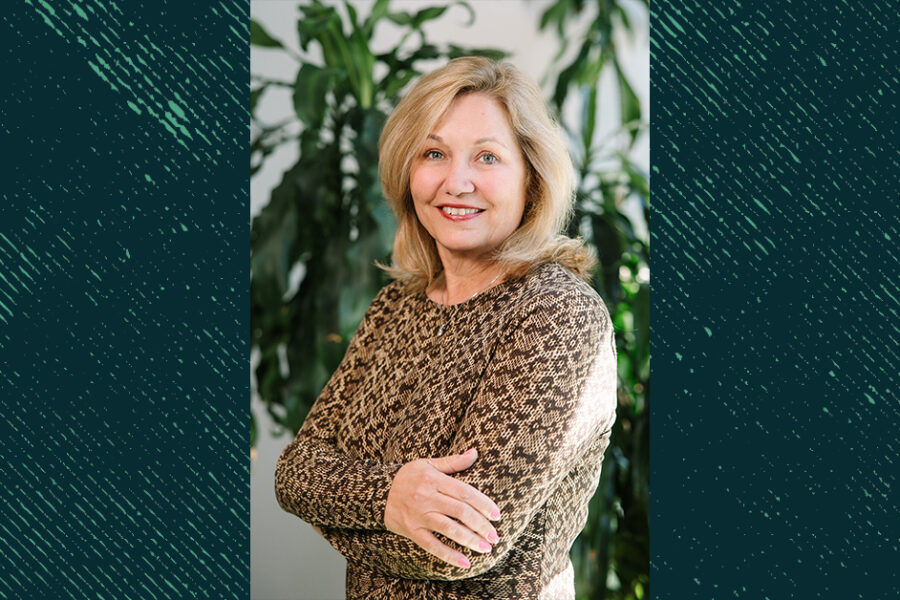
Deana Batross is the Founding Director of the Psychiatric Mental Health Nurse Practitioner program at Antioch University. She has been a nurse for over three decades, and prior to becoming a Psychiatric Nurse Practitioner she was a Family Nurse Practitioner. She holds a Doctor of Nursing Practice from Otterbein University.
Transcript
Deana Batross [00:00 – 00:26] – I define trauma as anything that impacts someone’s psychological health and mental health, and it can be whatever the patient describes it as. It’s not for me to decide what’s traumatic to them. It’s for them to tell me what’s traumatic to them. Some things are severe and some things are just a single event that happened, but it varies widely. And the stories that I hear on a day-to-day basis are pretty significant.
Jasper Nighthawk [00:26 – 02:12] – This is the Seed Field Podcast, the show where Antiochians share their knowledge, tell their stories, and come together to win victories for humanity. I’m your host, Jasper Nighthawk, and today we’re joined by Deana Batross for a conversation about psychological trauma and how psychiatric and mental health nurses are uniquely positioned to treat patients and help heal communities. As I look out on our communities, I see so many of us facing mental health challenges, be it our own mental health, the mental health struggles of our family and friends, or how our wider communities are struggling to help people facing mental illness. This is why I’m so looking forward to talking with Deana today. We’re going to talk about the important role that psychiatric and mental health nurses play in helping their patients move towards mental health. And I’m especially interested in the notion that many of the challenges people face today have their roots in psychological trauma. Let me quickly introduce Deana before I bring her on. Deana Beatrice is the founding director of Antioch’s psychiatric and mental health nurse practitioner master’s program. This program grows out of the nursing programs originally offered at Otterbein University. And when Antioch and Otterbein teamed up to form the Coalition for the Common Good, one outcome is that these Ohio-based nursing programs came over to Antioch, which is now working to bring them to students all across the country. Deana herself is an alum of Otterbein, where she got both her MS in Nursing and her Doctor of Nursing Practice. She’s a longtime educator. She has decades of experience both as a nurse and as a nurse practitioner. And she’s presented nationally on trauma and its role in our national mental health care crisis. So with that introduction, Deana, welcome to the Seed Field podcast.
Deana [02:13 – 02:14] – Oh, thank you for having me.
Jasper [02:14 – 03:10] – So I always like to have the first question be for us both to disclose our positionality, just to get out in the open where we’re coming to this conversation from, where we have firsthand experience, and where we don’t. So I can go first. I am white. I’m a cisgendered man. I’m queer. I’m not living with a physical disability, but relevant to this conversation, I do experience anxiety and depression. I have for most of my life, and I’ve managed them through a lot of therapy and other practices. I have a college degree and a master’s and steady housing and a steady income, but that hasn’t been the case for my whole life. Also, I’m a parent and my child recently turned three years old. So I’m thinking about these issues, not only from worrying about myself, but also worrying about a kid growing up in a world where a lot of people have a lot of struggles. All right, that’s enough about me. Deana, as much as you’re comfortable, where are you coming from?
Deana [03:10 – 03:25] – Yeah, for myself, I’m a white female. I’m married to my husband, Larry, and reside with my mother, who is 93 years old and care for her. So that offers more stress in day-to-day life. Let’s see, what else can I offer?
Jasper [03:25 – 03:44] – That’s pretty good. I think it paints a vision of you. Yeah, I want to jump right in. So I’ve had the chance to interview a number of mental health professionals here on this show about psychological trauma and its treatment. And I think that I have a good understanding of what trauma is. But I’m interested, how do you define trauma?
Deana [03:44 – 04:10] – I define trauma as anything that impacts someone’s psychological health and mental health. And it can be whatever the patient describes it is. It’s not for me to decide what’s traumatic to them. It’s for them to tell me what’s traumatic to them. Some things are severe and some things are just a single event that happened, but it varies widely. And the stories that I hear on a day-to-day basis are pretty significant.
Jasper [04:11 – 04:19] – Can you share some of those stories? Like what kind of events might lead people to say, that was traumatic. I am experiencing the after effects of psychological trauma.
Deana [04:20 – 04:57] – Yeah, I have a lot of women and men that have suffered from sexual abuse. That’s probably one of the most common things in recurrent sexual abuse that occurred all their life. That can be something minor, like for myself, I used to volunteer for the emergency squad Like back years ago when I worked in ICU and ER and the first time I went to a horrible accident where there were fatalities, I had a significant trauma and PTSD to the point that it still to this day impacts my comfort in some heavy traffic or with other people driving. So just things like that can occur that really impact you.
Jasper [04:58 – 05:07] – So it’s not just like we have ourselves been wounded, but it can also you can get like secondhand trauma from being a first responder at the scene of a grizzly collision.
Deana [05:08 – 05:26] – Yes, yes. I was used to being in the hospital setting where patients come in. They’re all nicely packaged up from the emergency squad and then going out into the field where that’s not occurring. and you’re the first one on scene and seeing some of that really mutilation that I wasn’t prepared for that I didn’t get in the car again for about three days.
Jasper [05:26 – 05:40] – So yeah. And what are some of the like long-term symptoms of trauma that isn’t treated?
Deana [05:41 – 06:07] – For plain PTSD and not complex PTSD, it’s more anxiety, depression, flashbacks, night terrors, things like that. Complex PTSD. It’s more significant trauma for a longer period of time that people suffer and their symptoms are more emotional regulation problems, suffering from depression, very complex and treated with a lot of therapy and medications. And I want to talk more about the treatment of it, but it’s, so…
Jasper [06:07 – 06:20] – You brought up like the trauma that can follow from sexual abuse and that often, not always, but often is over time. It’s like a pattern of abuse.
Deana [06:20 – 06:38] – Yes. I’ve had several people with, like you said, years of abuse, both physical, sexual abuse and how much they suffer. It takes them a while to reach out for help because it’s painful. It’s painful to talk about again. So it’s important not to re-traumatize people and let them go with their own flow and when they’re ready.
Jasper [06:38 – 06:46] – Well, can you talk a little bit about how, as a psychiatric nurse, you treat trauma and you approach the treatment?
Deana [06:47 – 07:37] – Yeah, just kind of letting the patient take the lead on when they’re ready and what they want to talk about. I had a recent case where the patient had a lot of anxiety and depression and some ADHD, which seems to come along with trauma a lot, but she didn’t want to talk about the trauma. And so we worked on the anxiety and we worked on the depression and just talking about her feelings and giving her tools on how to handle that. But she wasn’t getting better. And then she had a flashback where she remembered something that she didn’t remember before, where she was sexually assaulted. So I talked to her and I said, it’s time that maybe you approach the trauma and start working on that. And so I referred her to a specialist that did EMDR training. It’s eye movement, reprocessing, and then-
Jasper [07:39 – 07:41] – Desensitization, reprocessing.
Deana [07:41 – 08:00] – Yes, thank you. Yeah, because that’s not something that I think, I think it needs something more intense and it’s more than I can offer where my practice is more telehealth. I feel like sometimes that’s better in person, sometimes not, but for her, I felt like she needed safety and someone closer to her to get through this.
Jasper [08:00 – 08:11] – Thank you so much for bringing up this example. And I feel like we can kind of unpack a couple parts of this. So you’re meeting with her telehealth in your role as a psychiatric nurse practitioner.
Deana [08:11 – 08:11] – Correct.
Jasper [08:12 – 08:18] – And so are you doing mostly therapy? Are you prescribing medications? What is like the scope of your practice there?
Deana [08:19 – 09:25] – Yeah, I do both. I approach patients from every angle. And like with nursing and nurse practitioners, it’s that whole biopsychosocial model where you have the three circles, one for each one, and they intersect then with the patient in the middle. So looking at the biological aspect, what’s going on with the patient biologically? Is there anything physically going on? Like, do they have thyroid problems? Do they have palpitations or some type of heart problem that’s causing anxiety? What’s going on with them biologically? And also in their brain, what’s their neurotransmitters doing? And then socially is a big aspect, especially for nurses, I think we’re really good at looking at that social aspect. Do they have a safe place to live? We talked about I work with the homeless population. So I’m always thinking about what is that person’s home life like? Do they have safety? Do they have food that they need? And then the psychological part, what kind of symptoms are they having? And then what can we do to address that? So and then I approach it with both therapy and then medication management as well.
Jasper [09:26 – 09:53] – That’s such a well-rounded sort of like coming at it from every angle approach. I don’t know of another mental health profession that has such an emphasis on the social and the biological. And I know that you, before getting into psychiatric nursing, mental health nursing, you were a nurse. But do all nurses in your field have the experience with like human anatomy and the basic skills of nursing?
Deana [09:54 – 10:04] – Yes. For nurse practitioners, they have to go through advanced pathophysiology, physical assessment, pharmacology. Those are their baseline courses. And then they build from there.
Jasper [10:05 – 10:27] – And it’s so interesting hearing about the biopsychosocial aspect or approach to understanding what might undergird a patient’s symptoms that they’re presenting or that they’re seeking treatment for. Do you find that oftentimes what patients think is causing the problem, when you take that bigger view, you’re able to say, oh, there might be something else there?
Deana [10:27 – 11:00] – Yes. Yeah, I see that. Once I start diving in, an example is I have a person that is having severe insomnia, anxiety, panic, depression, but also drinks a lot of alcohol in the evenings. And so we discussed that and how that can contribute, but she didn’t feel like that probably made that big of a difference. So we’re not making a lot of progress with her care. But again, I tell them they’re in the driver’s seat. I will give them suggestions of what I think is going on. But she has to be the one to make that decision.
Jasper [11:00 – 11:27] – I think I spoke briefly when I was introducing why I was excited to talk to you about just all the challenges in treating people with their mental health challenges. and one of them is that people ultimately have to take a great deal of responsibility. I mean, do you sometimes have clients where you say, I’m legally obliged to report that you’re a harm to yourself and need to have a temporary hold placed on you? Or do you work with patients in sort of confinement sometimes?
Deana [11:28 – 12:02] – Sometimes. I did more of that in my internship. And since I work mostly from home in my own practice, but I always assess them for self-harm and thoughts of suicide. and I’ve had people tell me, yes, they had thoughts, but they usually didn’t have any plan on what they were going to do or any intent to actually do it, but were actually embarrassed to tell me that they even had thoughts of no longer being here. I hear that one a lot. But if they did say that they were going to harm themselves, I would call for help and I make them aware of that.
Jasper [12:02 – 12:14] – That seems like such a responsibility that all mental healthcare workers take on of like, you’re working with people who sometimes are near the brink and are, you know, there’s always a risk that they might take action to harm themselves.
Deana [12:14 – 12:26] – Yeah. I actually had one young man that did commit suicide. He was pretty mentally ill and didn’t come back for follow-up appointments. And I had a phone call that he had committed suicide.
Jasper [12:26 – 12:32] – Oh, that’s so sad. Yeah. Yeah. And tragic because I’m sure you thought, oh, if he had come back, we could have, we could have gotten there.
Deana [12:32 – 12:39] – Yeah. Yeah. That was in my brain thinking, I just could have done something, but that happens.
Jasper [12:40 – 12:53] – Yeah, yeah. I wanted to ask, when we’re thinking about trauma, what populations do you see who are dealing with this more or less than other populations? Or is it kind of like everybody is dealing with it?
Deana [12:53 – 13:35] – I think everybody is dealing with it in some degree. But I see people that are lower socioeconomic status suffer more, I think, because they’re dealing with the day-to-day, just trying to survive. that offers more than anxiety and depression. I have one lady right now that has severe bipolar disorder and post-traumatic stress disorder complex from a long time of sexual abuse who cannot get disability. She’s unable to work and she’s going to lose her home within this next month and has gotten, has just tapped out all the help that she could get. So I’m trying to help her find more assistance with housing and something that she can do before she ends up homeless, which happens many times.
Jasper [13:35 – 14:26] – And then I know homelessness has a ton of comorbidities associated with it, that it can be challenging to receive medical care. It can be a danger for creating or exacerbating substance abuse. And there’s just like so much suffering related to not having housing. Yes. So you describing your patient who’s kind of teetering on the brink of losing a lot of the things that are keeping her alive right now. And it strikes me as such a heavy thing to take on and also like a great act of service to be helping and treating her and also being her advocate. And I think that that kind of leads me to, I want to ask you about why you became a psychiatric nurse practitioner from your background in more general nursing.
Deana [14:27 – 15:35] – I started out working in ICU as a new grad in a cardiac unit, and I saw patients coming in with heart attacks all of a sudden, sudden death, irregular heart rhythms, all kinds of things that were causing them worse anxiety. Of course, if something like that happened to you, you’re going to be worried and be anxious. And I didn’t see that we were able to do a lot for them. We were focused on their physical health. We were focusing on their heart. And from there, no matter where I went. I continued in cardiology as a nurse practitioner and worked in an office setting, in a hospital setting, and the same thing. Lots of anxiety. But no matter where I worked, whether it was ER, ICU, in an office setting, there was that anxiety and depression. And a lot of times after people have open heart surgery, they suffer significant depression afterwards and anxiety. It’s a big deal with that. But I still felt unprepared to help them. So that’s why I decided to go back and do my psych NP on top of my family nurse practitioner. So I think it was a good combination that I could offer them both the physical health and the mental health.
Jasper [15:35 – 15:42] – And do you find that other psychiatric nurse practitioners often have a similar path into this profession?
Deana [15:42 – 15:55] – I do. Either is that and they want to do more for the patient or they go right into psych nursing and then they decide to be a nurse practitioner from there. So I kind of see two pathways there.
Jasper [15:55 – 16:10] – Okay. Yeah. I mean, it seems like it calls on a special kind of person who’s willing to, I don’t know, step in at a really critical juncture in a lot of people’s lives. Can you tell me a little bit about your work volunteering with this organization, Homeless Hands?
Deana [16:11 – 17:04] – Oh, yes. Homeless Hands is an organization in Zanesville that was started by a nurse as a volunteer position. And she has a house called Stepping Stones for people that are homeless. and they’re trying to get on their feet, they can live there while they work and save enough money to get a home. And she helps them with that. She helps them with furniture, trying to get a car. I mean, she reaches out to the community to get them help. But there’s also a lot of homeless population there. She feeds them day to day. There’s always water on the porch that people will just come and show up. There’s always snacks for them so they don’t go hungry. But a lot of them still suffer from significant mental health problems, like schizophrenia is probably one of the most common ones that I see there. So she’ll call me and I come in and evaluate them and try to start some medication to get them back to doing the things they want to do.
Jasper [17:05 – 17:18] – That seems like a population that really needs your services, but also why is it that they’re only being able to access them through your volunteering rather than through some more formal structure set up by our society?
Deana [17:18 – 17:58] – Yeah, I don’t think that structure is very strong for patients. They have nowhere to go. A lot of times they don’t have insurance and mentally, sometimes they don’t have that capability of obtaining it, of reaching out for help or knowing where to go. Some people have a lot of paranoia and don’t want to be around the general population. So that’s why they are homeless and they have no desire to be not homeless, but they still suffer from mental illness and they’re still out there on the streets. So it’s kind of a two way street. They don’t want to reach out for help. Then also help is not available. I live in Appalachia, Ohio, so it’s not a strong area for mental health services.
Jasper [17:59 – 18:15] – And I know that Appalachia, as stretching across states, there was a lot of interest in the last decade about deaths of despair, like deaths by suicide, by alcohol, alcohol-related organ failure, and also by opiates and overdoses.
Deana [18:16 – 18:16] – Yeah.
Jasper [18:16 – 18:26] – I guess, turning that into a question, how do you see nurses and psych nurses being able to kind of step in and address some of the underlying social forces?
Deana [18:27 – 19:05] – I think with organizations like Homeless Hands, there’s plenty of room for volunteer work if anybody wants to do that. But if you have the opportunity to talk to a patient, to interact with them, to see what you can do to help with, is there a substance use problem that’s underlying everything? Is it some more serious mental illness that needs medication and treatment? And are they open to treatment where nurses can assess that capability and provide what’s needed? And as nurses and nurse practitioners, we do have that capability to reach out to our politicians, to interact with them, to see what can be done. I think that’s important for nurses to remember. It’s part of our duty, I believe.
Jasper [19:06 – 19:12] – I appreciate that. And I want to talk a little bit about how you’re thinking about this new program, which am I right that it launches in January?
Deana [19:13 – 19:42] – Yep, January 26th. And it’s exciting to start this new program, but to approach it similar to nursing, very holistically, teaching the nurse practitioner students to look at each patient in that biopsychosocial sphere and look at their social determinants of health. Do they have what they need to survive? What kind of biases are they up against? Teaching these new nurse practitioners to look at this person in that manner is going to help the patient in the long run.
Jasper [19:43 – 20:10] – Yeah. So how do you help students not just kind of, you know, I know there’s like, I don’t know if you use the diagnostic and statistical manual, like the DSM-5, you know, like, and there’s, you know, there’s these different modalities, you know, you mentioned EMDR, which is like a somatic approach to therapy. Like, I feel like there are all of these formal elements of training, but how do you encourage the bigger holistic whole patient approach?
Deana [20:11 – 20:23] – Yeah. By asking questions, there’s discussion boards, there’s always papers to write, but looking at those ideas. I want to know what the student is thinking and what they’re seeing and bringing that back to the classroom.
Jasper [20:23 – 20:33] – So as they’re doing their residency or their previous work, possibly as a nurse, what are your lived experiences out in the world?
Deana [20:33 – 21:21] – Right, right. I want to see that and then have them focus on these areas. What’s going on with that patient in this big world? So we have discussion boards. We have a presentation that they eventually do And that spans over like three semesters looking at a certain topic. And that topic will be focused towards equity and inclusion, any social biases, the social determinants of health that people with mental health seems to suffer worse due to that. What does that patient have socially that determines their health? Are they able to go to an office? Can they come to see me? Do they have insurance? I offer cash payment. And if they can’t pay, I’ll provide free care. But what else is available for them besides just showing up in the ER? That’s a social determinant of health.
Jasper [21:22 – 22:23] – I also think about people who have been exposed to pollution as children. I only recently realized that my childhood asthma was related to a kind of industrial byproduct of the mill in the town where I grew up. And it was kind of an aha moment for me to say, oh, my life hasn’t just been a series of kind of random things that happened to me or, you know, a genetic roll of the dice. Like there was this evil company called Enron that, uh, that manipulated the California power markets when I was a kid and caused the local mill in town to burn a bunch of trash, like scrap wood to turn itself from like a lumber mill into a little electric power plant. And it created like a major toxic site that had to be remediated. But I think that that is relevant to my own history as a patient, as my own health history, and probably my psychological history too.
Deana [22:23 – 22:39] – Yeah, yeah, definitely. And think about, does a patient have employment that they can buy food that’s going to nourish their body and their brain? So there’s so much to it. What’s their housing like? What’s, you know, you have to look at everything socially to see how is that impacting their health today?
Jasper [22:39 – 22:47] – Yeah, that makes sense. Do you feel like the Antioch program that you’re launching is going to be distinct from other psych nurse programs?
Deana [22:47 – 22:55] – Yes, because of that. Yes. Our focus is on looking at that whole equity and inclusion and making sure that people are included.
Jasper [22:56 – 23:22] – That’s great to hear. I’m excited for that. And I had another question, which is, you know, as you’re thinking about preparing students for this work, I know that sometimes, I mean, like you said, you yourself were traumatized going out and seeing a car collision, a car crash. I know that there’s also like scary elements of this work sometimes in dealing with patients who are having, you know, psychosis. How do you prepare students for that?
Deana [23:22 – 24:40] – I think that they have to be aware, just educating them about psychosis and what’s going on with the patient and teaching them safety. They have to learn safety. Like when I am in a homeless environment, I’m not alone. Usually somebody is with me. So that’s important. But with psychosis, they have to remember that the patient doesn’t really know reality. And I think one example I had recently, my husband and I went camping and there was a lady there with her family. And she was having a psychosis with religion and felt that she wanted to prove her faith in God. So she drowned her four-year-old. And then he, her husband, wanted to show his face. So he tried to swim to a sandbar and he wasn’t a strong swimmer and he drowned. And so then she tried to also drown three more children who were older and survived. But when the police came, she was singing religious songs and it was just a religious psychosis. And sometimes psychosis occur, such as in postpartum depression comes with a psychosis. And we hear stories of women killing their children. And that’s a true psychosis and needs treatment. But they don’t realize reality. And I think it’s important that nurses and nurse practitioners realize that.
Jasper [24:40 – 25:34] – Yeah. Thank you for sharing. That’s such an intense story about being very near where a true tragedy happens. And you read about these things in the newspaper, but I appreciate your sort of empathetic lens or your clinical lens to say this is a act that comes out of psychosis. This isn’t, oh, she’s such a bad mom. This is, I mean, obviously she’s going to live with that for the rest of her life, this terrible thing. I wonder, I mean, as you’re approaching the treatment of patients who maybe have done acts that if they weren’t in the grips of psychosis would be like terrible, terrible things to have done to themselves and to others. How do you approach like both? I’m sure there’s a lot of guilt that people feel about that. But then there’s also like the wider society sometimes doesn’t let people off the hook just because they were having a mental health episode.
Deana [25:35 – 25:50] – Yeah, I think it’s a lot of therapy for that guilt, that guilt and shame that comes along with it. And that may never improve as far as from society, but they have to accept that that’s what happened and forgive themselves.
Jasper [25:50 – 26:10] – I mean, it kind of brings me back to what you were saying about nurses needing to be advocates to politicians, to people in places of power. I guess I’m wondering how you go about preparing your Antioch students to not only be effective nurses in their communities, but also have that voice that you’re mentioning.
Deana [26:11 – 26:38] – Yeah, one of our classes, actually, part of it is writing to your politicians, attending like in Ohio, there’s the Ohio, there’s the nurses day at the statehouse and going to that and learning the whole process in politics and being that advocate for the patient. I don’t think if you don’t understand politics that you can be a very good advocate. You have to know where the control is coming from and who you need to talk to to get your patients help.
Jasper [26:38 – 26:43] – Is that like advocating for a specific patient or more for like advocating for broader reforms?
Deana [26:44 – 26:45] – Just broader reforms for all patients.
Jasper [26:46 – 26:47] – Okay. Okay. Yeah. That makes sense.
Deana [26:48 – 27:27] – Yeah. It’s listening, really listening to the whole process. And Ohio is one that coming up right now that we’re asking to drop the physician oversight. It’s not really oversight, it’s collaboration, but we have to have a standard care agreement with a physician to practice. So we can’t, Ohio is one of the states that does not have independent practice for nurse practitioners. Many do across the United States, but Ohio is not one. So it’s now just finally coming up to be voted on in Congress. So it’s important at this time that we as nurses and nurse practitioners write to our politicians and let them know how we feel.
Jasper [27:27 – 27:39] – Yeah. Cause that’s also a massive equity issue, like an access issue, because there’s a physician shortage and especially general practitioners. And that’s a way that more people can access the healthcare that they need.
Deana [27:39 – 28:24] – Yeah, it was a few years ago, there was one of the politicians that wrote, he was trying to put into law that as patient had to be seen by a physician before you could order like home health for them. So it was just causing extra cost to the patient, extra time, and restricting care. And he happened to be in my local town at an ice cream parlor. so I dropped everything and went to the ice cream parlor and sat down next to him and explained myself and he actually had one of his people working with him send me an email so we could talk about it so so it works wow it did not pass so that was good.
Jasper [28:24 – 28:29] – That’s amazing I love that that image of you just like dropping everything and running down to the ice cream parlor.
Deana [28:29 – 28:33] – I was I was in the grocery store. I just left my groceries and ran down there.
Jasper [28:35 – 28:40] – That’s also such a passionate thing to do, abandoning your groceries. When you went back, were they still there?
Deana [28:40 – 28:45] – Yes, they were.
Jasper [28:45 – 29:00] – That’s nice. Yeah, maybe that’s also the small town spirit. Deana’s going to be back. She probably just had to go do something. Yeah, that’s great. I had, as a last question, I was thinking I would ask you, What is something that you wish more people knew about mental illness?
Deana [29:01 – 29:12] – That everyone suffers from mental illness at some time in their life. We all have anxiety and depression. It might be situational, but it’s not a shame to reach out and get help when you need it.
Jasper [29:13 – 30:35] – That’s a beautiful note to end this on. Thank you so much for coming on the show today. You’re welcome. Thank you. You can learn more about the program Deana chairs, the MS in nursing, psychiatric and mental health nurse practitioner on Antioch’s website. We’ll include a link to the program page in our show notes. And we’ll also link to the overall page for the Graduate School of Nursing and Health Professions. We’re also going to include links to two previous episodes that helped inform my conversation with Deana. My conversation with the psychologist Stephen Southern about expressive writing’s potential for treating complex PTSD. and my conversation with the therapist Rachel Moskowitz about somatic approaches to therapy. We post these show notes on our website, theseedfield.org, where you’ll also find full episode transcripts, prior episodes, and more. The Seedfield Podcast is produced by Antioch University. I’m your host, Jasper Nighthawk. Our editor is Nastasia Green. Our producer is Karen Hamilton. Dani LaPoint and Liza Wisner are our work-study assistants. We received additional production help from Amelia Bryan, Jonathan Hawkins, Melinda Garland, and Laurien Alexandre. Thank you for spending your time with us today. That’s it for this episode. We hope to see you next time. And don’t forget to plant a seed, sow a cause, and win a victory for humanity. From Antioch University, this has been the Seed Field Podcast.