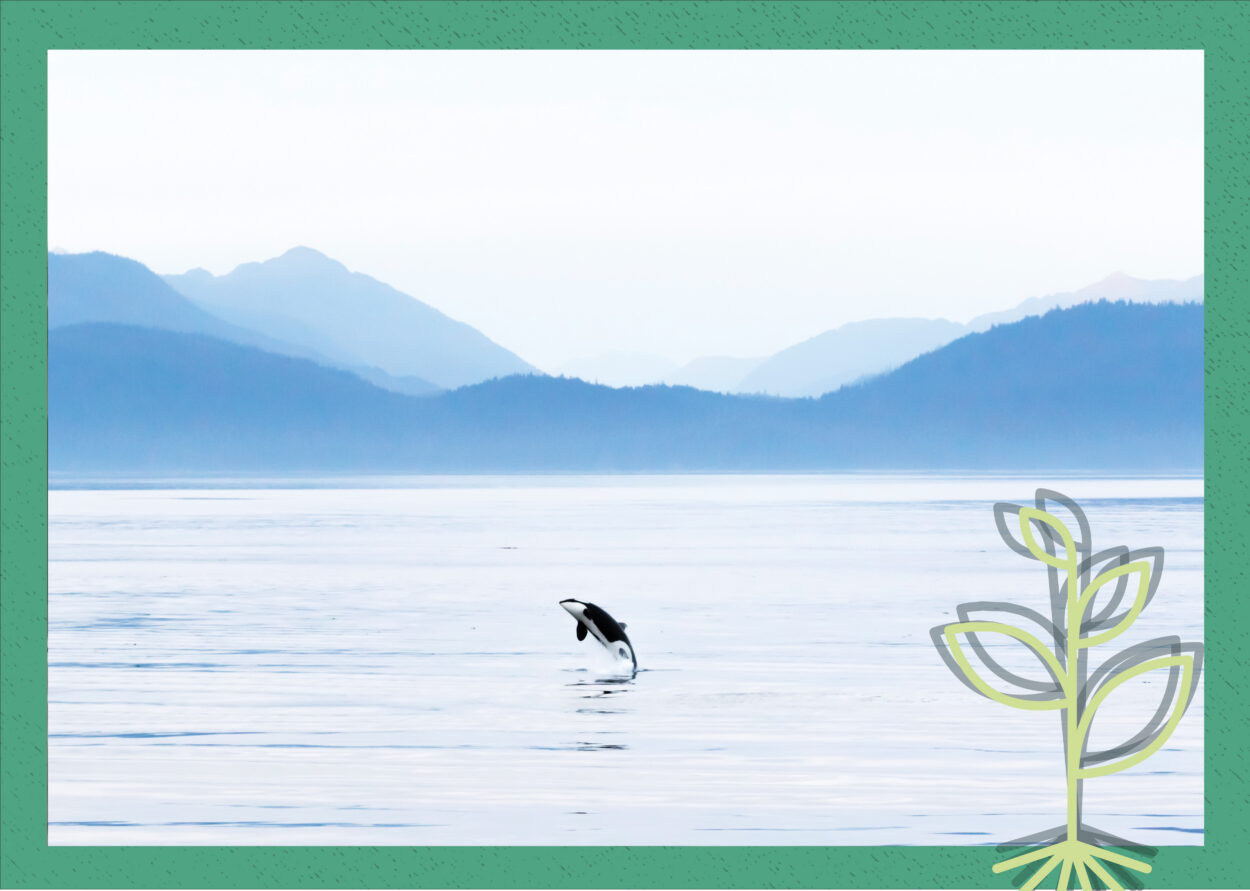

Over 20 years ago, Kriss Kevorkian coined the term “environmental grief” to describe the emotional impacts experienced by scientists and activists working around the clearcutting of redwood forests. In the intervening decades, more and more people have taken up this term to explain and explore their own emotions during a time of changing climate and environmental degradation. In today’s episode, Kriss talks about thanatology, her own work on behalf of the Southern Resident Orcas in the Salish Sea, and how we can harness environmental grief to act on behalf of the non-human world.
Subscribe: Apple Podcasts | Spotify | Pandora | Simplecast
Video Podcast
Shownotes
Visit Antioch’s website to learn more about the Undergraduate Studies programs in which Kriss teaches.
Kriss’s activist organization is called Legal Rights for the Salish Sea. If you want to follow Kriss’s advice and fill out your advanced directive, you can find more information at caringinfo.org.
– – –
This episode was recorded November 14, 2025 via Riverside.fm and released January 28, 2026.
The Seed Field Podcast is produced by Antioch University
Host: Jasper Nighthawk
Editor: Nastasia Green
Producer: Karen Hamilton
Work-Study Assistants: Dani LaPointe, Odin Rasco, Rylie DeGarmo, and Shayla Kerr
Additional Production Help: Amelia Bryan, Jonathan Hawkins, and Laurien Alexandre.
To access a full transcript and find more information about this and other episodes, visit theseedfield.org. To get updates and be notified about future episodes, follow Antioch University on Facebook.
Guest
Kriss Kevorkian is is a Thanatologist specializing in Biocentric Thanatology. She holds a doctoral degree in thanatology, the study/science of death, dying, and grief. Her experience includes working as a deputy coroner, assisting with autopsies and documenting evidence, and as a hospice medical social worker offering emotional support and counseling to terminally ill patients, from young children to elders and their families. In that role, she received Certificates of Recognition for her Outstanding Contribution to the Field of Social Work from local politicians. Dr. Kevorkian was Co-Chair of the Los Angeles County Bar Association Bioethics Committee, Chair of their Death and Dying Subcommittee, and Co-Chair of the San Fernando Valley End-of-Life Coalition.
She combined her passion for thanatology with her love of whales and the environment through her research on environmental grief and ecological grief. Hailed as a true visionary, Dr. Kevorkian coined these terms years before many in the field considered these particular forms of grief as they questioned, “Why would anyone grieve the loss of the environment?” She is the founder of A Grieving World, intuitively and compassionately supporting clients through all forms of grief, including ecological and environmental grief, and those facing the end of life.
Dr. Kevorkian is the founder of Legal Rights for the Salish Sea, an organization educating communities and stakeholders to recognize the inherent rights of the Southern Resident Orcas and the Salish Sea, and is a member of the Steering Committee of the Meaningful Movies Project in her community. Dr. Kevorkian has taught in the U.S. and UK beyond her work at Antioch.
Transcript
Kriss Kevorkian [00:00 – 00:28] – Psychologists and medical professionals are saying to their clients and patients, you need to go out in nature, go for a walk, do this. We see all the wonderful benefits nature has for us, but how do we benefit nature? So, when you’re walking in nature, are you helping to uplift nature or are you destroying nature? Are you leaving garbage? Are you talking loudly? Do you honor where you’re walking? Are you walking mindfully?
Jasper Nighthawk [00:33 – 02:13] – This is the Seed Field Podcast, the show where Antiochians share their knowledge, tell their stories, and come together to win victories for humanity. I’m your host, Jasper Nighthawk, and today we’re joined by Kriss Kevorkian for a conversation about thanatology – the study of death, dying, and grief –- and what lessons this discipline has for people living in a time of climate change and environmental destruction. I’m really excited to have the chance to talk with Kriss today because she is actually the one who coined the term environmental grief that today is seeing much more widespread use. She coined it over 20 years ago. And over the intervening years, psychologists and therapists have found that this is a useful concept as they seek to help people grieving a world experiencing crisis and environmental collapse. I’m so interested to know how these ideas actually help people, because I think often it can feel safer just to try not to think about the way ecosystems are in peril, species are going extinct, and the world is changing in some scary ways. So let me quickly introduce Kriss. She’s not only the inventor of the idea of environmental grief, she’s also a thanatologist specializing in biocentric thanatology. Kriss has worked as a deputy coroner, a hospice medical social worker, and many other roles in this field. She’s the founder of the advocacy organization Legal Rights for the Salish Sea, and she’s an adjunct faculty member here at Antioch, where she’s taught both in our psychology programs and in our undergraduate studies. Kriss, welcome to the Seed Field Podcast.
Kriss [02:14 – 02:16] — Thank you. I’m really pleased to be here.
Jasper [02:16 – 03:13] — We’re so happy to have you. And before we get into all of this exciting, maybe somewhat scary topic, I want to just take a moment to disclose where we’re coming to this conversation from. I can go first. I’m white. I’m a cisgendered man. I’m queer. I’m not living with a physical disability, though I do experience anxiety and depression and experienced some depression earlier this week. So it’s an ongoing thing. I have a college degree and a master’s degree. I have steady housing and steady income, which in this decade, and as in the entire history of our country, it’s not something to take for granted. I’m also the parent of a three-year-old child. And lastly, I want to say I live in Los Angeles, which the older name for the place where I live is Tovaangar, and it is the traditional and unceded territory of the Tongva people. Okay, Chris, as much as you’re comfortable, can you share your position?
Kriss [03:14 – 03:51] — Sure. I am Chris Kevorkian. I am an Armenian American, cisgender female. I do not have any disabilities of any kind. I would knock on wood, but that might make too much noise for the microphone. I am currently receiving steady housing and enough of an income to survive in this crazy world. And I am fortunate at this moment to be able to be food secure and housing secure. And I live on the lands of the Puyallup people here in Washington State. And is it okay if I read a nature acknowledgement?
Jasper [03:52 – 04:02] — I would love that. And I’m curious. I don’t know that I’ve ever heard a nature acknowledgement before.
Kriss [04:02 – 04:37] — So I got this from some other people and kind of added and deleted a few things, but here it goes. Nature was here before us, gave birth to all that we know and love, and will endure long after this has turned to dust. We affirm our shared responsibility to nature, we commit ourselves to caring for nature and defending nature from harm, and we strive to honor nature with our lives and actions. And I live on a land that I feel I am the caretaker of and the caregiver of, along with my wild kin, who include trees, rocks, deer, coyote, and a few bears.
Jasper [04:37 – 04:44] — That’s beautiful. And I love the invocation of all the creatures and at least the megafauna who you share space with.
Kriss [04:44 – 04:47] — They are all spectacular.
Jasper [04:47 – 05:24] — So I love that you come to the topic of environmental grief by way of thanatology. and I think that our society just as a fact is uncomfortable with death and thanatology, which I don’t know if all listeners are going to be familiar with this term. It comes from the Greek god Thanatos, who’s like the God of Death. That word, which I just think is a fun word. Once you know it, you’re like, oh yes, Thanatos, thanatology. But it invites us to stop and consider death in a more thoughtful way. But my knowledge is somewhat limited. Can you tell us a little bit more about thanatology and what it means to you as an area of study?
Kriss [05:25 – 06:54] — Yeah, I sort of fell into it. I had spent most of my life studying whales and intended to study whales and was a college majoring in marine biology and zoology. And at that time, my parents thought that they would prefer I become a lawyer so I could help them later in life. And we fought a bit about that because I thought, oh, law, okay, I’ll become an environmental lawyer. And they’re like, no, no, no. So, I ended up getting into social work and my instructor at Humboldt State sent me to hospice to do my internship. And I took to it like a fish to water and was very comfortable with death. And I think it just relates to the fact that I’ve been surrounded by death and grief most of my life. I’m the granddaughter of an Armenian genocide survivor who was inundated with trauma and death and grief and just experienced so much of it in my family’s life and in my life. So, it just seems it’s a part of life. So, it didn’t seem like too much of a stretch for me. And then, jokingly, I say my name’s Kevorkian. So, I kind of fell into that as well. Because at the time, Dr. Jack Kevorkian was doing stuff, and I’m like, well, duh. I just went into the family business, I guess. But yeah.
Jasper [06:55 – 07:04] — There’s something calling to you simply through sharing a last name. Jack Kevorkian was famous for helping patients with assisted suicide, right?
Kriss [07:05 – 07:07] — Right. Terminally ill patients. Yes.
Jasper [07:07 – 07:18] — That’s right. That’s right. So when you’re teaching students in classes related to death and dying. What do you actually discuss and what kind of readings do you do?
Kriss [07:19 – 08:03] — Well, I like asking students what they know about death and dying and what they think about it, because it’s really fascinating to see what people have learned and what they’ve come to understand and accept themselves. Because we don’t talk enough about death and dying as adults. So we sort of think that, okay, children don’t understand it or other people don’t understand it. But when you take the time to actually ask somebody what they know or what they believe happens at the time of death, the responses are fascinating. And so, I like asking my students, what do you think happens? And most of them never really think about it because who wants to think about that? We’ve got enough issues going on in life. Nobody’s really going to stop and say, hmm, what does happen at the time of death?
Jasper [08:03 – 08:53] — Yeah. I mean, if you were asking me that question, I would say, boy, there’s a philosophical question slash religious of what happens to the person, what happens to the soul. And then there’s a physiological question of what happens to the body. And I think we know about rigor mortis and the physical changes. And I’ve been around a few people who have died, been present at that. And it’s intense to see a body stop being full of life. And then I would say there’s also so many social aspects, like talking to the coroner, arranging a funeral, trying to figure out what to do with possessions. Like it’s a truly, I guess those are my answers. Is that the kind of things that students are saying?
Kriss [08:53 – 09:01] — Yeah, it’s just, it’s interesting because we plan so many events in our lifetime, but we rarely plan for death.
Jasper [09:01 – 09:02] — Yeah.
Kriss [09:02 – 09:09] — I mean, you plan for your graduation, you plan for a wedding, plan for babies, all that jazz. but people aren’t planning for death.
Jasper [09:09 – 09:18] — Yeah, I mean, I think some of us are excited about that. They’re like, well, at least I won’t have to do any more work at that point. Like that’ll be someone else’s work.
Kriss [09:19 – 09:23] — Yeah, hopefully they’ll do it and they’ll follow your wishes. That’s the only concern.
Jasper [09:23 – 09:31] — Yeah, yeah. And I guess I mentioned that you were a deputy coroner. I’m curious how that informs your teaching and what you learned in that experience.
Kriss [09:32 – 11:09] — That was fascinating because in my hospice work, I’d been with so many patients when they transitioned. So, that was always fascinating to be, as you just mentioned, to be with somebody in their dying process and at their bedside when they’ve taken their last breath. To be a witness to that, to have that intimacy with another person, to be allowed in that is just a privilege. It’s a gift and an honor and one that I was always so grateful to be a part of, recognizing that I was just a periphery, just there to help support those who were left behind, so to speak. But as a deputy coroner, I assisted with autopsies. And it was always fascinating for me to see how our bodies are just truly shells. Because you move the body and it’s completely stiff at that point when we’re performing an autopsy. It’s just fascinating because I remember working with children when I was facilitating bereavement support groups. And I love, love working with kids because you just never know what they’re going to say. And what I heard most often from children is that it’s like our bodies are like shells, like a hermit crab. And as we get bigger and grow out of our shell, we’ll just get another one. And in my experience, that really seems to be the case. Our bodies are truly just shells. And it’s fascinating to think about how much time and energy we spend on the shell instead of what’s inside the shell.
Jasper [11:10 – 11:11] — So the spirit or the soul.
Kriss [11:11 – 11:13] — Soul, if people want to call it that.
Jasper [11:14 – 12:20] — Yeah, it’s interesting contemplating dead bodies. But I want to back up or expand from specific conversations that you might be having in a class about death and to think of the subject of death as a whole as almost like not the same as a lot of the other topics that we study in the academy or that we talk about. Because I feel like death is so caught up in the idea of endings and of, you know, within psychology, it’s an ailment or medical science. These are ailments that don’t result in a full recovery. And it made me think of this line from Rainer Maria Rilke’s Duino Elegies, this poem cycle that he wrote. But this one has always stuck with me when I think about death and endings. He says, and we who’ve always thought of joy as rising would feel the emotion that almost amazes us when a happy thing falls. And I wonder if you could talk a little bit about what it does to us when we actually spend time contemplating the ending of something.
Kriss [12:21 – 14:27] — Well, it’s interesting because death to me isn’t necessarily an ending. It’s more of a beginning. And it’s funny because even in the tarot, it’s a transition, it’s a beginning. It’s leaving this, I don’t know, it’s pretty fascinating to me, all of it. But there’s this movie from the 80s called Defending Your Life. Have you ever seen it? It was Meryl Streep and Albert Brooks. And I love it because I used to refer to this movie all the time with my hospice patients who were struggling. And there was one patient in particular who was really having a hard time, he was a gay man who was raised as a Mormon. And so he had this tremendous fear that he was going to go to hell because he was gay. And he was struggling. He had a lot of pain. And I thought, you know what, what if we could sort of reframe that thinking for you? And in the movie, Defending Your Life, it’s basically showing Albert Brooks dies, and he ends up going to a place called Judgment City. And there, he has to defend different aspects of his life, different times, the decisions that he made. Meryl Streep is up there as well, and she’s had a glorious life. She’s adopted children. I think she saved a cat from a burning building or something like that. And so, she gets to move forward where Albert Brooks has to come back and learn more lessons. And from what I’ve learned from hospice patients and being in this field, that seems to be a realistic way of looking at life. One hospice patient in particular, and the hospice chaplain, taught me that life is all about learning and teaching. And so, if we can reframe death not as something so negative, but as a means to moving forward, if we’re fortunate enough to do so, that’s how I like to see it. And then if we’re not, then okay, it’s like we’re having to take another exam or retake a class again. Maybe we’ve been held back in a grade because we didn’t learn all that we needed to learn in this lifetime.
Jasper [14:28 – 14:42] — Yeah, that’s interesting. And I always think that contemplating what you might end up having on your tombstone or what regret you might have on your deathbed is a useful way of forcing you to think about what you’re actually filling your days with.
Kriss [14:42 – 15:39] — Right. And I ask my students to write their own obituaries and to be creative. You don’t have to write something negative or anything. Be creative. Say Jasper flew to the moon when he was 57 because he had an opportunity to do so or things like that. Just to think of it as fun and maybe aspirational. I think the greatest lesson that we can learn from death is to live our lives to the fullest and to recognize that death is there. Like I tell my students, I walk with death and I walk with grief because I see them as valuable teachers, never taking things for granted, never taking anyone for granted, knowing that at any moment this could all be gone. And it’s not in a negative or depressing way for me. It’s in a way to help inspire me to be a better version of myself than the day before or the moment before, because we always have an opportunity to shift our thinking.
Jasper [15:40 – 15:44] — So you’re saying that the kind of the contemplation of death is an aid to the shifting of thinking.
Kriss [15:45 – 15:48] — Yeah, I believe so. It works for me.
Jasper [15:48 – 16:27] — Yeah. I feel like this is a good bridge because I want to talk about environmental grief. And I think that the concept of environmental grief, like on its face, could make us feel sad. It could remind us of the grief that a lot of us feel about the ways that, you know, for me, I feel a lot of pain about the plains of the United States and the way that they have been converted into these kind of vast monocrop fields where they’re largely growing soybeans and corn. And these used to be these prairies that had, you know, herds of bison and just had a vibrancy of life that is not there today.
Jasper [16:30 – 16:57] — And the aquifers are being drained. I mean, this is just like one example of an ecosystem that I know somewhat, but that I feel grief about the change that has happened to it. But I think when I hear environmental grief, I think, oh yeah, that’s really sad. But if I’m understanding you correctly, by looking at it squarely, we can actually use it to inspire our work or to live our lives in a more full and maybe productive way.
Kriss [16:57 – 18:12] — Yeah, I think in any aspect of grief, if we’re able to look at it and then harness it to take action, that’s a really good way to help us move forward. Because grief can be all-consuming and put us in the pit of despair and keep us there for a while if we’re not careful. It can be just incredibly overwhelming. And it’s important to find space to, if at all possible, remember appreciation and gratitude. And I realize that’s so kind of cliche these days, but truly when things are looking bleak, I mean, I’m part of a wildlife coalition where we often just, it doesn’t look good. Some of the things, the policies that we’re having to deal with. And I just remind myself, I’ll look out, as I’ve mentioned, the fall colors here in Washington are spectacular. And so focusing on beauty, focusing on love, focusing on something to help lift me out of that misery, lift me out of the despair, lift me out of that overwhelming feeling of grief helps. It may be momentary, but hopefully I can lift myself out more moments than just one single moment.
Jasper [18:12 – 18:21] — Like having the term helps you identify when it’s happening and maybe take some deep breaths or look out your window or take a walk.
Kriss [18:21 – 20:03] — Right. And what’s interesting about this is that when I conducted my research, because I started, I tell my students one other thing. Don’t make the mistake that I did. When I got a PhD, it was in thanatology. Nobody knew what that was. So, when you’re getting a PhD, make sure people know what you’re talking about. So, you’ll get a job or something. Because honestly, when people say thanatology, it’s like, they look at me with blank stares. But I had a professor who said, you know, it’s great, but what are you going to contribute to the field that’s new? And at the time, I wanted to study, you know, psychedelics at the end of life or after-death communication because that was fascinating to see and listen to when people were close to death. But I was living in Humboldt County at the time, and one of the things that I always struggled with there was seeing the logging trucks go by. And every time I would see them full, I would tear up. I just started feeling this more and more. And I thought, God, I’ve got this grief about the environment. And I was doing research looking, what is this coming from? Who’s come up with this? And nobody had. And so, that’s where it came from. And then I focused my research on the southern resident orcas. And when I interviewed scientists asking, how are you coping with the decline of the southern resident orcas? And they just kind of looked at me funny and we’d talk about grief and bring it up. Nobody had thought about grief. They kept saying, Kriss, you put a name to this vague feeling I’d had, but I never knew that it was grief.
Jasper [20:04 – 20:14] — Yeah. Can you talk a little bit about your work advocating on behalf of the Southern resident orcas who obviously can’t themselves speak English and show up in the halls of power?
Kriss [20:15 – 22:08] — Well, they’re certainly speaking a lot. People just tend to ignore them, as we do with most marginalized populations. But the southern residents are a unique ecotype of orcas. They are only fish eaters, where other orcas are mammal eaters. And the southern residents predominantly feed on Chinook salmon, who are also endangered. And because of that, the southern resident population right now is at 74. Back in the 70s, they were captured and sent to various aquaria like SeaWorld. And there are documentaries about the captures. You could Google and see how horrific it was. They would corral the orcas into Penn Cove next to Whidbey Island and separate the young from the older, the adolescents and the older orcas. And people could hear on the island everywhere the screams of the orcas as their babies were being taken from them. And it’s, sorry, it’s really emotional to think about because it’s just, it’s mind-blowing to me how horrible we treat others. And we continue to view nature as a commodity, as property. As I mentioned before, with nature, where I live, I don’t own this property. I am the caregiver of it. And I wish that we could view nature that way. And fortunately, there’s the Rights of Nature movement that does just that. And so, we are building our work off of the Rights of Nature framework, where we’re continuing to educate our communities and decision makers to recognize the inherent rights of the southern residents so that they can have legal standing to defend themselves. So if somebody-
Jasper [22:08 – 22:11] — Your organization is called Legal Rights for the Salish Sea, right?
Kriss [22:12 – 23:08] — Yes. Yes. Okay. And we’re working, we’ve partnered with the Northwest Animal Rights Network, and they’ve been fabulous and just super helpful with us moving forward. But it’s challenging in America because everyone is so afraid of the word rights. It’s always been that if you talk about granting rights or recognizing the rights of others, somehow that takes away your rights, which we know doesn’t happen, but people freak out. Instead of just allowing everyone to have a piece of the pie, a select few want it all for themselves. But when it comes to the southern residents and all of nature, we continue to, you know, quote unquote, manage nature or quote unquote, manage these natural resources. And they’re not resources, they’re living beings. And we’re doing our best to help educate people to recognize that.
Jasper [23:08 – 23:35] — So I’ve heard a little bit about this movement to bring legal protections and legal rights and even representation to natural non-human beings. And I’ve heard of people trying to get the right to have a river, for instance, sue a corporation that is dumping things into the river and have the legal standing to file a lawsuit, even though it would, of course, need intermediaries of human lawyers.
Kriss [23:35 – 23:58] — Right. And guardians. And so in New Zealand and Ecuador, they have rights of rivers and other ecosystems. And in Panama, they recognized the inherent rights of sea turtles a few years ago. And even in Washington, they recognized the rights of the Snohomish River watershed recently. But right now, developers are fighting against that.
Jasper [23:59 – 23:59] — Of course.
Kriss [23:59 – 24:14] — And it’s very sad that in 2025, one would hope we would have evolved a bit more, but clearly we haven’t, not when it comes to nature.
Jasper [24:15 – 24:46] — No, and I mean, even essential rights to privacy, to due process, I mean, aren’t being extended to not only to humans living in the borders of the United States, and certainly aren’t being applied to humans living outside the borders of the United States. So it’s no surprise that rights are also not being extended to other living creatures who also you and I might think have a right to live and to kind of make their lives in the ways that they have in the past.
Kriss [24:46 – 25:06] — Well, they should. And it’s kind of interesting that nature hasn’t rebelled against us more. I mean, with all the destruction, we all know that Mother Nature always will have the last word, But it’s frustrating that we continue to destroy our home planet. Not many other species would destroy their homes as we do.
Jasper [25:07 – 25:21] — So, all right, we’ve gone into the darkness or the lamentable state of things. But I want to talk a little bit more about environmental grief. I was hoping you could define environmental grief.
Kriss [25:22 – 27:47] — Sure, that would be helpful. So, I define environmental grief as grief reaction stemming from the environmental loss of ecosystems caused by natural or human-made events. So, to me, that’s like the southern residents because we’re destroying the ecosystem within the Salish Sea. And then there’s also ecological grief that I coined a few years later, which is different. Unfortunately, there’s an academic in Canada who’s using that synonymously with environmental grief, and they’re different. And ecological grief is the grief reaction stemming from the disconnection and relational loss of our natural world. So, to me, that one sort of evolves a bit, because to me, it’s seeing that we’re harming nature and not recognizing that we’re harming nature as much as we are, because we distance ourselves from nature. As we’ve talked, we are nature. Nature resides within us. And yet, for some reason, we still believe that we are superior, that there’s still this man versus nature instead of recognizing that we are nature. And in psychology, one of the things that frustrates me is how psychologists and medical professionals are saying to their clients and patients, you need to go out in nature, go for a walk, do this. We see all the wonderful benefits nature has for us, but how do we benefit nature? So, when you’re walking in nature, are you helping to uplift nature or are you destroying nature? Are you leaving garbage? Are you talking loudly? Do you honor where you’re walking? Are you walking mindfully? You know, these things, I would like people to think about this when they’re out because it’s difficult for us to really change how we live on this planet. In most areas, we have to have a car or have the money to afford an Uber or Lyft or some way to get around because public transportation isn’t accessible or isn’t in our area. So, we have to get around by car. What kind of car can you afford? Most often, it’s the gas guzzlers because they’re less expensive. So if you’re doing that, try and balance things out as best you can by being mindful in ways that you can be in how you walk on this planet.
Jasper [27:47 – 27:48] — Yeah.
Kriss [27:48 – 27:51] — How you walk with our planet, I should say.
Jasper [27:51 – 28:00] — Okay. So if I’m understanding you right, you’re saying ecological grief is this term, which maybe is a little confused because both are eco-grief. But ecological grief.
Kriss [28:00 – 28:03] — And then ecological grief. The other one’s environmental.
Jasper [28:03 – 28:19] — Oh, okay. Okay. So not eco. But the ecological grief is grief about the feelings of separation that we have from our wider world and the feeling of being disconnected as it’s being harmed, kind of.
Kriss [28:20 – 29:18] — Yeah, it’s like an example that I shared once and I share with the class is when people are so disconnected from nature that there’s this image, an article that came out a while ago about people who grabbed at Francis Gunn, a dolphin, baby dolphin from the water and held this baby up, grabbed the baby, people swarmed around. Everyone wanted pictures of the baby. And they’re holding the baby up while people are reaching to touch the baby. And it’s as if nobody had any awareness whatsoever that what they were doing was killing this baby in order to get a photo. And then once they were done with the photo, the baby died. I mean, it’s so mind boggling to me that people could be so disconnected and lack so much empathy for another that they would do this.
Jasper [29:19 – 29:57] — To get the photo. That’s so incredibly distressing. And it’s also, yeah, I can feel my own grief at such a thing. And so I guess that leads me to one of the questions that I really wanted to ask you, which is, how does a greater understanding of environmental grief and an ability to name it and to identify it in ourselves. How does that help us actually do the work of environmental activism, of living more mindfully, and of finding our way through this distressing time, which probably will go on for most of our whole lives?
Kriss [29:57 – 31:33] — Yeah, hopefully not. But yeah, I think, again, it goes back to harnessing the grief. So I harness my environmental grief, I harness the ecological grief, and that’s why I got involved in the Rights of Nature movement, because I’m then surrounded by people who feel the same way about nature as I do. And while we may lament everything that’s happening, we are coming together to make change as best we can. And I am just extremely grateful for the people who are doing this work, because it’s not easy. Nobody said life was going to be easy, I know, but this is challenging work, especially in this country at this time. But we’re standing on the shoulders of others who came before us. And before Jane Goodall died, she used to say she had hope. And if Jane Goodall could have hope, I could have hope. And I’m going to do my best to continue the work that I’ve been doing since I was 12 when I fell in love with whales. So, I honestly don’t know another way of living because I’ve been doing it this long. But one thing that I tell people is if this is hard, stop. Take a moment. Take care of yourself. Let other people carry on for you. And then come back when you’re sort of rejuvenated as best you can be. Because we can’t just keep pushing. We’re going to burn out. And there’s so much compassion fatigue already. We need to take care of ourselves.
Jasper [31:34 – 32:04] —- So if I’m hearing you, you’re saying environmental grief helps us name that thing that we’re feeling, understand it, and then channel it into productive action. And also to develop the self-awareness just to feel when we are burnt out, when we are overwhelmed, and to channel it when we can into action, but also to know when to step back and take care of ourselves and do those things that rejuvenate.
Kriss [32:04 – 33:06] — Yeah, but I would hope that we could get to a point where we’re not going to burn out, that we’re taking care of ourselves daily. Because we’ve had a history of just going full throttle and then crashing. And we can’t do that. That’s not sustainable. God, I hate that word when it comes to nature. But when it comes here, it actually works. But we have to make sure that we’re being mindful in all our actions and taking time for ourselves. And I realize that that’s getting harder and harder to do in the world that we live in today. But even if it’s just moment by moment by moment, to find the light and bring it inside, let it warm you, let it nourish you. because we need that. We need to become brighter as we can be in order. And it’s sounding so dorky, but it’s like being brighter in a world that seems to be getting darker, because that’s how we’re going to be able to see the people who are going to lead us forward.
Jasper [33:07 – 33:30] — I mean, it strikes me in the way that you’ve been talking about death and dying and the spirit, and then the way that you’re talking about the light of this work and nurturing that and building it. There is such a spiritual element to this. I think when we are talking about death, it naturally asks us to consider the supernatural. There’s some connection there.
Kriss [33:30 – 33:52] — Yeah, I think there’s a connection with nature and being with nature and knowing because death is part of nature. We’re seeing it in the seasons and nature’s been showing us this forever. It’s just when are humans going to get it?
Jasper [33:52 – 34:11] — Yeah. Yeah. Well, I wanted to ask you one more question though. I was curious if there is some practice or exercise or assignment or reframe that you would like for our listeners to take away from this that they could use without going out and getting a PhD in thanatology or necessarily going super deep into the subject, but some sort of gateway or something useful?
Kriss [34:11 – 35:17] — What I like to ask of my students and people is that it’s very simple. It’s completing your advanced directives. And the advanced directives are, if you are unable to speak for yourself during a medical event, your wishes are written out on paper. And you can just Google advanced directives and find one for your state. And in most cases, they do not need to be notarized. They just need to be signed by two witnesses who are not family or people who would benefit from your death. So I would ask people to complete their advanced directives because in thanatology and in bioethics, the reason why advanced directives are so important is because young people had died without advanced directives in place and became legal nightmares. So, if you’re 18 and over, please complete your advanced directives. and be sure to share your wishes with the people that you list as your proxies and make sure to give them a copy of your advanced directive and also your physician.
Jasper [35:18 – 35:23] — That is so wonderfully practical. I love that. Thank you so much, Kriss. It’s been a pleasure talking with you.
Kriss [35:23 – 35:26] — It’s been awesome. Thank you so much.
Jasper [35:29 – 36:34] — You can learn more about the undergraduate studies programs that Kriss teaches in by visiting Antioch’s website, antioch.edu. We will also include a link in our show notes to the specific undergraduate studies webpage. In those show notes, you’ll also find a link to the website for Kriss’s activist group, Legal Rights for the Salish Sea. We post these show notes on our website, theseedfield.org, where you’ll also find full episode transcripts, prior episodes, video episodes, and more. The Seed Field Podcast is produced by Antioch University. I’m your host, Jasper Nighthawk. Our editor is Nastasia Green. Our producer is Karen Hamilton. Dani LaPointe, Odin Rasco, Riley DeGarmo, and Shayla Kerr are our work-study assistants. We received additional production help from Amelia Bryan, Jonathan Hawkins, and Laurien Alexandre. Thank you for spending your time with us today. That’s it for this episode. We hope to see you next time. And don’t forget to plant a seed, sow a cause, and win a victory for humanity. From Antioch University, this has been the Seed Field Podcast.