
Antioch University New England Doctor of Psychology program faculty members Lorraine Mangione and Rachel Chickerella, alongside doctoral candidates Taylor Hardock and Samantha D’Anna, are publishing work that frames the vibrant fandoms of Bruce Springsteen, Taylor Swift, and the Jonas Brothers not as novelties but as legitimate sites of human meaning-making. The PsyD program’s structure makes this kind of work possible by encouraging students to treat their own authentic interests as scholarly assets. The results are fascinating contributions to our understanding of the human mind.
From Sinatra to Springsteen

Lorraine Mangione grew up in a New York family where Frank Sinatra was her father’s favorite and Harry Belafonte was her mother’s, and they both loved music, jazz in particular. It’s not surprising that Mangione developed her own deep love for music, becoming a huge fan of Bruce Springsteen. As a psychologist and educator, she naturally grew interested in studying and writing about what she was seeing and experiencing as a member of his fandom. She had noticed that most peoples’ conception of a Springsteen fan was associated with “a certain type of man,” while what she saw on the ground included a significant subsect of women fans who, she observed, “seem to like him for different reasons than the men do.” And she’s one of them, so she can talk.
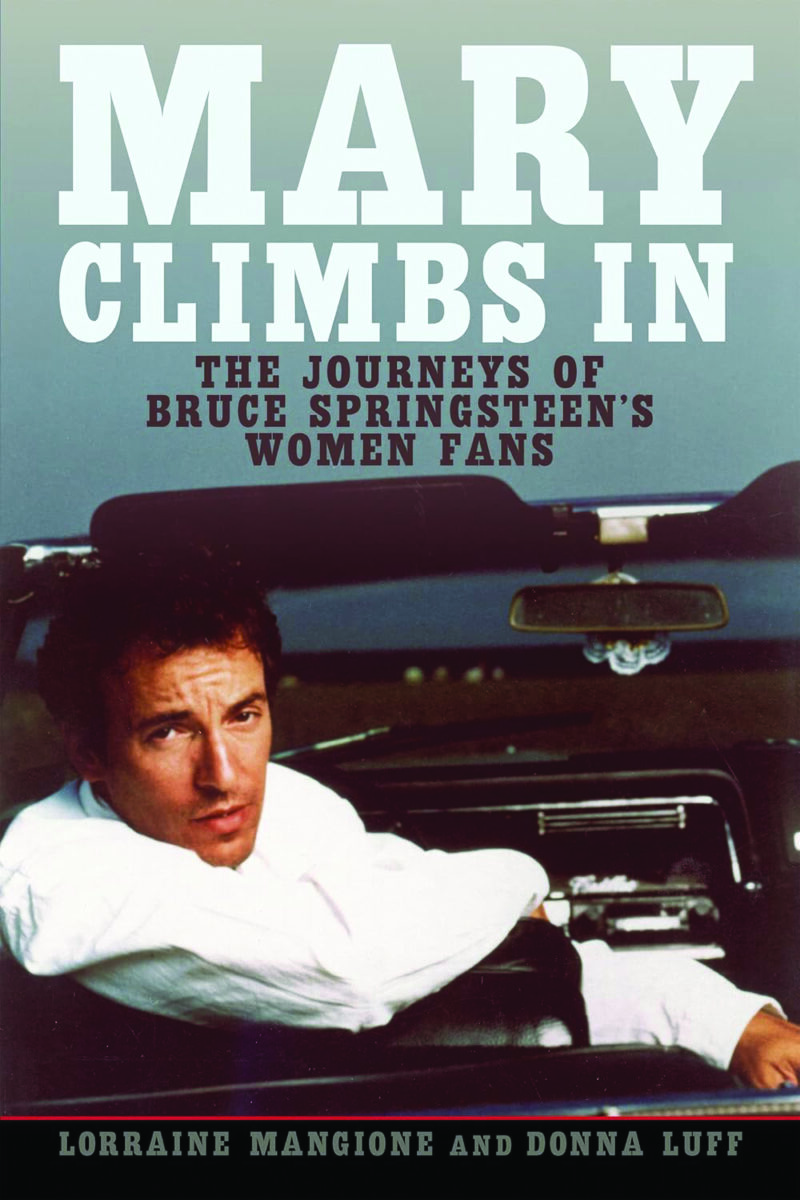
On the heels of Daniel Cavicchi’s 1998 book Tramps Like Us: Music and Meaning Among Springsteen Fans, Mangione and Donna Luff, a friend and colleague whom she met at a Springsteen symposium, set out to study women fans of Springsteen. Their interest was prompted by Cavicchi having noted that women fans had been largely overlooked. It was not hard to find willing participants for their queries on the subject. They conducted surveys that were so successful that they decided to embark on a book project, which resulted in the 2023 publication of Mary Climbs In: The Journeys of Bruce Springsteen’s Women Fans.
“Fandom can be an avenue for investigating personal identity.”
“It’s not just about Bruce Springsteen, though that’s my obsession,” Mangione says. “It’s about the way creativity, the arts, and fandom can be an avenue for investigating personal identity, getting help in a holistic way, trying to understand the meaning of life, and finding a community.”
Speculating ‘Swifties’ Find Community

For Rachel Chickerella, another PsyD faculty member, collaborative research into sexuality and pop culture is a throughline that runs from her 2025 Journal of Bisexuality paper with PsyD student Taylor Hardock on the biphobic experiences of bi+ men, to a paper centering online ‘Swiftie’ communities that she is currently writing with Hardock and another student, Samantha D’Anna.
Hardock’s path to the Swift research is personal: she attended her first Taylor Swift concert in fourth grade, and Swift’s music was a crucial part of her own processing of her sexuality and coming out as queer. It’s no surprise then that the trio has researched fans’ claims that Swift’s lyrics are coded indications of her own queerness particularly resonant.

“People tend to minimize and dismiss the perspectives of girls and women and what they are into as unimportant,” says Hardock. She sees stigma around fandom in general, and especially ones considered ‘teeny-bopperish’ or hyper-feminine. “It’s just part of a misogynistic society,” she says. “But there’s a lot of positive stuff happening in these communities, and I hope that changes.”
Their latest paper centers on a content analysis of two Reddit communities: the “Gaylors” who believe Swift is gay, and fans who believe she is bisexual. Reddit’s anonymity enables a particular kind of openness, which Hardock says makes the material found there unusually rich. Fans discuss varied evidence including lyrics, wardrobe choices, public statements, and the public’s view of Swift’s female friendships. The researchers found that these communities also become places to find belonging, share identity, and connect with others across a small but meaningful corner of the internet.
Both Hardock and Chickerella could see the fun in engaging with these arguments. However, as Chickerella says, “The ethics of speculating about someone’s sexuality when they have not identified as LGBTQ+ remains complicated from my perspective.” As she puts it, “While Swift is a public person and is perceived by some (particularly Gaylors) as dangling ‘Easter Eggs’ about her sexual orientation, she does not owe us this information.”
Celebrity, Parasocial Fandom, and the Jonas Brothers

Samantha D’Anna, the third collaborator on the Swift paper, is also writing a pop-centered dissertation on a topic that arose from her own enthusiasm for the Jonas Brothers. D’Anna became a fan at age seven, and the English pop act’s music has carried her through many difficult moments. She began her research hoping to better understand the emotional gaps that are filled by love for a particular celebrity. The result examines the relationship between parasocial relationships, attachment style, and celebrity worship, and whether those three constructs predict feelings of loneliness among fans. She sees gaps in psychological research around the role that parasocial relationships play in people’s lives of today.
D’Anna is investigating celebrity culture in the digital age, when celebrities can reach fans with almost no intermediation. Jonas Brothers fans can stream their new podcast at the push of a button and, as she says, “now I even feel like they are right in the room with me!” In many ways, this can seem positive. “But,” as D’Anna says, “there is little research that focuses on what that does to a person psychologically.” The unlimited flow of content and information surely has effects on fans’ mental health.
Fandom as a Therapeutic Tool
Swift wrote the song “Long Live” in gratitude to her band and crew at the end of the Speak Now era. Its central image—“I had the time of my life fighting dragons with you”—is about celebrating doing something meaningful with others. That, in essence, is what the fans in these three projects are doing, whether they’re Team Springsteen, Swift, or Jonas: fighting the dragons of loneliness, isolation, and alienation, together.
The connective thread that emerges from these three bodies of research is about more than an affection for popular music. It’s about a shared conviction that the things people love are worth understanding and valuing from a psychological perspective. Fandom cannot be reduced to a guilty pleasure. Rather, it’s a window into the ongoing human need to feel accompanied through life. “The arts are healing,” Mangione says. “Talking to patients about what they’re interested in—what they’re listening to, reading, or watching—is a powerful therapeutic tool.”