


This essay is part of Antioch Voices, a forum for Antiochians to speak out about issues important to them. Opinions expressed here belong to the author alone and do not necessarily reflect the official position of Antioch University. If you’d like to share your own voice, the first step is to send a short description of what you are planning to write about to [email protected].
Written from Minneapolis, Minnesota, on January 24, 2026.
It is one of those days when the cold does not live only in the air, it settles into people. We are watching grief and urgency unfold in real time, while public systems feel strained and misaligned. The gaps in response land hardest on the people already carrying the most.
I also want to speak plainly about what we are holding in our city right now. We are grieving Renée Nicole Good, a Twin Cities resident who was fatally shot by an ICE agent in Minneapolis on January 7. We are grieving Alex Pretti, an ICU nurse identified by his family, who was shot and killed today by a federal immigration officer during an enforcement operation here in Minneapolis.
I am writing as an educator, student, and relational therapist, and also as a queer and trans brown immigrant. Not to center myself, but to be transparent about positionality: my concern is not theoretical. It is relational. It is embodied. It is about whose lives are treated as expendable.
Difference is not the problem. Division, disagreement, and complexity are normal parts of being human and part of living in a society. What is abnormal, and what is not acceptable, is the intensity of hate and the pattern of neglect, especially when it comes from people and institutions with the most power to protect.
Here is the reasoning I keep coming back to.
When leadership and systems respond to crisis with care, coordination, and material support, communities stabilize. When leadership responds with scapegoating, indifference, or force without accountability, harm spreads faster and farther. It spreads predictably toward those with the least protection. So if we want different outcomes, we cannot rely on individual resilience alone. We have to strengthen the relational and civic muscles that keep people safe: accountability, mutual aid, truth-telling, and organized care.
Minneapolis is not a stranger to death and violence. The last five years alone have asked too much of this city. While I do not represent Minneapolis or Minnesota solely, I see how others and myself carry the police murder of George Floyd, and the ongoing aftermath that reshaped how many of us understand safety, state power, and grief. We carry the mass shooting that killed Fletcher Merkel and Harper Moyski, children whose names should never have become public memorials. And now we carry the names Renée and Alex, and the fear that comes when federal power is experienced not as protection but as threat.
As a systemic thinker, I do not believe one explanation will hold all of this. It would be easy to point to a single cause, a single villain, a single fix. That is rarely how systems work. Systems are built through incentives, histories, policies, and cultural stories that make harm seem “normal” to people who are not the ones absorbing the impact. Naming complexity is not excusing harm. It is how we identify leverage points for change.
I want to name a quieter truth, too. Even when institutions fail, people still practice care. I see it in neighbors checking on each other. I see it in conversations that stay human even when they are tense. I see it in those who organize rides, meals, childcare, court support, legal observing, and harm reduction, even when it costs them time, money, and sleep. That is not a substitute for policy change, but it is often the bridge that keeps people alive long enough to reach it.
So here is my request of us, grounded in both hope and practicality:
- Reach toward someone. Check on one person today who might be carrying this alone.
- Practice bounded courage. A hard conversation does not have to be endless to be meaningful. One honest exchange with clear limits is still a practice of justice.
- Engage the estranged with safety and intention. If reconnection is possible, let it be incremental. If it is not safe, choose protection without shame.
- Refuse the story that harm is inevitable. That story is convenient for people who do not plan to change anything.
- Put values into motion. Time, money, labor, skill, emotions, choose one sustainable contribution and repeat it. Systems shift when ordinary people do purposeful things together.
As we approach what those in the Asian community call the Year of the Fire Horse, I am thinking about heat, speed, and consequence. Fire can warm. Fire can destroy. What matters is what we build around it: containment, care, accountability, and community practice that is steady enough to hold the heat without turning on each other.
I am writing this with grief. I am also writing it with commitment. Many of you already care deeply. My invitation is to let that care become action that is relational, specific, and sustained, not just a feeling we carry in isolation.
With grief, with resolve, and with you in this.
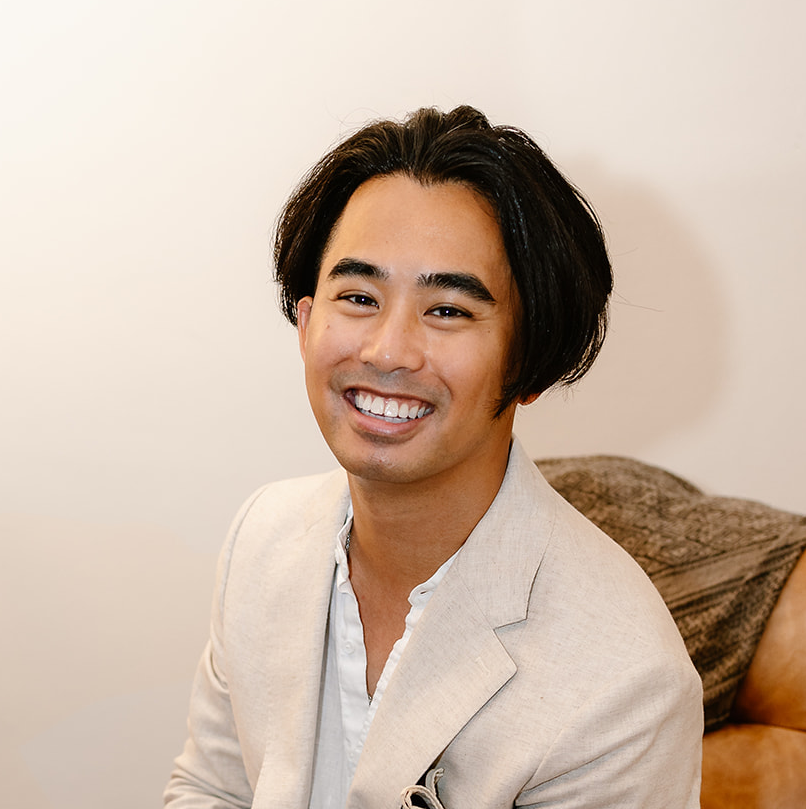
Kei Skeide
Kei Skeide, MS, LMFT, is a PhD candidate in Couple and Family Therapy at Antioch University New England and a Licensed Marriage and Family Therapist in Minnesota and Wisconsin, based in Minneapolis. Their work centers relational ethics, community care, and culturally attuned practice using AI with Queer and Trans, BIPOC, immigrant, neurodivergent, and communities. Kei is based in Minneapolis.