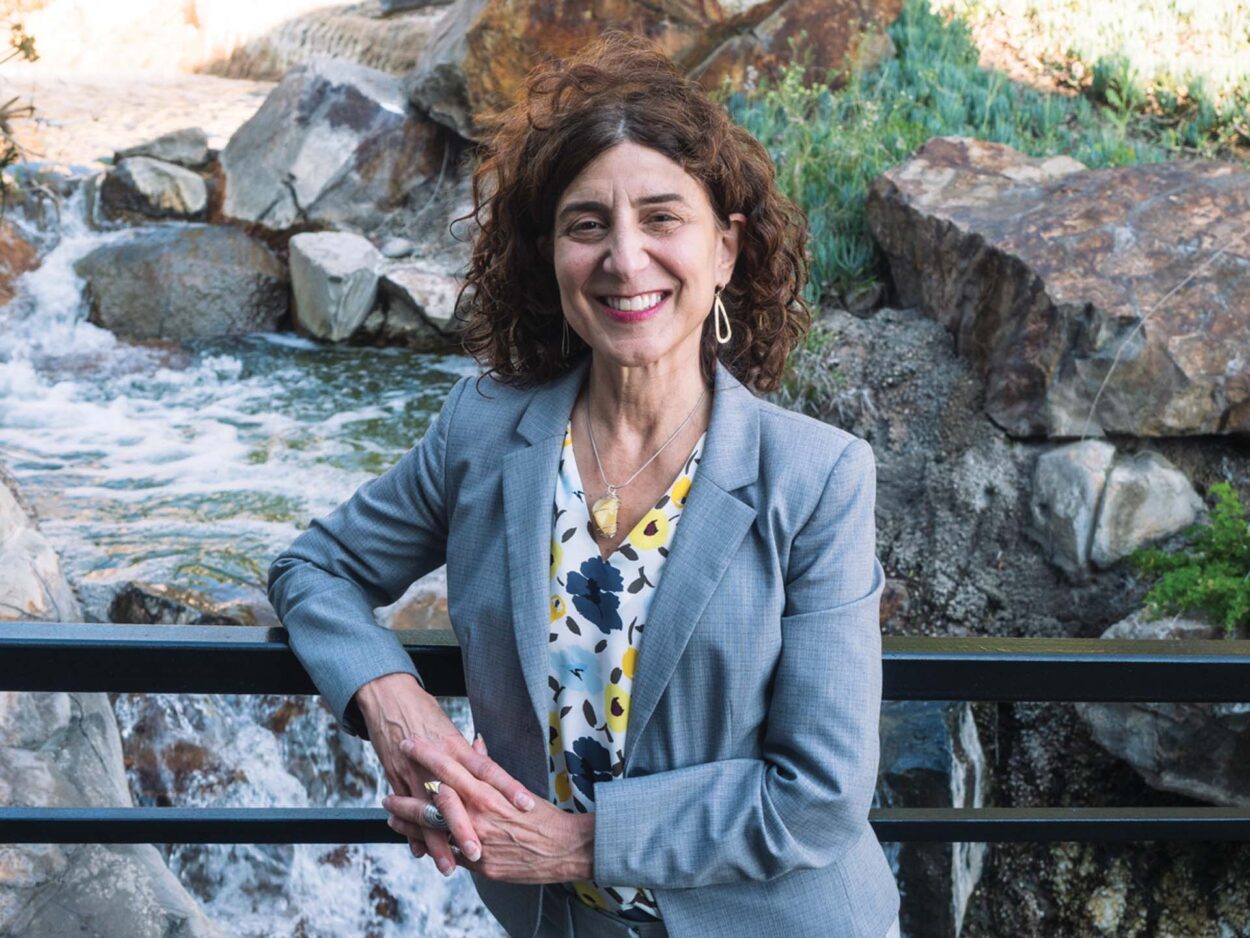

President Lori Varlotta on her Personal, Scholarly, and Professional Path to Antioch: a conversation between President Lori Varlotta and Antioch Alumni Magazine Co-Editor Jasper Nighthawk
Jasper: Let’s start with the personal stories. Thinking back, what are some aspects of your personal life that you feel have impacted who you are as an academic leader today?
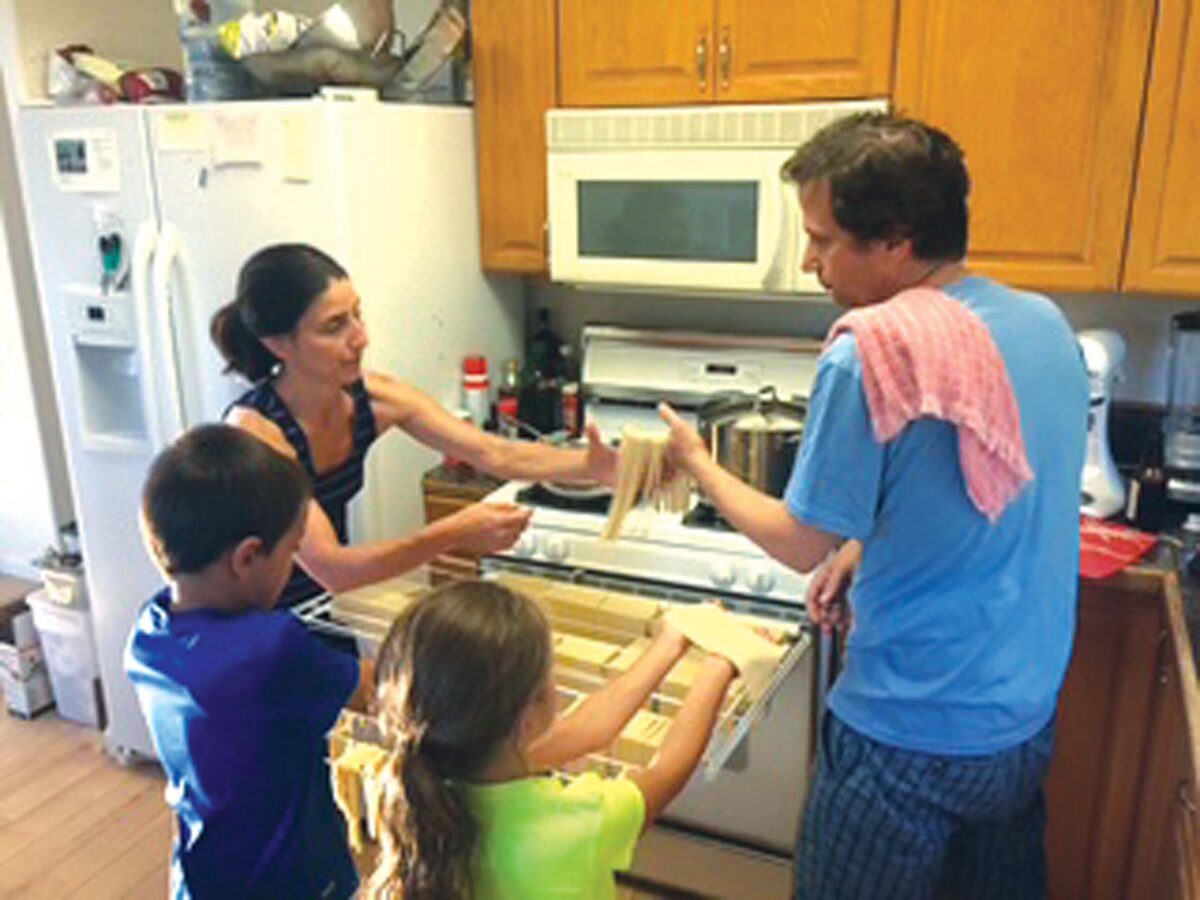
Lori: I grew up in a blue-collar Italian American family. All my aunts, uncles, and cousins—and there were lots of us—lived in Greater Pittsburgh, PA. We had a strong sense of family, place, and community. Every Christmas, the whole Varlotta clan and friends, about 50-60 of us, would gather at my Aunt Rafaela’s (Aunt “Dell” to us) house. Over homemade pasta, ham, turkey, salads, and lots of Italian cookies and wine, we would listen to our elders share stories about “the old country” and the paternal grandparents who made the journey to the U.S.. I loved it: one big family, lots of tales.
In between the space heaters and long folding tables set up in Aunt Dell’s garage, we gathered, ate, and talked. Kids were taught to listen to our elders, be respectful, and think before we opened our mouths. At the same time, we were given the space to say what we thought. No matter the topic discussed or the story recalled, disagreements surfaced. There were many spirited back-and-forth exchanges—loud ones, at that. In our family, the disagreements fueled rather than stifled the conversation. All of that has shaped the way I lead, live, and interact. It is second nature for me to be direct, speak openly, and say what is on my mind. I also try to listen carefully and be respectful. For me, differences of opinion, even conflicts, are natural and normal. What’s unnatural is pretending they don’t exist or being unwilling to listen long enough to understand from where they are coming.
Jasper: What were the sorts of topics you might disagree about in those days?
Lori: One of the topics was hunting. In our school district, the first day of Buck Season was a school holiday. Most of the family members were serious deer, turkey, and bird hunters. We ate everything they brought home. But a few thought it was crazy to teach kids to shoot and kill animals. I remember arguments about why it was more ethical to shoot, dress, and eat a deer or wild turkey than to buy store-packaged meat that came from a slaughterhouse. The few who had recently become vegetarians opposed eating animals, no matter which way they were killed.
Another topic pertained to unions. My dad was a proud member of the UAW [United Auto Workers]. For 38 years, he worked two full-time jobs: one as a bus driver and the other as an assembly line worker at a General Motors factory. Several of my uncles carried skilled-trades union cards. As the next generation of Varlottas started thinking about college, there were interesting conversations about what it meant to be blue-collar vs. white-collar. I learned early in life about the gap that divided those two worlds.
Jasper: You said your dad held down two jobs for over three decades. Share a bit more about your mom holding it together with four kids? What did you learn about the role of women at that time and your own personal and academic choices?
Lori: In her early- and mid-twenties, my mom worked as a ticket agent for Eastern Airlines. When I was little, I used to look through her pile of work photos, and she looked so happy and glamorous to me. A perk of the job was free flights, and she took advantage of it, traveling with girlfriends to places she would otherwise never have been able to visit. She got married in her late twenties, started her family shortly thereafter, and she stayed home to raise four kids. I never perceived her as being bitter about it, but as the only girl in the family, it bothered me that she had given up a career.
On a related note, I knew my mother had been her high school class valedictorian. I was a smart kid, too, and my parents talked routinely with me not just about going to college, but about going to a really good one. For better or worse, I began to equate intelligence with college. And it struck me as wrong that my mother, clearly a very smart person, had not been able to go to college. I didn’t have the intellectual framework for it then, but I could feel a tension between what I was being told about opportunity and what I saw in her life.
Jasper: Given your background, what was going to college like for you?
Lori: I really wanted to go to Brown University. I took the Greyhound bus in the early ’80s to attend a campus visit. I was there during an unusually warm spring weekend. Girls in sundresses were lying on the grass, no shoes in sight; guys with long hair were playing hacky sack. It seemed so laid-back for an Ivy League school, and I was intrigued by and attracted to that vibe. It was reassuring and liberating at the same time. But then I got a scholarship to the University of Notre Dame, and the decision was made. My parents were committed to putting all of us through college—anything they didn’t spend on me went to my brothers. Their goal was to have us graduate debt-free. That level of commitment from a blue-collar family was remarkable. I owe my healthy financial start to my parents’ sacrifices.
I enrolled at and graduated from Notre Dame. I did well academically but struggled in terms of what we would now call “fit.” I entered in 1981, a mere nine years after women were first admitted. Male students outnumbered female students by almost 4:1 in those days. The lopsidedness permeated the learning and the social environment. At the instructional level, I felt it acutely. As a philosophy major, I didn’t have a single female professor for any of my classes. Bothered by the lack of women in the department, I developed an academic curiosity about feminism. Academic coursework in this area was not available at Notre Dame, so I had to set it aside until I continued my studies at the graduate level.
Jasper: Before getting into your graduate studies and scholarship, let’s talk a bit more about Notre Dame. You were a student there during the tenure of the legendary Father Ted Hesburgh, who served as the school’s 15th President, but who is also considered one of the most influential religious leaders in America and was a monumental presence in the peace and Civil Rights movements for decades. Do you think that affected you as a student or your sense of university leadership?
Lori: In that moment, I didn’t understand what a powerful figure Father Hesburgh was. Frankly, I resented what I perceived to be his—or at least “the administration’s”—abandonment of women’s reproductive rights, which, at the time, I conflated with women’s rights in general. As a 20-year-old burgeoning feminist, I largely wrote him off, not acknowledging or appreciating the global work he was doing in peace studies, civil rights, and, as it turned out, other areas of “women’s rights.”
“Differences of opinion, even conflicts, are natural and normal. What’s unnatural is pretending they don’t exist or being unwilling to listen long enough to understand from where they are coming.”
In retrospect, I was a know-it-all undergraduate who took satisfaction in railing against “the man and the machine.” Even though I had comfortably engaged in complex dinner table discussions as a kid, I locked into a few ideological perspectives in college that made it easy for me to view those with whom I disagreed as ill-informed, non-progressive, and backward. I think about that version of myself when students are angry with me now. Critique and pushback are part of the student role. My task is to meet them with some measure of grace in the moment and hope that in time they may come to better understand me the way I came to understand Father Ted.
Jasper: You referenced your burgeoning feminism and how Notre Dame made no place for that. I want to ask about your PhD in Educational Leadership and Feminist Philosophy at Miami University of Ohio. It seems that you charted your own academic studies in a very Antiochian individualized and interdisciplinary way.
Lori: Yes, I was in the first PhD cohort of a wonderfully individualized, interdisciplinary program. The degree conferred was in Educational Leadership, but I had to design a multidisciplinary concentration and build it largely through independent study. I chose philosophy, with a focus on feminist philosophy, and worked with faculty to shape the projects, credits, and learning outcomes.
Looking back, I’m struck by how generous those professors were. Many of my courses were built around the work we co-designed together. It was both challenging and energizing—easily the most meaningful learning experience I’ve had, and very much in the spirit of Antioch.
Jasper: We often talk about John Dewey’s approach to education as core to Antioch. I’ve heard you reference him as well. How has his philosophy impacted your learning and leadership?
“You can’t lead a university well without an understanding of how learning happens.”
Lori: I’ve always resonated with John Dewey. His belief that students learn by doing—not just by reading and discussing—felt both radical and right. The idea that learning deepens when it’s connected to real work in real communities was, for me, an intellectual necessity. It also matched who I already was. I was a curious kid who liked figuring things out and getting involved in activities and projects beyond the classroom. I was more or less doing “service learning” before it became a thing. I loved connecting the dots between academic work, real-world problems, and serving others. It floated my boat then, and it still does.
Jasper: How does feminist philosophy intersect with this?
Lori: Feminist philosophy reshapes how we think about the teacher and the learner. In traditional classrooms, knowledge flows one way. In community-based settings, the flow is multidirectional. Students may grasp the theory, but those working on real problems bring insights that can augment and challenge classroom knowledge and understanding. The line between teacher and learner blurs; humility and humanity become palpable. When you are learning and serving with and alongside others, “service” morphs from charity to mutual engagement. That reframing changed how I understand learning, community, and “the other.” It also aligns with the call to “win victories for humanity.”
Jasper: Clearly, Antioch’s tradition of co-op must mean a lot to you. And, bringing real-world projects into graduate study is one of our differentiators. Almost all of our programs have a component of field study, service learning, a real-world project, or self-directed research in the community. What’s your take on that?
Lori: It’s one of the things that drew me to Antioch. The co-op tradition approaches community work through a social justice lens, not from a place of expertise or one-way exchange. At its best, students participate in these experiences as learners, contributors, and reflective beings. I don’t think we can learn in any powerful or practical way in isolation. For me, genuine learning occurs in a relationship with others, including those whose experiences and perspectives differ from our own. To put an even finer point on it, I don’t think we can learn deeply unless we are pushed, pulled, and feel uncomfortable at times.
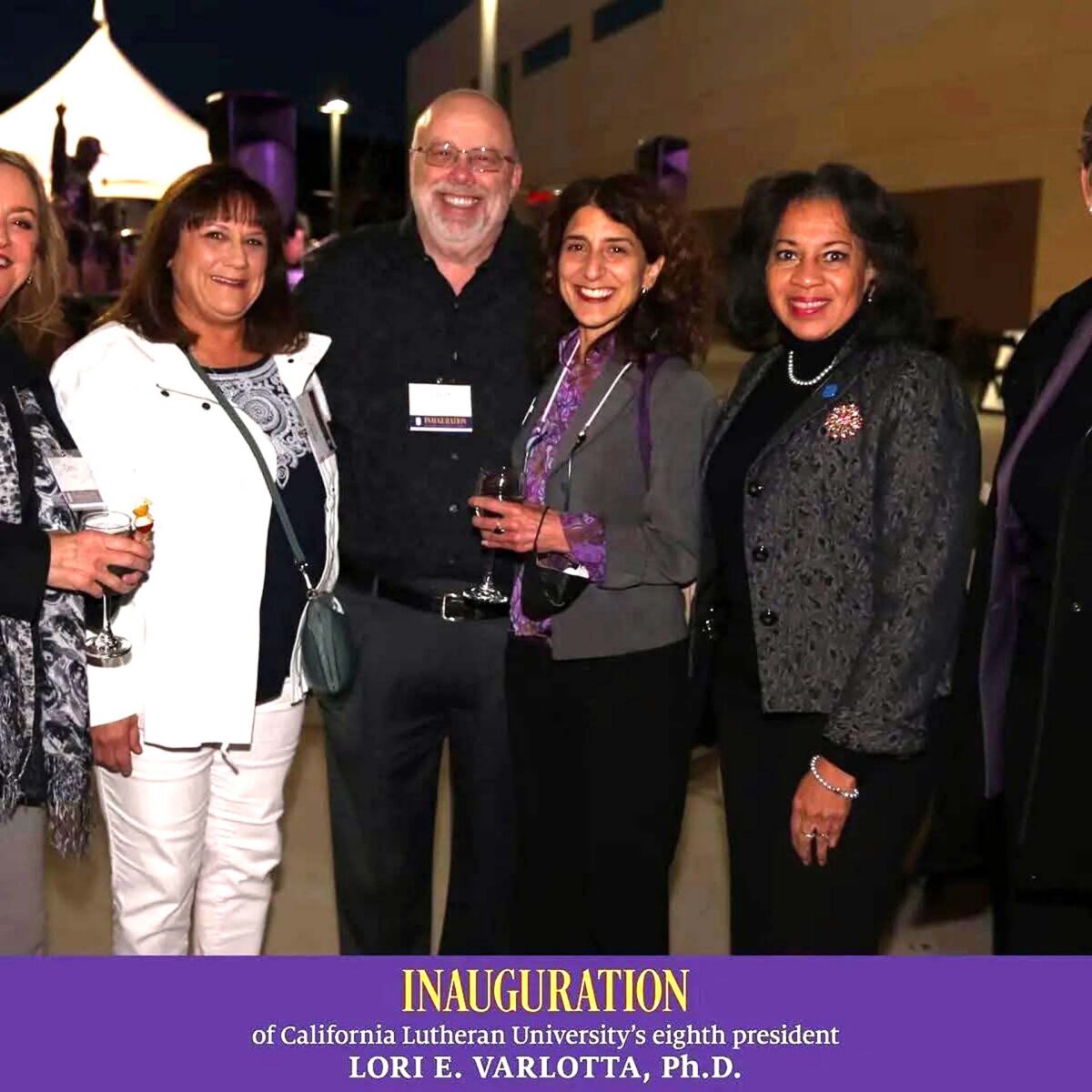
Jasper: This helps frame a bit what led you to Antioch in terms of philosophy, feminism, and social justice. You’ve also had a professional path that seems to have led you to Antioch. You went to Sacramento State, an enormous institution, where you stayed for a long time. You went from there to there to being president at Hiram for nine years. You then had a brief stay at Cal Lutheran before coming to us. Share a bit more about your professional growth through all of this.
Lori: At California State, Sacramento—or Sac State—the president saw something in me. He often handed me the tough, messy challenges that other vice presidents weren’t jumping up and down to take on. I became a bit of a fixer. When parts of the university needed to be redesigned or rethought, I was asked to step in and make decisions, and I did so, keeping students at the center in each case.
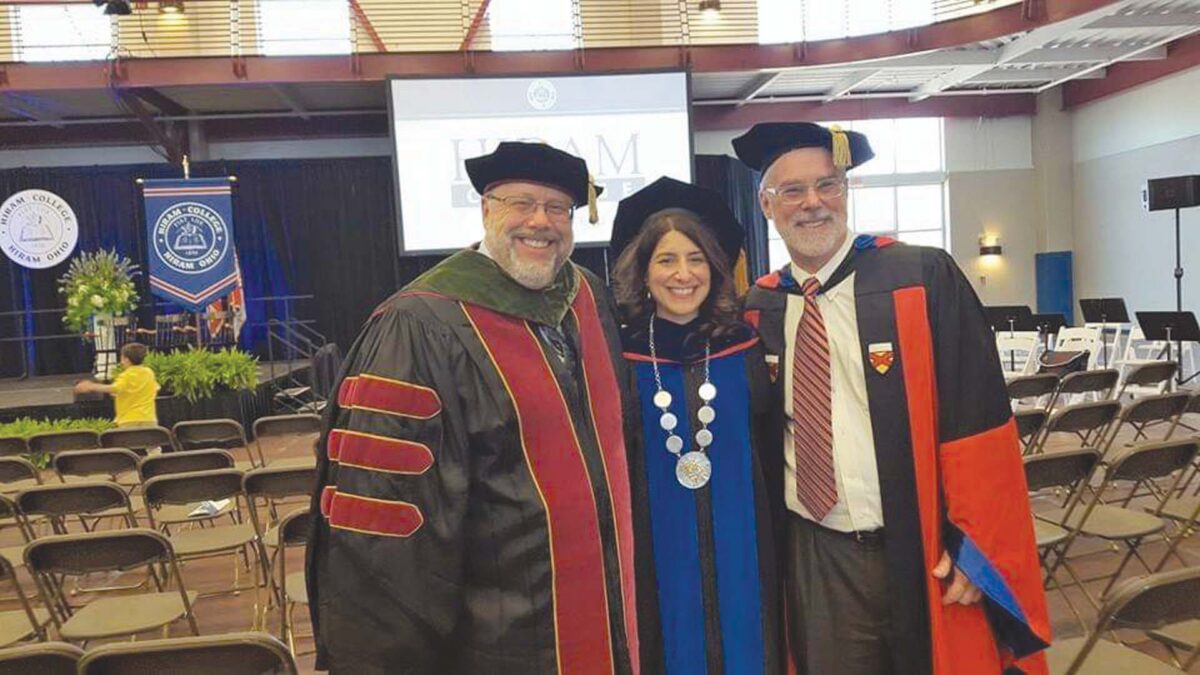
At a place that large, there’s no shortage of that kind of work. I kept getting opportunities to take things apart and put them back together in better ways. It was demanding, but it kept me engaged and curious for more than a decade. All of those experiences prepared me well for my first presidency at Hiram College. By the time I took the helm there, I was ready for the challenges embedded in the role.
Jasper: I feel like we’ve traced personal, scholarly, and professional steps that led you to us. Let’s now focus on your first year here at Antioch. You visited all five campuses. Let’s visit them briefly now. What stood out each?
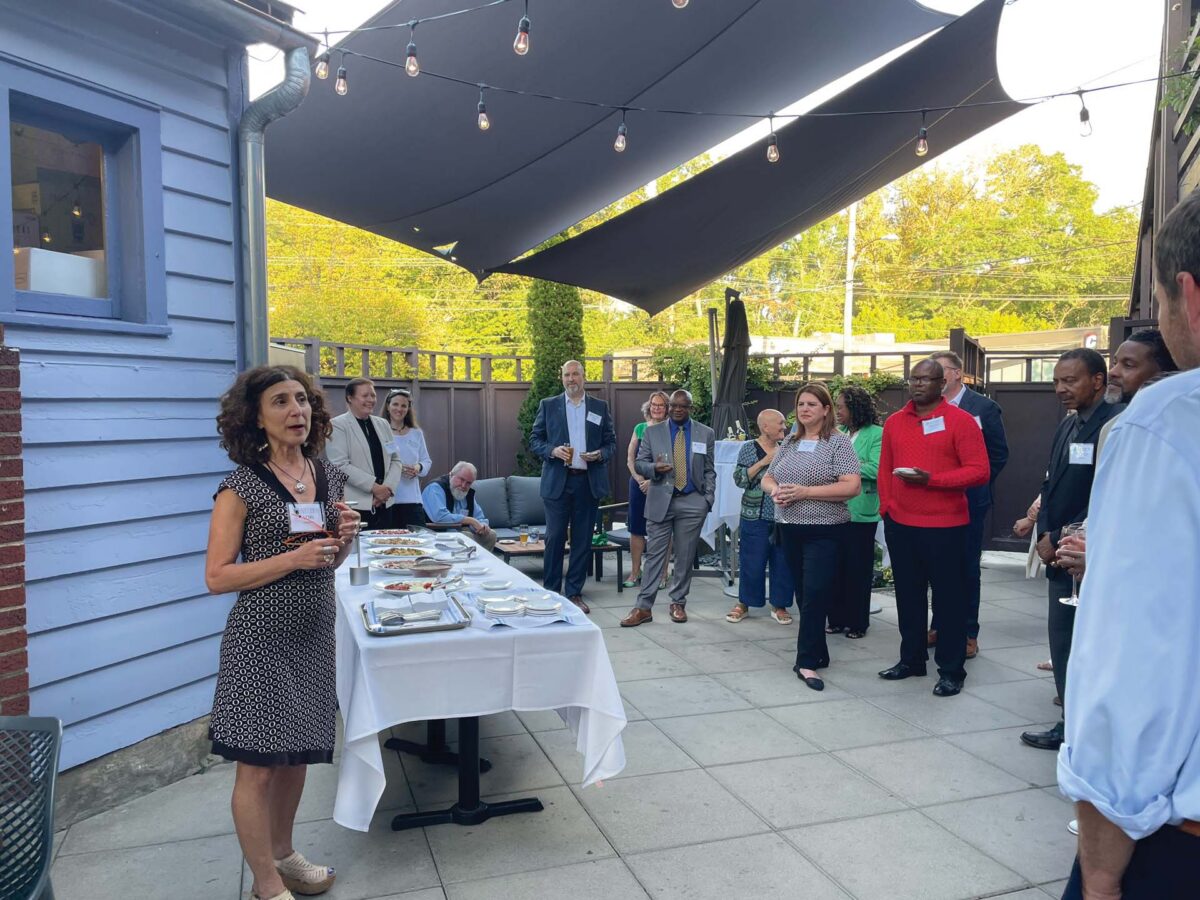
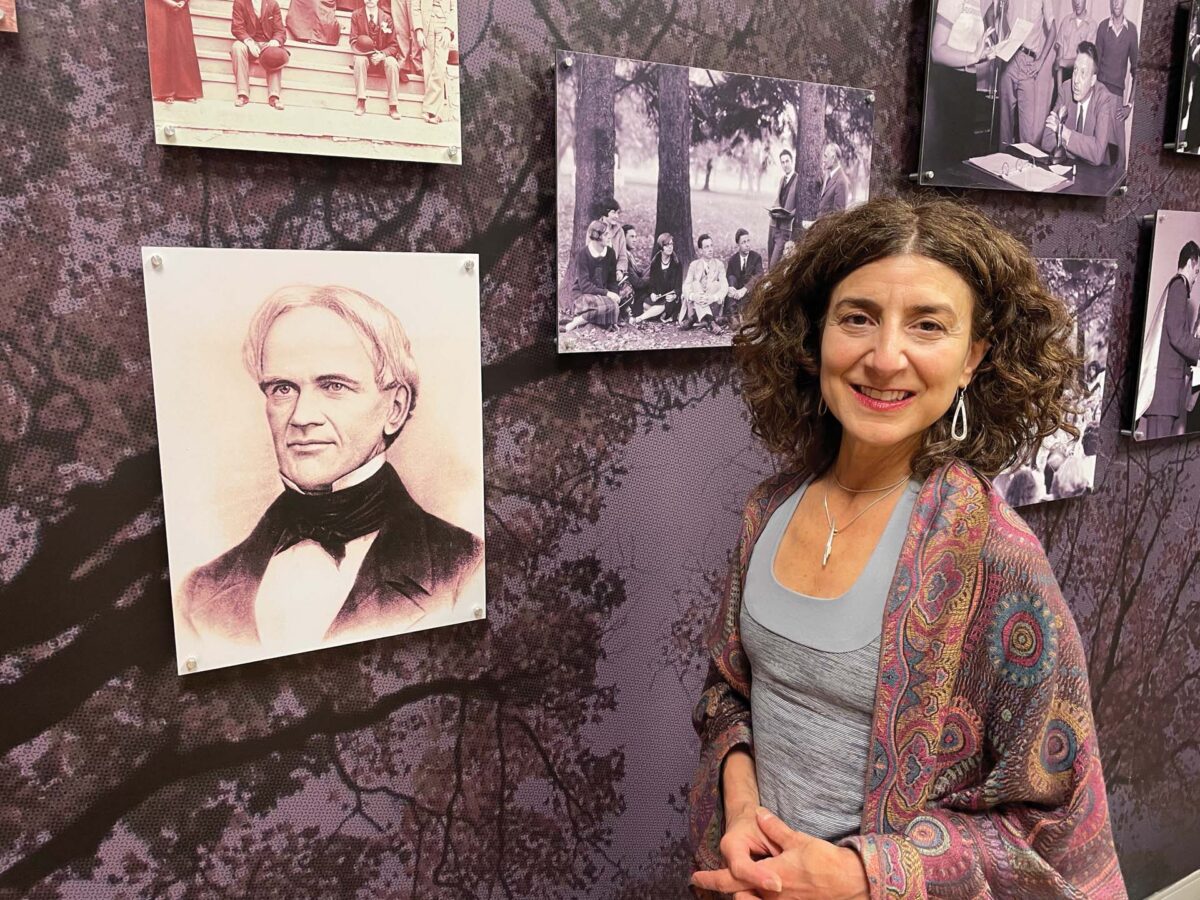
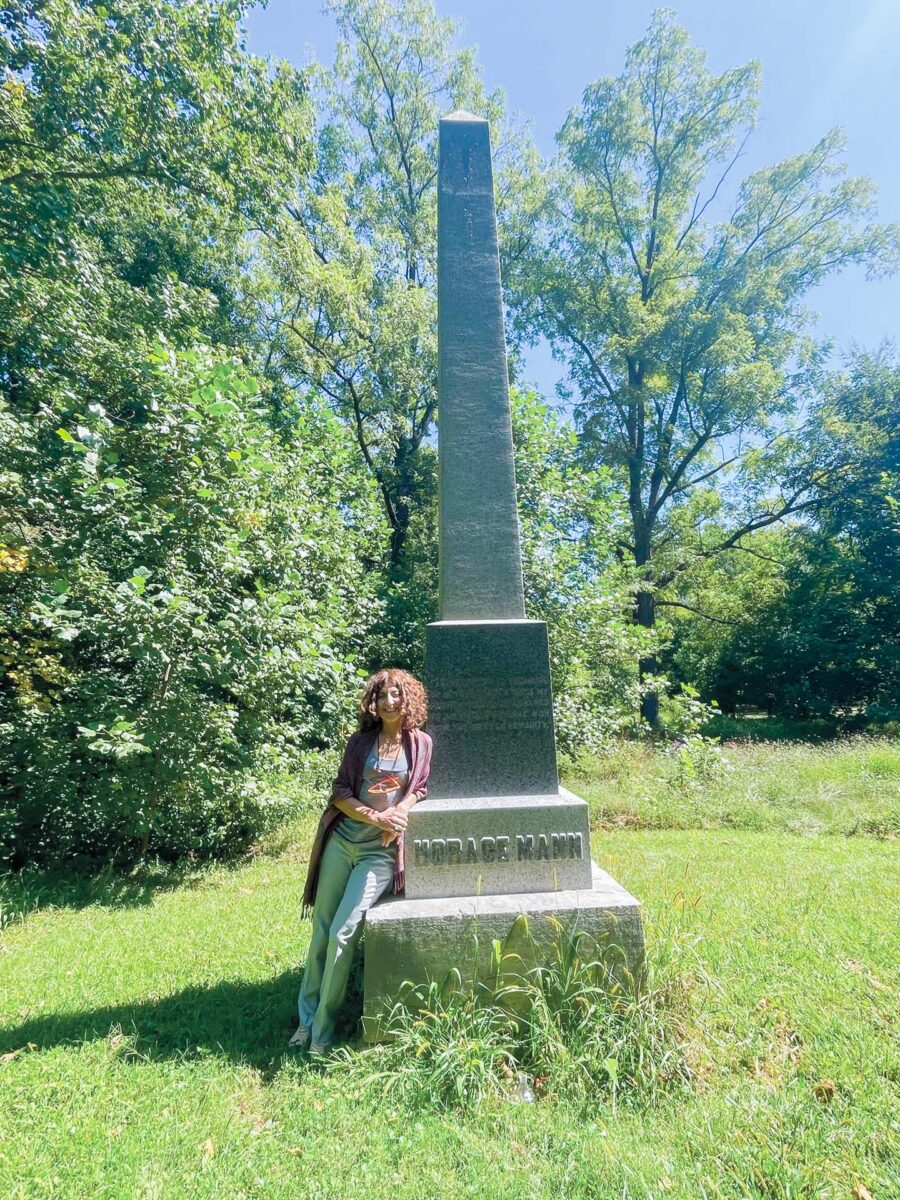
Lori: My first stop was Yellow Springs, the start of all things Antioch. I had known the town as a young person, so returning felt both familiar and meaningful. We hosted an AU Friends and Alumni reception at a local restaurant, where I was warmly welcomed by community and educational leaders throughout the region. I also connected with the president of Antioch College, who treated me to a delicious lunch and a walk around the college. We stopped at the Horace Mann monument for a photo op and an acknowledgment of our joint histories and legacies. It was the perfect way to start my own Antioch journey.
Then I went to Otterbein University in nearby Westerville. What stood out there were the conversations with faculty working alongside Antioch colleagues on the GEAPs (Graduate Education Academic Pathways). There was real energy around creating direct, affordable routes into graduate study. The interactions made the partnership feel tangible.
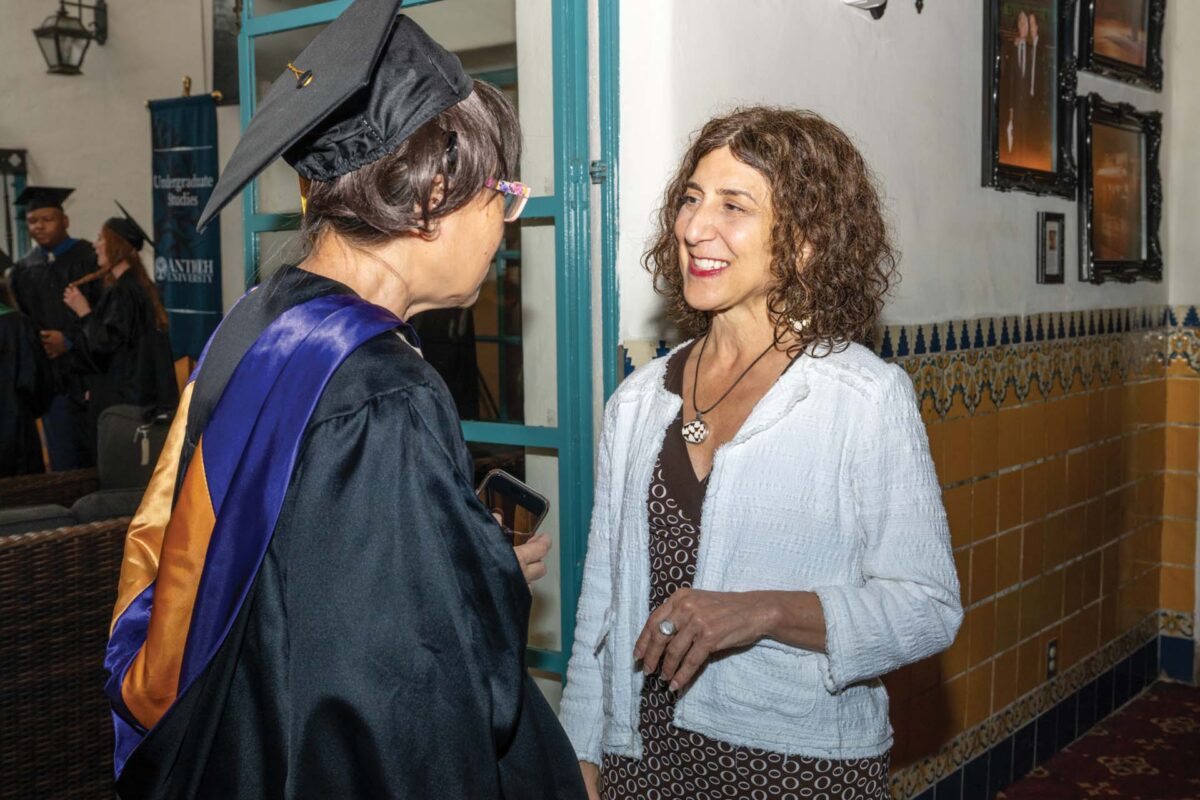
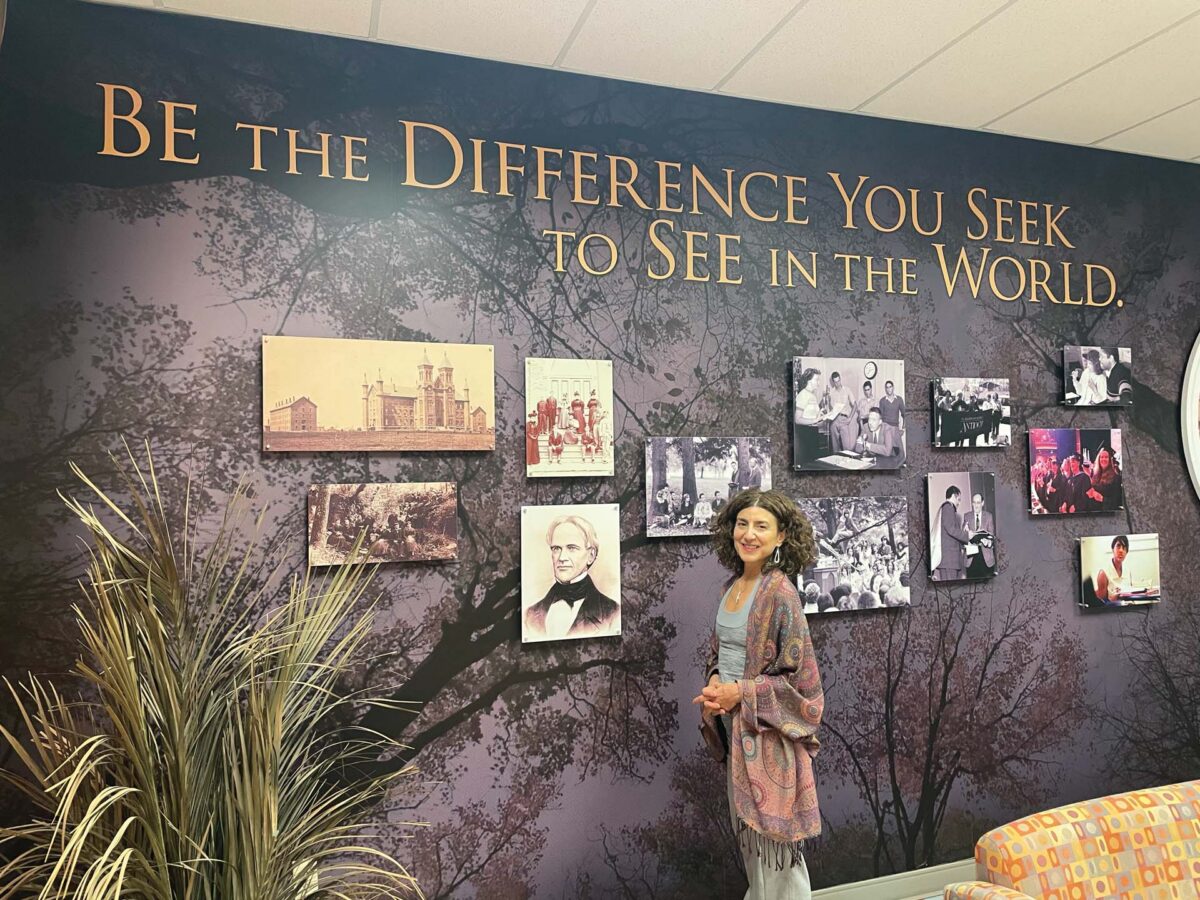
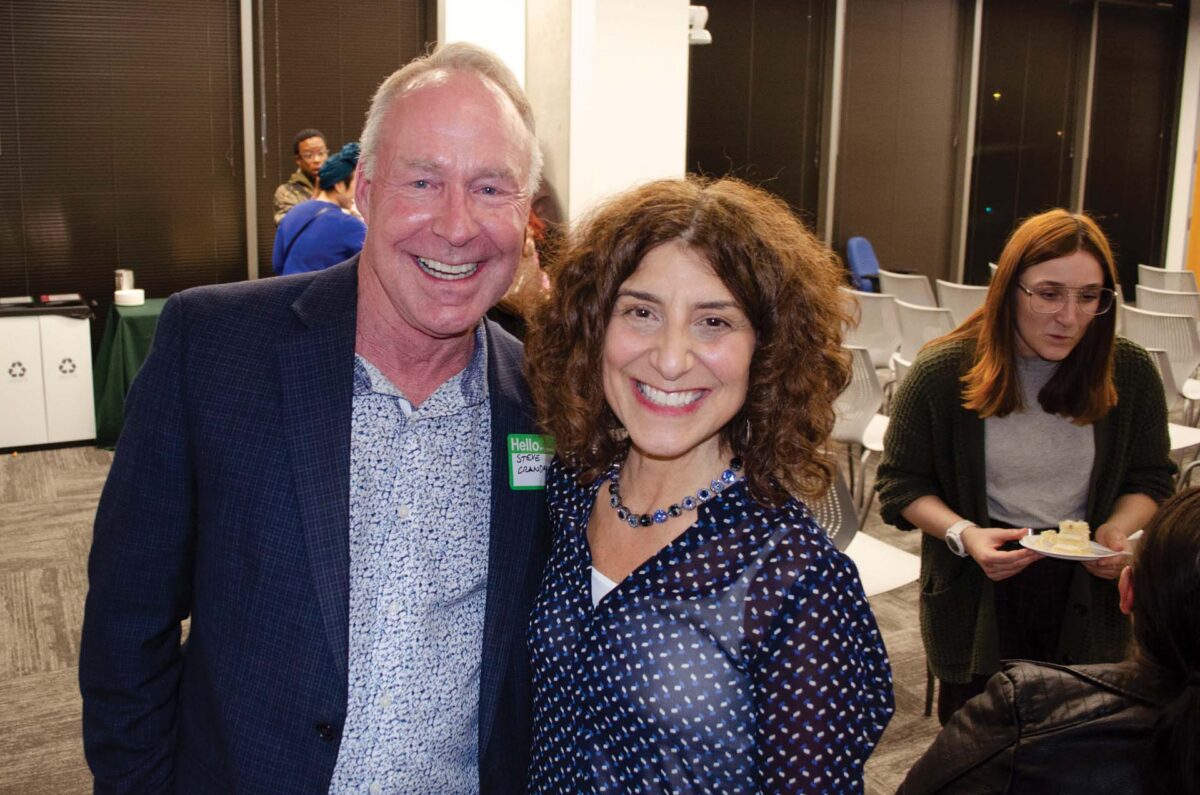
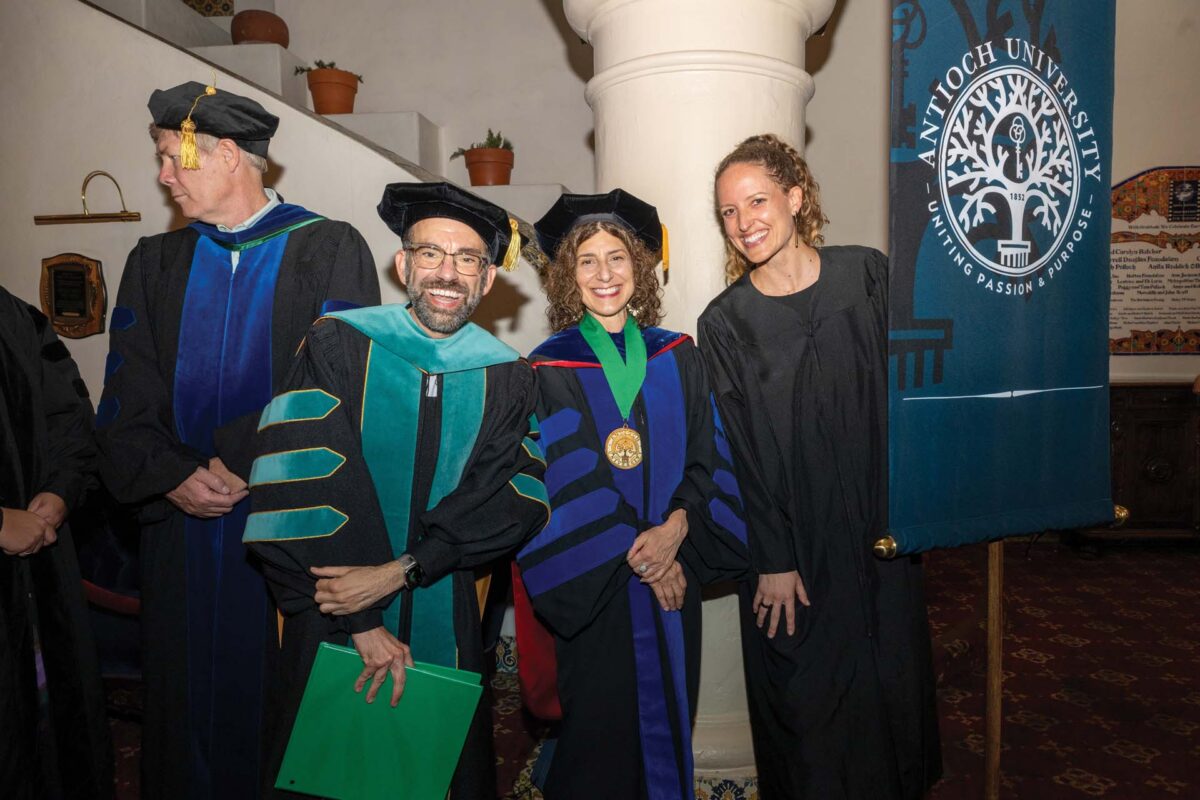
Next, I went to Antioch University Santa Barbara for commencement and returned a month later for a longer visit. I love commencements because it’s when administrators, faculty, and students are all happy at once. You can feel the joy. Students are proud, families are proud, and faculty know they’ve done good work. Administrators, who don’t always have as much student interaction, love to see the fruits of everyone’s collective labor. It was a great Antioch experience for all of us. Though the ceremony was held on a dreary day in Santa Barbara, the light and warmth in the room made it feel like sunny California.
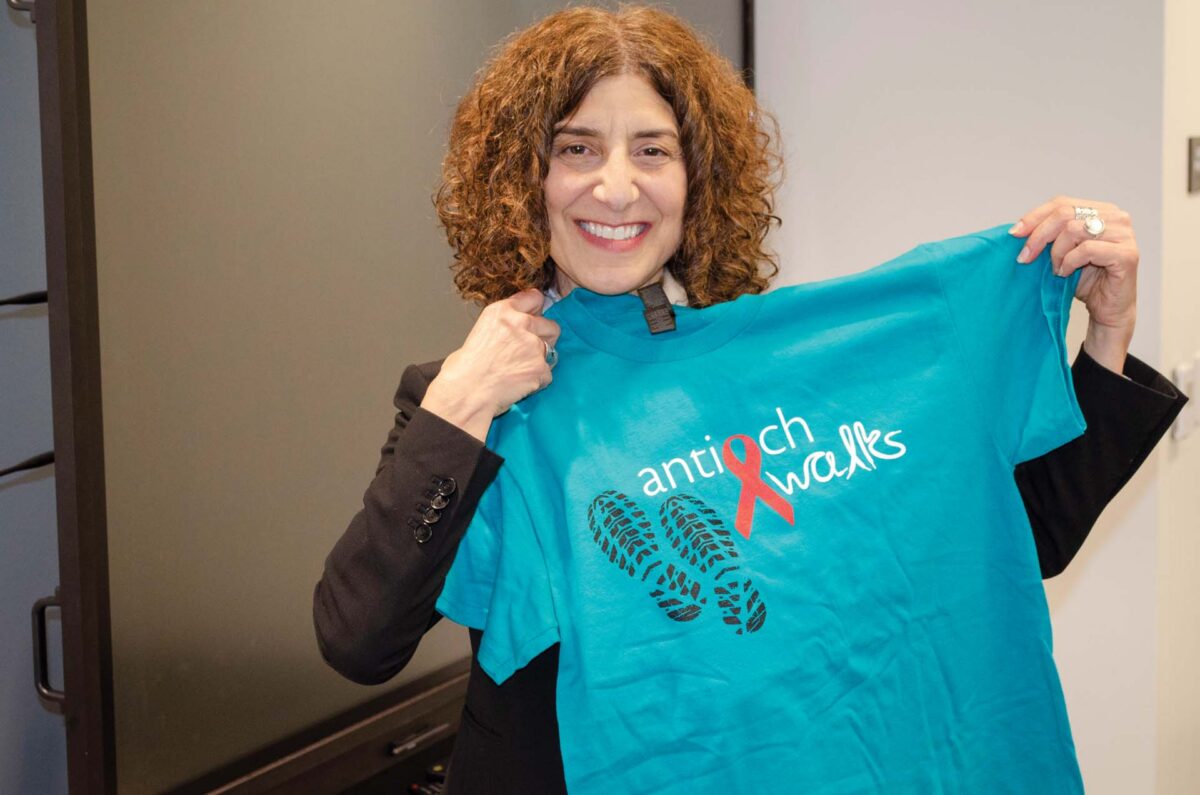
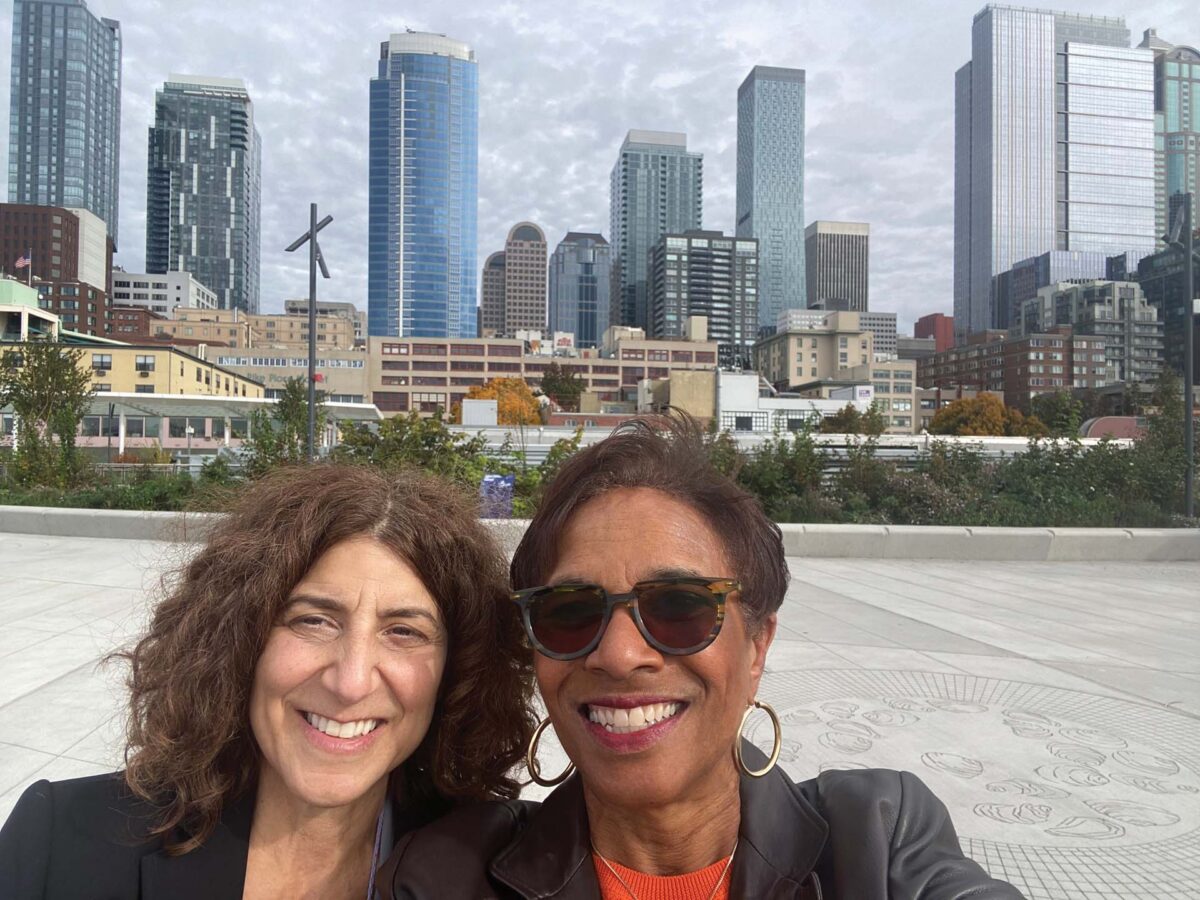
Seattle was the next stop, timed so I could attend the campus’s 50th anniversary celebration. I thoroughly enjoyed the well-attended, well-organized reception complete with alumni reflections, student performances, and remarks from local elected officials. Reflecting an Antiochian spirit, the event struck a nice balance. It was structured enough for people to share what they were learning and thinking, yet informal enough to talk with old friends, make acquaintances with newer folks, and grab a bite to eat.
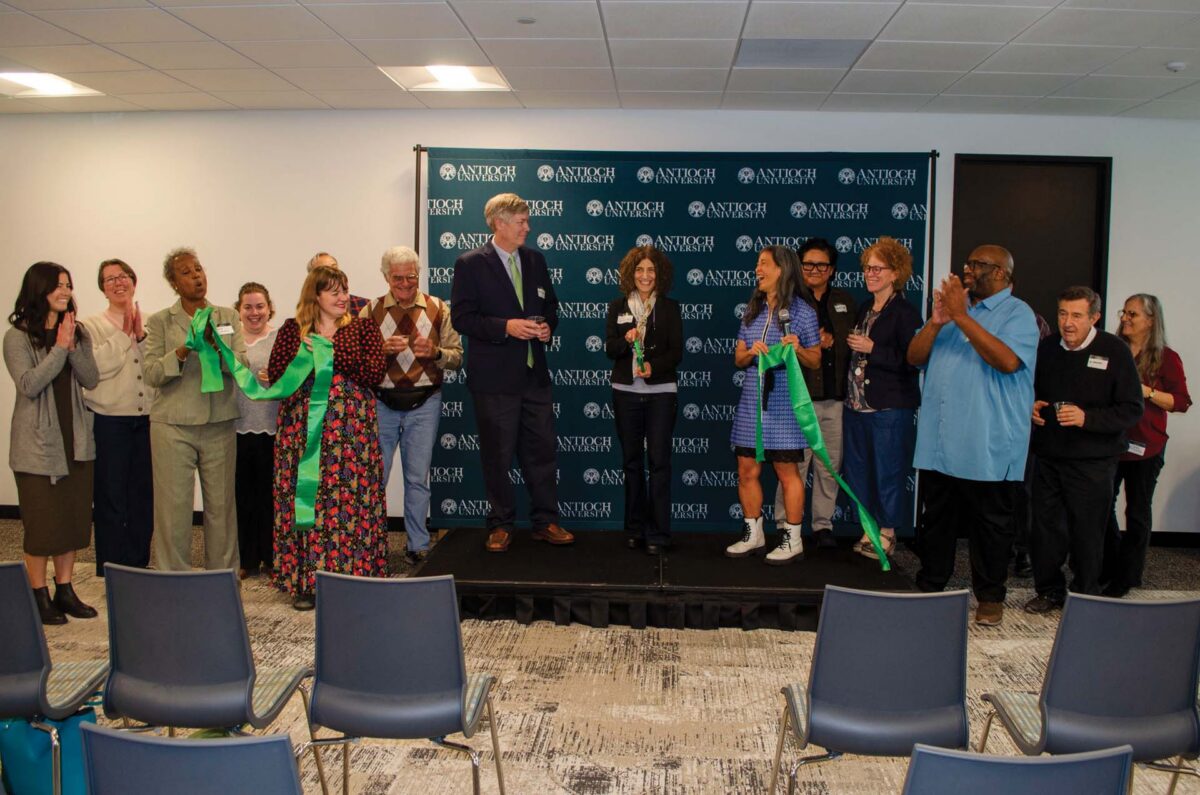
I was then off to Antioch University Los Angeles for the ribbon-cutting at our new campus there. It is beautiful inside and out. As someone who enjoys the outdoors, I especially appreciated the courtyard spaces where people can gather, eat, and talk. The LA visit also coincided with the MFA residency. I found myself sitting alongside students as they got oriented to their program while I got a firsthand look at how a low-residency model works. It was a great opportunity to experience both the residency and the celebration of the new campus at the same time.
“There was also a quiet act of kindness that has stayed with me.”
At both Antioch University Seattle and Antioch University Los Angeles, I met with classes of students. I think it’s important for presidents to understand what the learning environment looks and feels like. This seems especially important at Antioch, since we have a less conventional approach to instruction and various delivery models. Seeing how classes, residencies, and orientations are run gives me a much clearer sense of the institution I’ve been called to lead. You can’t lead a university well without an understanding of how learning happens. At Antioch, learning occurs in ways, places, and spaces that differ from other universities I have served.
I finally made my way across the country to spend time at Antioch University New England. During that visit, I held an intense listening session where students shared how frustrated and disappointed they were about issues related to the mental health clinics—both the decision to close them and how that decision was made. To be honest, it was hard to take in.
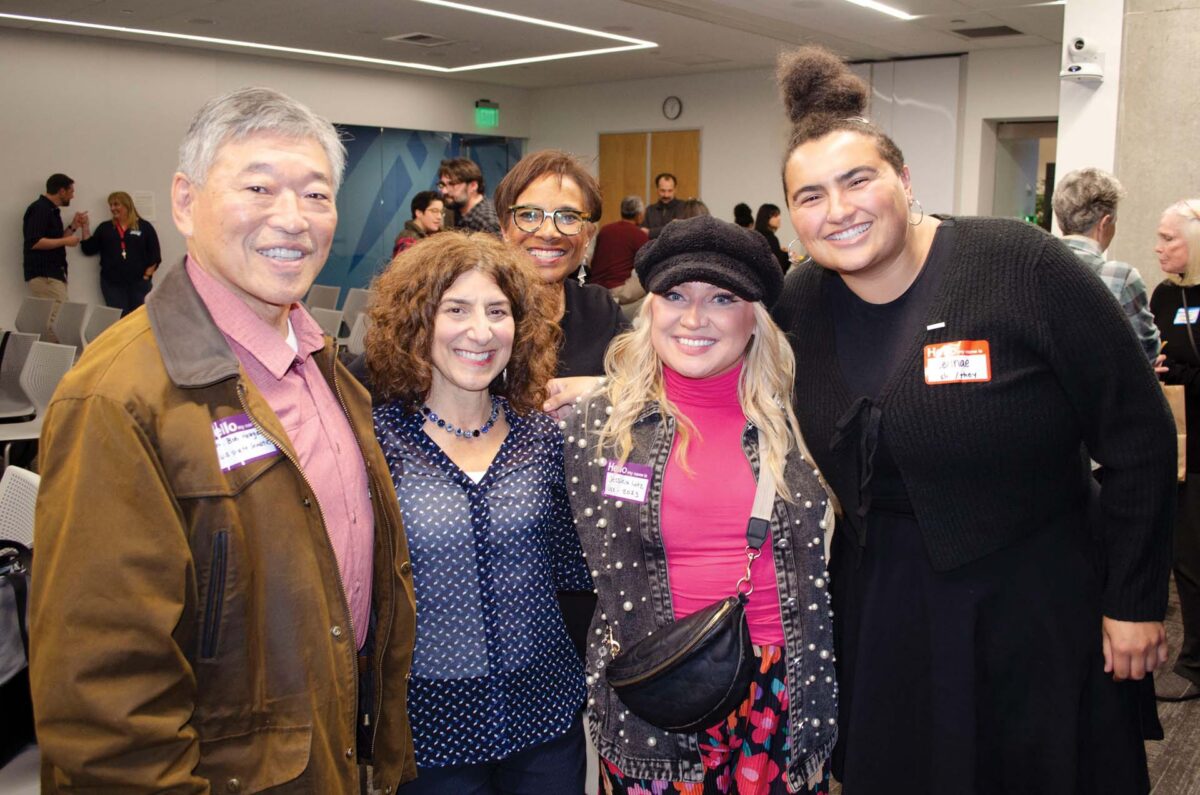
After some careful listening and a good deal of back-and-forth, we got to a better place. At times, I asked people to pause or to reframe a question so I could really hear it. By the end, students lined up to thank me—for listening, for staying steady, for asking for those pauses. I’m not a trained psychologist, so I was humbled when some said participating in that exchange gave them ideas for navigating tense moments themselves. They appreciated my taking a breath, asking for time, not feeling the need to respond immediately. Some positive feedback emerged from what began as a very difficult session. And I couldn’t help but think back to those family dinners where I first learned how to listen, be respectful, and engage in not avoid a conflict.
The other thing I’ll say about New England is how much I loved the Glover’s Ledge and community garden visits. I’m happiest when I’m outside, so these were real highlights.
There was also a quiet act of kindness that has stayed with me. On the day I was headed to Glover’s Ledge, a staff member packed me a lunch—a thermos of homemade vegetarian soup, a sandwich, and cut vegetables. It was such a simple, thoughtful gesture, and it meant a great deal. At another place, a staff member might have been intimidated by having the new president visit. But I sensed none of that at Antioch. Here, a colleague I had never met simply thought, “our new president is going to be out and about, and she needs to have something healthy to eat.” That staff member took care of me. It was a small yet powerful act of humanity. I am grateful.
Jasper: You’ve now been here for more than six months. Let’s spend some time talking about leadership at Antioch. The personal visits are such an amazing and critical part of your first six months. Yet we know no Antioch leader can be on the road all the time. You’ve been beating the drum about “distributed leadership” at this University that is made up of traditional campuses, geographically dispersed faculty, staff, and students, and a wide range of in-person, online, and hybrid teaching and learning modalities. This is a challenge and an opportunity. How’s that been going?
Lori: I’m genuinely interested in learning about distributed leadership alongside others. Many at Antioch have been working in and refining this model far longer than I have, and I have more to learn than to teach. I want to understand it and model it well. I bring experience leading campuses, but leading in a distributed environment is less familiar to me—that’s what makes it energizing. It gives me the chance to be both a learner and a leader at the same time—open about what’s working, what isn’t, and willing to experiment as we figure it out together. Distributed leadership is a defining feature of Antioch in the 21st century—a real point of pride. We can plant a flag here since we’ve been doing this work for a long time. There’s still more to do, but naming it and learning from it helps all of us—especially me as a new leader—lean into it more intentionally and invite others to learn from our strengths in this area.
Jasper: Thank you, Lori, for sharing so much about aspects of your personal story and your professional experience that have led you to Antioch. I’ve enjoyed getting to learn more about you, and I’m sure others will too.
Lori: Jasper, you have a gift for getting people to open up and talk. We covered way more ground than I had anticipated. Thank you.