
Many Americans know the seasonal rhythms of our songbird neighbors: they arrive in the spring and leave in the fall. But where do the birds go in winter? For biologist Mike Akresh, studying Kirtland’s warbler, wood thrush, and whistling warbler has led him all over the Caribbean and Central America. But the most remarkable connection are the local people he has met during this work, who have become his collaborators, students, and often powerful conservationists in their own rights. In this conversation, Mike shares about a recent trip to Rum Cay in the Bahamas, how the end of Indigenous burning practices has imperiled songbird habitat, the drama of capturing bald eagle nestlings, and much more.
Subscribe: Apple Podcasts | Spotify | Pandora | Simplecast
Video Podcast
Shownotes
Visit the landing pages for Antioch’s MS in Environmental Studies and PhD in Environmental Studies to learn more about the programs Mike teaches in. You can learn more about his research and project on his personal website. And visit YouTube if you want to watch VC3TV’s interview with Mike, “Professors from the Antioch University are working with the forestry department in St. Vincent.”
This episode was recorded February 23, 2026 via Riverside.fm and released March 6, 2026.
The Seed Field Podcast is produced by Antioch University
Host: Jasper Nighthawk
Editor: Nastasia Green
Producer: Karen Hamilton
Work-Study Assistants: Dani LaPointe, Odin Rasco, Rylie DeGarmo, and Shayla Kerr
Additional Production Help: Amelia Bryan, Jonathan Hawkins, and Laurien Alexandre
Guest
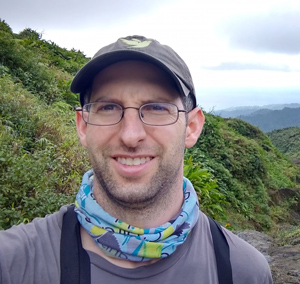
Mike Akresh is Core Faculty in Antioch’s Environmental Studies Department and Director of the Antioch Spatial Analysis Lab and the Conservation Biology program. His teaching and research interests focus on wildlife management, biostatistics, ornithology, tropical ecology, and community science. He works with students in and outside of classes on these topics. His work frequently has a strong quantitative approach, incorporating both standardized and state-of-the-art field techniques and statistical analyses to robustly examine research questions and hypotheses of interest. He often works closely with a wide variety of stakeholders, including state and federal agencies, nonprofit conservation organizations, research collaborators and universities, and the general public.
Transcript
Mike Akresh [00:00 – 00:21] – For a lot of these migratory birds, I mean, they disappear in the summer, but they’re going somewhere. You have to think about what’s called full annual cycle or full life cycle ecology of these species and not just understanding what they’re doing when it’s snowy here and where they are, but also to best conserve them, trying to conserve them in different areas throughout their life cycle.
Jasper Nighthawk [00:26 – 01:10] – This is the Seed Field Podcast, the show where Antiochians share their knowledge, tell their stories, and come together to win victories for humanity. I’m your host, Jasper Nighthawk, and today we’re joined by Mike Akresh for a conversation about songbirds and how studying these animals and working on songbird conservation can lead scientists into meaningful and interesting work that bridges borders and societies. To set up this conversation, let me tell a quick story. I grew up out in the redwood forests of Northern California. Out there in the woods, you can tell that summer is truly over the first day when right around dusk, you hear this song.
[Birdsong plays 01:10 – 01:15]
Jasper [01:15 – 3:31] – That’s the hermit thrush. Though I have to admit, I’d been listening to this bird’s song for decades before I finally learned its name. I did eventually figure it out a handful of years back. I found a website with different bird areas and their songs, and I browsed through, listened to a bunch of bird songs, and finally I was like, this is it. It’s the hermit thrush that I’ve been looking for. But my curiosity that day, it ended with a positive identification. And until this week, I had never thought to wonder where this beloved bird actually was spending the summer when it wasn’t around or the winter when it often was absent too. So I looked it up and it turns out that these hermit thrushes, they get around. They migrate up to Canada in the summers. And then in the winters, many of them go all the way down into Western Mexico. They’re these great travelers of North America. And as I was thinking of this, I thought, man, it’s sweet that these birds hold three different passports. And I also liked thinking about all the people up and down our continent who get to hear that special hermit thrush song. So I bring up this story because today’s guest, Mike Akresh, has been taking the migration of songbirds much more seriously than me. Mike lives most of the year in New England, where he’s core faculty in Antioch’s Environmental Studies Department. And his research into several different songbird species has taken him not just around New England, where the birds tend to spend their springs and summers, but also to where they overwinter; the Caribbean, Central America, and this of course differs by species. These trips to the wintering grounds of these songbird species have not just given Mike the chance to add to our knowledge about these crucial and often endangered species, they’ve also brought him into relationship with the people who live in these countries who get to spend the winters with these birds. And Mike has done really interesting work alongside partners in the Bahamas, in St. Vincent, in Honduras, and beyond. So I’m really excited to learn more about Mike’s work today, both with birds and with the other people who care about these birds. So Mike, welcome to the Seed Field Podcast.
Mike [03:31 – 03:32] – Thanks for having me.
Jasper [03:33 – 03:59] – I’m super happy to have you here. Before we get into the nitty-gritty of our conversation, I do want to ask you to share where you’re coming to the conversation from, and I’ll share myself too. So I can go first. I’m white. I’m a cisgendered man. I’m queer. I’m not living with a physical disability, though I do experience anxiety and depression. I have a college degree and I have steady housing and steady income. I’ll hand it over to you, Mike.
Mike [03:59 – 04:12] – Thanks. I’m also a white male and I have had the opportunity to get also a college degree and a master’s and PhD degree. And so I’ve had the privilege to do that.
Jasper [04:13 – 04:44] – That’s great. Thanks for sharing that, Mike. So I wanted to get right into, like, I want to talk about some of your history and what brought you to caring about birds and studying them. But I wanted to kind of get into the excitement of this work. So we were talking last week and you told me about a trip that you had recently taken to Rum Cay in the Bahamas. And I was wondering if you could tell us what your goals were with that trip and some of the details of kind of the hardships that you faced and what came out of it.
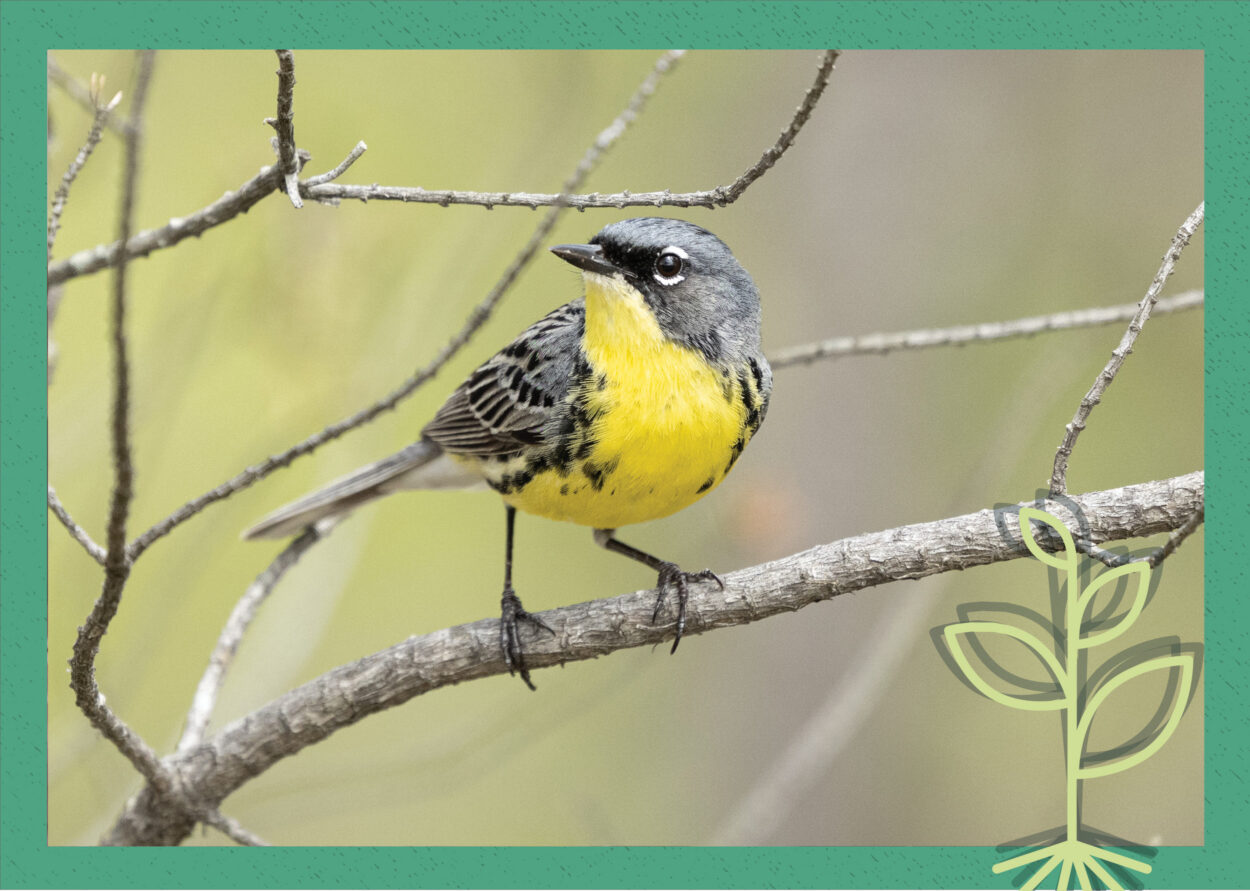
Mike [04:44 – 05:55] – Happy to talk about the recent trip down to Rum Cay in the Bahamas. This is an endangered warbler species that breeds mainly in Michigan and in the Great Lakes region, a little bit in Canada, and then primarily winters down in the Bahamas. And this species has been on the endangered species list in the past. It recently came off the list, but there’s only about three to four thousand individuals of this species in the world. And so some past research had found that the central and eastern part of the Bahamas is where this species lives and winters and spends its stationary non-breeding period. But we didn’t really know which exact islands. There’s a number of islands where the bird was documented, but this one island right in the middle of other islands where it’s been found had never been surveyed. So our main goal was to go out there and try to find really for the first time and see if this bird was hanging out and had some individuals and some of population was spending the winter down on this island, Rum Cay.
Jasper [05:56 – 06:08] – Let’s play a recording of the Kirtland’s warbler.
Birdsong plays [06:00 – 06:05]
Jasper [06:05 – 06:08] – How ingrained is that bird call in your mind?
Mike [06:08 – 06:25] – It is pretty ingrained. We use that playback, we use that call actually to survey for the bird in the nonbreeding grounds in the Bahamas. So we will play that song continuously for hours and hours while we’re walking. And so that song is pretty ingrained in my mind.
Jasper [06:26 – 06:32] – Yeah. Okay. Okay. So but the birds themselves are not actually making that call when they’re in the Bahamas.
Mike [06:32 – 06:41] – No. In the Bahamas, they mainly do just chips. Sometimes these kind of buzzy flight calls, but mainly they won’t be singing down there.
Jasper [06:42 – 06:47] – Okay. So back to Rum Cay, how remote is this island and what was it like getting there?
Mike [06:47 – 07:41] – Yeah, so it’s a pretty remote island, which is why it hasn’t really been detected on the island in the past. Only about 40 people live on the island. And we were actually planning to do surveys right along the runway right when we got there in late afternoon, just because birds will start kind of being a little bit more active in the afternoon, late afternoon. And we also, it was a few miles away from where we were staying. We were like, OK, let’s go survey this area. And we just got swarmed by mosquitoes right when we got off the plane. They were really, really, really bad, almost like what you might expect in Alaska, just kind of covering our face and neck and arms and stuff. So over the whole week, we got bitten pretty extensively. And we did find a bird right away that first afternoon, that first day, right near the runway. But it was difficult field conditions, definitely.
Jasper [07:42 – 08:04] – I have to say that the story when you were telling me it before, it made me think of reading National Geographic as a kid, like the prop airplane drops you in a remote airfield and you have your mist nets and your wide brim hat and you’re suddenly swarmed by mosquitoes and trying to carry out your field research under adverse conditions.
Mike [08:05 – 08:21] – Yeah, definitely. Very, it can get really hot in the Bahamas too. So just not like your vacation beach when you’re out kind of macheteing different trails and trying to push through thorny, thorny, really dense vegetation. But we did find the birds. So that was good.
Jasper [08:21 – 08:30] – Yeah. So it turns out it’s not a hospitable place for you. But for these Kirtland’s warblers, you were able to identify that it’s actually a hot spot. Is that right?
Mike [08:30 – 08:50] – Yeah. So we ended up finding over 15 birds just during a few days of our surveys, which is great. Really, really high numbers, given that the population is pretty small in general. And yeah, we found lots of areas where there was fruiting plants and birds eating these fruiting plants that are preferred in the Bahamas.
Jasper [08:51 – 09:18] – Yeah, that’s so interesting. So you alluded to the conservation work that has happened around Kirtland’s warblers and the way that interested people have taken up the cause to try to restore its habitat. And I know that a lot of that habitat restoration has happened in Michigan, like in the U.S. side. And I was interested to learn a little bit about the habitat that it needs for its mating grounds. Could you tell us a little bit about that, those efforts?
Mike [09:19 – 09:48] – Yeah, in the breeding season, it prefers young early successional habitat and prefers to nest in jack pine or some other experimental pine. Often, the bird does well in areas that are planted trees or areas that have been burned and prescribed burning or tree harvesting actually provides habitat for some of these species in New England. And it’s a similar case for the Kirtland’s Warbler in Michigan and Great Lakes region.
Jasper [09:49 – 10:01] – Yeah, I was interested in that because it seems like it’s fire suppression that is maybe leading to the erasure of this habitat.
Mike [10:01 – 10:44] – Yeah, even before the last ice age, but even kind of more recently, there’s been indigenous tribes in North America that had done a lot of burning, and they would do burning for blueberry production, as well as creating kind of habitat for deer and other game that they would hunt. And so the idea that the eastern North America was kind of untouched landscape is kind of incorrect in this kind of false assumption. There was a lot of management that indigenous tribes did in the landscape, both in Michigan and in New England. and other parts of the Northeast. And so that would kind of create this habitat for these birds, troubling birds, and lots of other wildlife and biodiversity that kind of need this type of forest or type of vegetation.
Jasper [10:44 – 11:03] – Yeah. Okay, so there’s this side of the habitat on the American side for Kirtland’s warblers in Michigan for other birds. There’s all these groups working to do their best to conserve the bird habitats. How is that work being taken up in the Bahamas or in the Caribbean?
Mike [11:04 – 11:33] – Yeah, we try to collaborate with Bahamian organizations such as Bahamas National Trust, as well as University of the Bahamas and this other island, Eleuthera, called One Eleuthera Foundation. And we’re starting a project where we’re trying to grow these fruiting plants that these Kirtland’s warbler like, and then plant them in different places on the island, potentially in areas where there has been development, but we can try to plant areas of these fruiting native plants to provide more habitat for the threatened species.
Jasper [11:33 – 11:45] – Yeah, it seems meaningful to pursue this work in all of the habitats inhabited by the species, not just the ones in the north.
Mike [11:45 – 12:16] – Yeah, definitely. For a lot of these migratory birds, I mean, they disappear in the summer, but they’re going somewhere. You have to think about what’s called full annual cycle or full life cycle ecology of these species and not just understanding what they’re doing when it’s snowy here and where they are, but also to best conserve them, trying to conserve them in different areas throughout their life cycle and working with different countries and organizations throughout their life cycle to do that, to have that conservation for these migratory species.
Jasper [12:17 – 12:35] – Yeah. And so that kind of brings me to the side of the people actually living in these countries. I mean, you mentioned working with Bahamian colleagues. Can you talk a little bit about your relationship with these folks, how you’re able to share some of your knowledge and also just create a collaboration?
Mike [12:36 – 13:23] – Yeah, so it’s been great to collaborate with Bahamians and other Caribbean nationals in other countries as well. Besides kind of going down and conducting research and working with Bahamians is trying to build capacity so that they can do the surveys on their own as well. And also just building capacity for educational wise and building up careers of young professionals on these islands. So some of the grant funding that I’ve gotten over the years for this Bahamas project has then led to Bahamian students getting GIS certificates and taking classes at Antioch. And even there’s a student currently that’s in the full master’s program that is being fully funded through the Kirtland’s Warbler grant project to get their master’s here in our environmental studies department.
Jasper [13:24 – 13:36] – That’s so great that there are these people coming in to Antioch even in particular, who are from these other countries that are connected in some way through these birds. Like I find it kind of inspirational.
Mike [13:37 – 14:05] – Yeah, it’s great that these birds are connecting, diversifying and getting other people different viewpoints in our classes. For instance, joining on projects and thinking about other taxa like corals and fish in the tropics that students might not be thinking about in the Northeast. So some of these just having more diversity in the classroom as well is really beneficial for everybody as well.
Jasper [14:05 – 14:42] – I mean, to zoom out a little bit from Kirtland’s Warbler or even from songbirds, I read in one of the pieces that you sent to me while I was preparing to talk with you just about the incredible biodiversity of the tropics. And compared to the Northeast of the United States, which has had very well-funded, often for, you know, reasons of capitalism and empire, but like very well-funded universities for 400-plus years now, that the tropics are comparatively understudied. Is that true that there are many species that really need more description, more study?
Mike [14:43 – 15:49] – Yeah, across the board, the tropics are very less studied. And partly it’s just there are so many more species down there, but also just because there’s less capacity, less, as you said, history of people studying taxa down there. There’s so much that we don’t know down there. We’re still describing new bird species in the tropics and in the Caribbean that in the past hadn’t been described or were combined together into a single species. But now people are finding, okay, this is actually two or three or four different species. And so that directly impacts conservation and what you even consider as a bird species. Another species that I study in St. Vincent, the whistling warbler and working with the local forestry department and local Vincentians, I believe it is. This is a bird species that the nest has never been documented. So we don’t even know where this bird is nesting, when it’s nesting. And it’s just hasn’t really been scientifically documented. So there’s just so much unknowns in in the tropics.
Jasper [15:49 – 16:25] – Yeah. Let me, let me play a recording of the whistling warbler.
Birdsong plays [15:54 -16:10]
Jasper [16:11 – 16:25] – So you’re trying to raise awareness about this species that’s endemic to that island. Like it’s not, am I right? It’s not been seen anywhere else.
Mike [16:25 – 17:06] – Yeah. And so this is a species that’s only found on St. Vincent, only on that island. And yeah, this is a really also an endangered species, another kind of endangered warbler species that doesn’t migrate. They just stay there the entire year on the island. In 2021, there was a volcano eruption in the north part of the island that just erupted. It’s not a huge, huge island. So we were interested in seeing how that impacted the birds. And even a year or two ago, there was a hurricane that passed through on the island as well. So there’s definitely lots of disturbances and other kind of development and agricultural impacts on the species that are important to study and see how the bird is doing to best conserve it.
Jasper [17:06 – 17:17] – The way that you’re studying it is you’re going out into the field, you’re doing inventory, seeing how many you can find in a specific area and making recording, like setting up recording stations. Is that right?
Mike [17:18 – 18:05] – Yeah. And so we’ve been working directly with the Department of Forestry on this project as well as with this nonprofit organization, Birds Caribbean. And we go out and we survey along transects and along accessible trails where we do point counts and count the birds that we see and hear in different locations throughout the island. And then we also have been putting what’s called ARUs or audio recording units, autonomous recording units, where we can just set them out and leave them for a week or so, or even a few weeks and see what we hear later on getting those recordings and seeing if we see or hear any of these endangered or other rare bird species.
Jasper [18:05 – 18:26] – I want to bring things back a little bit closer to New England and talk about some of the ways that you’ve engaged people who aren’t necessarily trained scientists closer to like Keene, New Hampshire. So I wanted to ask about these bio blitzes that you’ve organized in the past. Can you tell us what that means? It’s kind of a funny word, bio blitz.
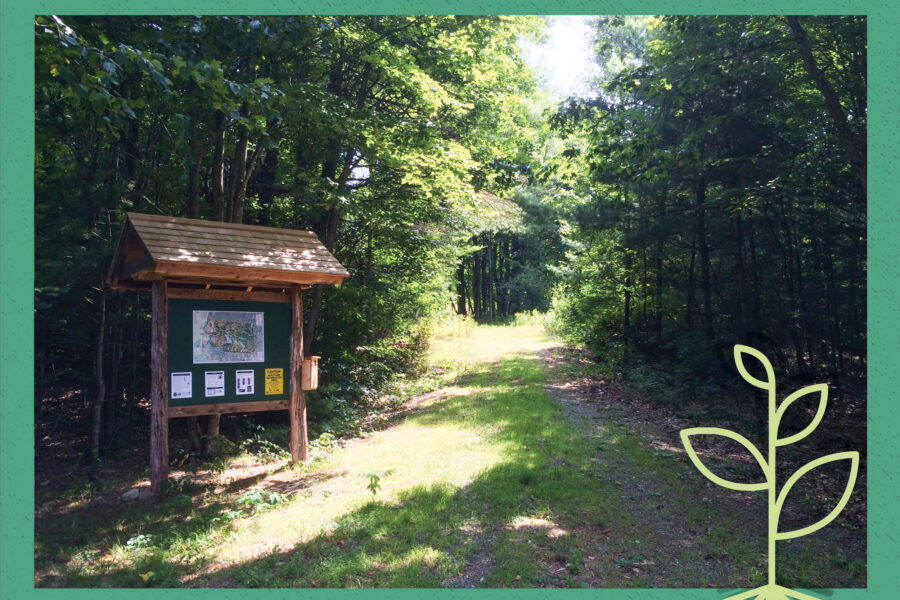
Mike [18:26 – 19:41] – Yeah. So bio blitz, I guess, biological blitz of this is often kind of paired with these community science platforms. One is iNaturalist, another is eBird, which are national or even international global biodiversity databases where people submit observations of what they’re seeing or hearing and taking pictures of, of all taxa, and then understanding, okay, what is the biodiversity in a given location or throughout the world, really. In a BioBlitz, you would go out and have a bunch of students and have a bunch of people come together, a community, and try to see and hear as many kind of species as you can at a given place or at a given time. And so we’ve had bio blitzes at Antioch’s property at Glover’s Ledge in Langdon, New Hampshire, just close to the campus of Antioch University, New England, where students have gone out and looked for frogs, looked for salamanders and birds. We’ve set up lights at night to attract insects and moths to just get an idea of all the biodiversity that you might find in an area. And it’s a really great learning tool.
Jasper [19:42 – 19:55] – Yeah. I’m kind of inspired by the idea of setting up lights at night to try and draw in moths and Lepidoptera and like catalog those.
Mike [19:55 – 20:50] – Yeah. It’s really amazing how many different species of moths. I’ve had some students that have worked with me on insect research and insect studies, and it’s amazing how many different moths and beetles and ants, and it’s actually a great way to get at biodiversity and better understand a whole variety of kind of both the diversity of insects that are in an area and also other things. There’s a student currently that’s been collaborating with me and another researcher at Harvard looking at nocturnal pollination to see these moths are actually pollinating our plants at night. And so there’s all this research that you can do at night that sometimes doesn’t get as well covered in the past because it just is a people are usually sleeping at night. And there are sometimes are our safety considerations that you have to think about and make sure you’re covering for nighttime work.
Jasper [20:50 – 21:13] – I love that. Like, I think sometimes when you look at science, it can be like, wow, so much of the world has been described. So many species have been discovered. There’s only things around the edges left or there’s nothing left. But hearing you talk about all of the things to discover in the tropics, all of the things waiting to be discovered if you just start studying what happens at night, it kind of is a broadening horizon.
Mike [21:13 – 21:24] – Yeah, definitely. There’s so much that we don’t know and so much that we can try to conserve as well and to help with conservation.
Jasper [21:24 – 21:31] – Yeah. I wanted to ask, are there any other stories of like your students’ projects that you’d like to share?
Mike [21:32 – 21:54] – Yeah, there’s been lots of current and student projects that have been great. One student is working with bald eagles and looking at PFAS, the Forever Chemicals, looking at these PFAS compounds in bald eagle nestlings and seeing if they are affecting the bald eagles and how much, how much of these chemicals that you hear about them more and more are affecting wildlife.
Jasper [21:54 – 22:09] – Yeah. And especially like at the top of the food chain, like usually chemicals accumulate like DDT famously accumulated in, in like birds that predate on other birds or on fish. Right. Yeah. Are there any preliminary findings there?
Mike [22:09 – 22:35] – I mean, yeah, I mean, we’ve, we were able to run, uh, he was able to run a lot of able to run some samples and find some of the hot spots for where these chemicals are, are more in industrial areas or in areas where there was a lot of firefighting foam used. And that had a lot of PFAS. And so there is, kind of, these point sources, hot spots where it seems like the eagles are picking up these chemicals, especially in Eastern Massachusetts.
Jasper [22:36 – 22:40] – That sounds potentially dramatic. How do you get a bald eagle nestling?
Mike [22:40 – 23:18] – This student, Jesse Canney, is pretty amazing. He’ll climb up with all the permits and with collaboration with Mass Wildlife, climb up 100-foot white pine trees and other really kind of inaccessible areas and bringing down the bald eagles. and sometimes other technicians are doing this as well, getting the bald eagle nestlings, bringing them down in a bag and taking the blood and other samples from these nestlings that are pretty big, almost basketball sized, and then using a poi system to them, get them back up to the top of the tree and back up into the nest after the sampling’s done.
Jasper [23:18 – 23:21] – That’s incredible. And how do the parents feel about this?
Mike [23:21 – 23:43] – Bald eagles aren’t too aggressive. They are actually, the parents aren’t too aggressive. The student actually, Jesse does do some banding of peregrine falcon nestlings as well throughout the state. And those tend to be a little bit more aggressive and may actually dive bomb you. And you might want to wear like a hard hat close to the nest.
Jasper [23:44 – 23:49] – Next time I go to band some peregrine nestlings, I’ll wear a hard hat.
Mike [23:49 – 23:51] – Yeah, that’s a good idea.
Jasper [23:52 – 23:57] – Yeah, that’s cool. And are your students all working on birds or are there other projects?
Mike [23:57 – 24:45] – I have, as I mentioned, some students that have done some insect research. Other students have done work with amphibians and frogs using those same audio recorders. There was also a student that graduated recently that worked with snakes and looking at smooth green snakes. And so, yeah, there’s been lots of lots of other taxa, primarily birds, but also branching out a little bit into insects and what’s called herps or herpetofauna, snakes and amphibians. And yeah, a lot of this is done really by the graduate students, which is great. Antioch students will kind of sometimes be part of my projects, but also Antioch University is really flexible in terms of these students being able to kind of do research on what they want to study.
Jasper [24:45 – 24:54] – Yeah, that’s great. I wanted to ask as a final question, is there anything that you would recommend for listeners who want to do something to support migratory birds?
Mike [24:55 – 26:31] – Yeah, there’s lots of kind of individual actions. Some might be fairly straightforward, like planting native plants, which helps with insect populations and bird populations. Reducing like artificial light at night can help insects and then therefore help birds. And so there’s some of these individual actions for larger actions advocating for conservation with your state and your local county or town throughout the state or the nation that you live in. What is really impacting birds in the Northeast is kind of habitat management and habitat conservation. And so a lot of it comes down to being able to conserve land and also manage land for biodiversity. And so donating or collaborating with agencies that are really trying to help both kind of the rare species that are threatened and endangered, as well as common species and stopping those common species from becoming endangered. There’s a saying by some of the bird organizations, “keeping common birds common” and making sure that their abundance and biodiversity kind of remains stable over time. I love those steps. Thanks for having me. I’m glad to talk about birds and all the great student research that all the students have been able to take part in.
Jasper [26:32 – 27:47] – Mike, thanks so much for coming on the Seedfield podcast. Mike teaches in Antioch University’s MS and PhD in Environmental Studies. In our show notes, we’ll include links to those programs landing pages on antioch.edu. We’ll also link to Mike’s personal website, which has further information about his scholarship and many of the projects that we spoke about here on this podcast today. And we’ll link in the show notes to a YouTube video from VC3TV, where Mike is interviewed about his work conserving the whistling warbler on the island of St. Vincent. We post these show notes on our website, theseedfield.org, where you’ll also find full episode transcripts, prior episodes, and more. The Seed Field Podcast is produced by Antioch University. I’m your host, Jasper Nighthawk. Our editor is Nastasia Green. Our producer is Karen Hamilton. Our social media manager is Selina Starling. Dani LaPointe, Odin Rasco, Rylie DeGarmo, and Shayla Kerr are our work-study assistants. We received additional production help from Amelia Bryan, Jonathan Hawkins, and Laurien Alexandre. Thank you for spending your time with us today. That’s it for this episode. We hope to see you next time. And don’t forget to plant a seed, sow a cause, and win a victory for humanity. From Antioch University, this has been the Seed Field Podcast.