This essay is part of Antioch Voices, a forum for Antiochians to speak out about issues important to them. Opinions expressed here belong to the author alone and do not necessarily reflect the official position of Antioch University. If you’d like to share your own voice, the first step is to send a short description of what you are planning to write about to [email protected].
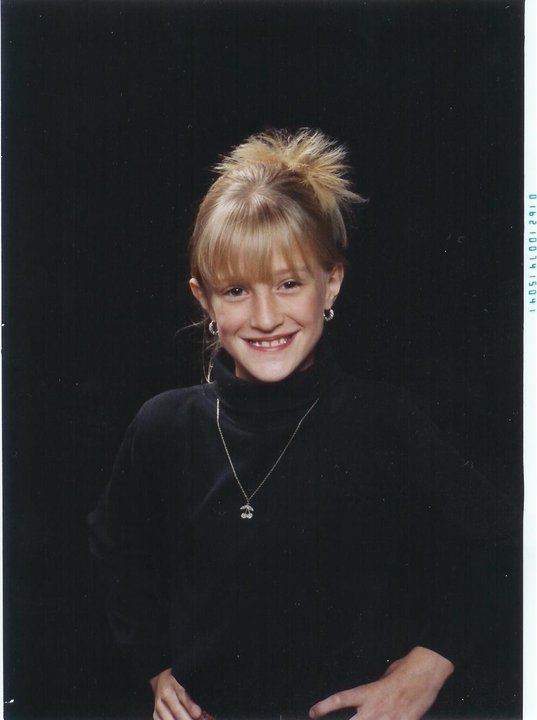
When I was a child, media literacy was all around me, through morning appearances of Sesame Street and Mr. Rogers’ Neighborhood; in after-school episodes of PBS Kids’ Between the Lions; in the bedtime stories my father read to me every night; in the short stories I obsessively wrote about my childhood cat; and on the shelves of my middle school library, which became a beloved safe space in a particularly tumultuous time in my adolescence.
Even as I spent summer vacations in my hometown in upstate New York, I spent hours upon hours with my favorite virtual pal, Reader Rabbit, a titular character in The Learning Company’s Learn to Read with Phonics CD-ROM series. In the late ’90s, The Learning Company was a titan in the realm of educational computer games, developing millennial essentials such as Carmen Sandiego and The Oregon Trail.
Call it Millennial nostalgia, but the influence is there. These may seem like simple memories, but for me they’re pieces of a puzzle that paint a larger picture of the development of media literacy skills. I am grateful for the privilege to have had access to this material in my formative years as a child, despite the fact that my family struggled financially and could never afford cable television. I navigated the world more aware, literate, and cognizant of changing technologies, mass media, and social tools. My established literacy broke through all the noise in a digital space.
This exposure is also partially responsible for my academic and professional successes, as I carried these tools with me throughout my time as a journalist, in my transition into digital marketing, and in my career in higher education. My passion for digital literacy inspired me to pursue my graduate degree, thanks to the Individualized Master of Arts (IMA) program at Antioch.
A huge highlight of the IMA program is the fact that you can ultimately choose your own pathway down the roads of Humanities and Social Sciences, or through a self-designed journey. In the self-designed concentration, students create their own degree plan, syllabi, and course outcomes as they align with their interests, passions, and future goals. Once your materials are approved, students work with their IMA advisor to select an expert educator who may be open to teaching a class or providing mentorship. There is truly no idea too big; oftentimes, I have shared a passing thought surrounding literacy with my mentor or advisor, who both excitedly exclaim, “We can make a course out of that!”
My degree, Digital Media Literacy and Modern Society, is structured around fostering a literate society within a digital world, while examining the intersectionality of socioeconomic connotations within exposure to media. The experiences I have had in the IMA program have opened up a whole new realm, a whole new path of social justice-forward thinking.
Encouraged and supported by compassionate advisors, educators, mentors, and fellow students, I feel excited, supported, and empowered as I navigate the program. In fact, much of this Antioch Voices essay contains material from a previous essay I submitted in my self-designed class, Digital Media Literacy.
What Is Media Literacy?
The definition I gravitate towards is the one from the National Association of Media Literacy Education (NAMLE): “the ability to access, analyze, evaluate, create, and act using all forms of communication,” going on to say that media literacy is interdisciplinary concept that represents “a necessary, inevitable, and realistic response to the complex, ever-changing electronic environment and communication cornucopia surrounding us.”
Media literacy affects our approaches to media consumption, research methodologies, trust in media, trust in each other’s narratives, and exposure to social media algorithms. Being media literate allows us to be smart consumers who are dedicated to education, liberation, and social justice, believing that media literacy is the fabric of a well-informed society and community.
Media Literacy In Our Current Environment
Unlike the early 90s and 2000s, when technological literacy was a priority in the educational system, today, media literacy is not the foundation for education. There are multiple reasons why we’re seeing a decline in literacy rates, such as lack of access, lack of proper funding, lack of skilled educators, and existing, onset inequities in the education system as a whole. As an example, schools in white, middle-class communities have broader, more advanced curricula compared to children who come from lower socioeconomic backgrounds.
Media literacy is still here; it’s just not taught as predominantly as it was at the turning point of technology. With the advancements of artificial intelligence, such as AI-generated videos that could easily trick the most literate of users thanks to Sora 2, interpreting media will only get more challenging.
The rise of technology has been lightning-fast, with little concern for infrastructure, exposure, and safety; we are a society that assumes because we are surrounded by smartphones, instant access to news, and constant noise due to social media, we are just expected to know how to engage with these tools, confusing fluency with critical thinking and falsely assuming technical skills equal analytical capabilities. Consumption is the goal in the fast-moving, digitally-centered society we’re living in, with less emphasis on critical thinking, digital awareness, and messaging deconstruction.
How can we move forward in a world that is more focused on short-form content, consumerism, and sensationalized media?
Media exists as a form of entertainment, information, and social interaction, but without media literacy in the background, we will continue to allow ourselves to be exposed to misinformation, politically-biased news, and monocultural views. There needs to be more exposure, understanding, and establishment of literacy around artificial intelligence, deep-fake technology, and the validity of factual information and research.
Educators are calling for more awareness of media literacy and its normalization in not only the classroom, but the outside world that continues to see an influx of misinformation, disinformation, and fake news. Deficits in education, both within science literacy and media literacy, are associated with the belief in discredited conspiracy theories, according to a survey conducted by Reboot Foundation.
However, in my opinion, there is an outcry for the need for media literacy, without an actual solidified restructuring involved. It seems that much of the responsibility of literacy is set upon the consumer, without questioning the entire system itself.
Fostering a media-literate population within the United States would depend on a systemic reboot, a restructuring that re-evaluates what is best for society as a whole, versus what’s best for a specific set of people, organizations, or government entities. It would mean integrating media literacy into every aspect of our world, much like Denmark, where children learn literacy, messaging deconstruction, and the reliability of news sources at an early age.
It would mean prioritizing educational systems, educators, and developers of educational facilities and tools. It would mean finding new, creative ways to educate future generations, just like The Learning Company did in the 90s. It would take a huge foundational shift that won’t happen in pieces or in fragments, but all at once – similar to my own exposure to media literacy growing up – meeting users where they are through virtual games, social media platforms, and community engagement.
Maybe then we can rediscover and reprioritize the cruciality of media literacy and its place within our tech-centered society.
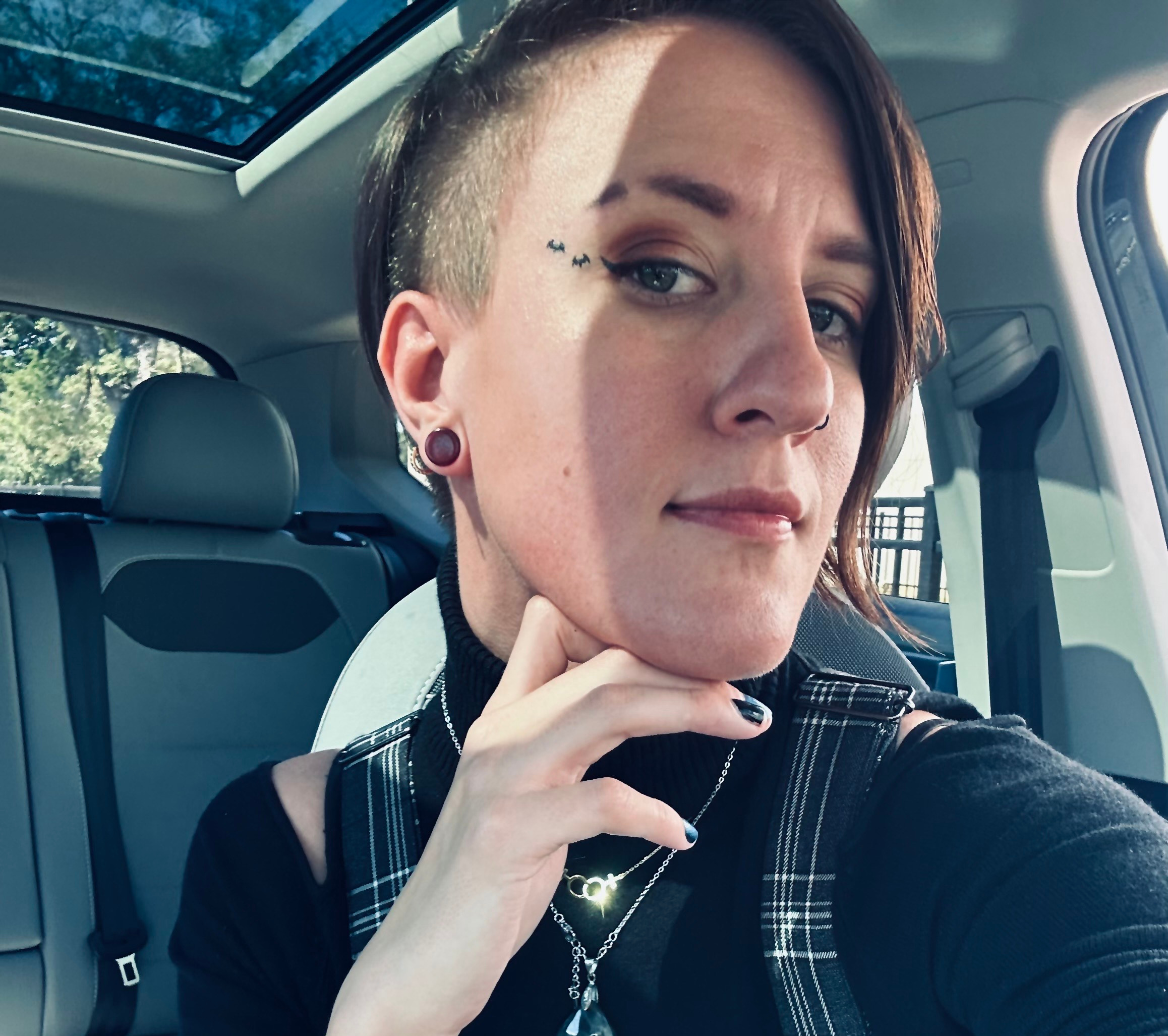
Selina Starling
Selina Starling is the social media manager for Antioch University and a student in the Individualized Master of Arts program, pursuing a self-designed degree focused on media literacy, resiliency, and artificial intelligence. She has a background in higher education and is passionate about creating engaging content. In her spare time, she enjoys tending to her container garden, feeding local bird populations, and borrowing DVDs from the library. Selina currently resides in Pensacola, Florida, with her partner and two cats, Bowie and Dorian Gray.